



































































![Sales & Distribution [Oil & Gas]](https://www.hiddenbrains.com/blog/wp-content/themes/blankslate/assets/images/sales_and_distribution-icon.74d08193.svg "Sales & Distribution [Oil & Gas]")

![Fluid Terminal Management [Oil & Gas]](https://www.hiddenbrains.com/blog/wp-content/themes/blankslate/assets/images/fluid_terminal_management-icon.4b3a27a4.svg "Fluid Terminal Management [Oil & Gas]")


![Sales & Distribution [Oil & Gas]](https://www.hiddenbrains.com/blog/wp-content/themes/blankslate/assets/images/sales_and_distribution-icon.74d08193.svg?1.0.0 "Sales & Distribution [Oil & Gas]")
![Fluid Terminal Management [Oil & Gas]](https://www.hiddenbrains.com/blog/wp-content/themes/blankslate/assets/images/fluid_terminal_management-icon.4b3a27a4.svg?1.0.0 "Fluid Terminal Management [Oil & Gas]")

































































































Quick Summary
The future of FinTech, InsurTech, and HealthTech software is here, and it’s smarter, faster, and AI-powered.
By 2026, digital transformation will redefine banking, insurance, and healthcare with personalized services, predictive insights, and seamless automation. Discover the trends, innovations, and game-changing software solutions driving this revolution and learn how businesses can stay ahead in a world where speed, intelligence, and efficiency are everything.
Are you ready to lead the change?
Introduction
Imagine opening your banking app, filing an insurance claim, or booking a doctor’s appointment, and having AI anticipate what you need before you even ask. This isn’t science fiction anymore. It’s the new normal taking shape across the future of FinTech, InsurTech, and HealthTech industries.
These sectors are at the heart of a global digital transformation, powered by AI, automation, and predictive analytics. The year 2026 will mark a tipping point at which software no longer just supports business operations but defines customer trust and growth.
For C-level executives, startup founders, and technology leaders, understanding this shift is crucial for staying ahead in the age of intelligence.

FinTech: Future of Financial Technology
Introduction to FinTech
The future of FinTech is defined by personalized, data-driven, and secure experiences. From digital wallets to blockchain-powered banking, the focus is shifting toward smarter customer engagement and real-time decisions.
Global FinTech adoption is soaring, and by 2026, it’s expected that future financial technology will merge AI, blockchain, and embedded finance to create fully autonomous digital ecosystems.
Challenges & Solutions in FinTech
Challenge 1: Rising Cybersecurity Threats
➡ Solution: AI-powered fraud detection and behavioral analytics are now protecting financial platforms in real time, ensuring transactions are secure without disrupting user convenience.
Challenge 2: Complex Regulatory Compliance
➡ Solution: Smart automation within compliance tools ensures constant monitoring of laws and financial regulations across regions, reducing the manual burden for global institutions. Several businesses also consider fintech development outsourcing to avoid the hassle and leave it to the experts.
Challenge 3: Customer Experience Gaps
➡ Solution: Personalized AI assistants and chatbots deliver 24/7 banking support, improving retention and satisfaction through predictive recommendations.
Challenge 4: Data Overload
➡ Solution: Cloud-based fintech software development services use AI to analyze massive datasets for meaningful financial insights and risk predictions.
Future Trends in FinTech
- AI in FinTech: From automated investment portfolios to intelligent fraud prevention.
- Blockchain evolution: Increased transparency and reduced transaction costs.
- Predictive analytics: Anticipating financial behavior before users act.
- Embedded finance: Integrating payments and loans into non-financial ecosystems.
By 2026, FinTech will no longer be an option; it will be the core of financial strategy.
Real-Life Example in FinTech
Hidden Brains partnered with a FinTech enterprise, “Credit Pulse,” to drive digital transformation and elevate credit bureau services in Saudi Arabia. It is a leading national credit bureau, licensed to provide world-class consumer and commercial products and services.
Operating under the supervision of the Saudi Arabian Central Bank, our client, a leading national credit collection agency, provides credit information to individuals and companies. We designed a secure, AI-powered platform for intelligent payments and compliance automation.
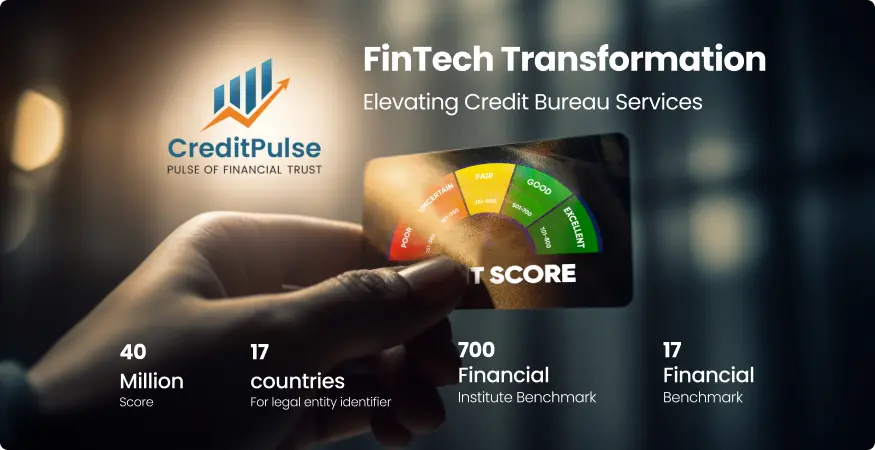
Impact at a Glance:
- 40 Million Score
- 17 Countries for Legal Entity Identifier
- 700 Financial Institute Benchmark
- 17 Mortgage Benchmark
InsurTech: Future of Insurance Technology
Introduction to InsurTech
The future of InsurTech revolves around predictive risk management and on-demand, customer-first coverage. By leveraging insurtech digital transformation, companies are turning complex processes like claims and underwriting into instant digital experiences.
Stat Fact Ahead:
According to Grand View Research, the global insurtech market size was estimated at USD 5.45 billion in 2022 and is projected to reach USD 152.43 billion by 2030, growing at a CAGR of 52.7% from 2023 to 2030.
Challenges & Solutions in InsurTech
Challenge 1: Slow Claims Processing
➡ Solution: AI-based automation enables faster claim validation, reducing processing time from days to minutes while improving accuracy.
Challenge 2: Inefficient Risk Assessment
➡ Solution: Predictive analytics and machine learning assess individual risk patterns using real-time data, leading to smarter underwriting decisions.
Challenge 3: Poor Customer Engagement
➡ Solution: Personalized AI chatbots and self-service portals empower customers to manage policies and claims independently.
Challenge 4: Legacy System Bottlenecks
➡ Solution: Cloud-native insurance software solutions modernize outdated infrastructures, enhancing scalability, integration, and business agility.
Future Trends in InsurTech
- AI-powered claims automation: Speeding up settlements with zero manual errors.
- Usage-based policies: Pay-as-you-go models for customized coverage.
- Blockchain transparency: Tamper-proof smart contracts and policy data.
- Predictive customer care: Preventing risks instead of reacting to them.
The best InsurTech startups of 2026 will be those blending personalization with automation to build insurance experiences people actually trust.
Real-Life Case Study in InsurTech
Hidden Brains collaborated on Layr, an advanced AI-driven commercial insurance platform. It empowers brokers with automated policy generation, intelligent dashboards, and predictive underwriting.
Layr, the Atlanta-based insurtech innovator, is transforming the commercial insurance landscape for small businesses across the U.S.
Its AI-powered cloud insurance platform automates the complex process of sourcing, purchasing, and managing business insurance. Entrepreneurs receive tailored policy recommendations, optimal coverage matches, and accurate carrier pricing predictions.
With Layr’s self-service portal, business owners can manage insurance tasks independently and secure coverage on their own terms.
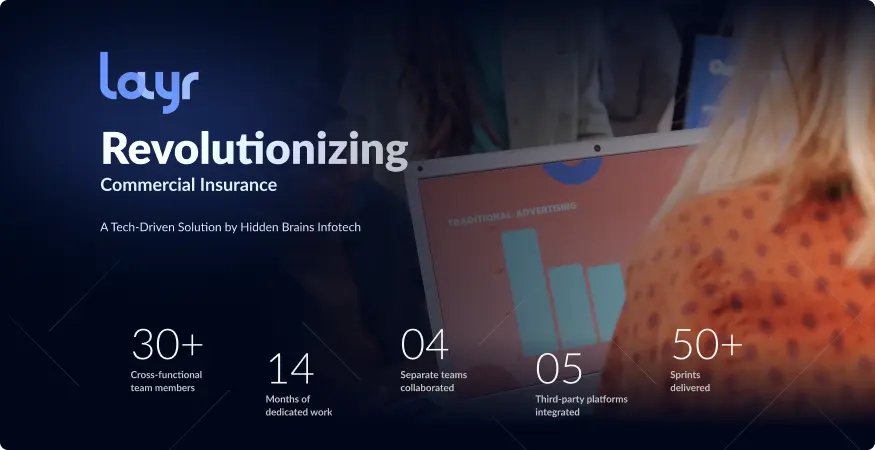
The Impact at a Glance:
- $20M+ Funding Received
- 100+ Insurance Brokers
- 100k Live and Active Customers
- 10+ Insurance Coverage Types
This case proves how the future of insurance technology is no longer about selling policies but delivering intelligent, adaptive, and data-backed protection.
HealthTech: Future of Healthcare Technology
Introduction to HealthTech
The future of HealthTech will completely transform how patients receive care. Fueled by AI, telemedicine, and digital transformation in healthcare, this sector is bridging the gap between hospitals, doctors, and patients globally.
From wearable health monitors to AI-assisted diagnostics, advanced health tech is empowering patients to take control of their health while enabling providers to deliver proactive care.
Challenges & Solutions in HealthTech
Challenge 1: Limited Access to Quality Care
➡ Solution: Telemedicine and AI-powered consultation platforms are making healthcare accessible even in rural and underserved regions.
Challenge 2: Data Privacy & Security Concerns
➡ Solution: Blockchain-backed storage and secure data encryption safeguard patient information without compromising efficiency.
Challenge 3: Inefficient Patient Data Management
➡ Solution: Integrated hospital systems developed by a healthcare software development company streamline records, analytics, and treatment coordination.
Challenge 4: Delayed Diagnosis
➡ Solution: AI-based imaging tools detect anomalies faster, improving early disease identification and treatment outcomes.
Future Trends in HealthTech
- AI in healthcare future: Predictive diagnosis and robotic surgeries.
- Future of telemedicine: Virtual consultations becoming mainstream.
- Wearable integration: Real-time health tracking for preventive care.
- Future of digital health: Cloud and IoT enabling 24/7 patient monitoring.
In 2026, healthcare technology trends will create an ecosystem where healthcare is intelligent, predictive, and accessible, anytime, anywhere.
Real-Life HealthTech Use Case
Discover how Hidden Brains developed a custom real-time communication SaaS solution that transformed operations for 100+ clinics. Just check what this healthcare use case reveals. The platform not only streamlined interactions but also maintained patient confidentiality and data integrity, fully compliant with HIPAA standards.
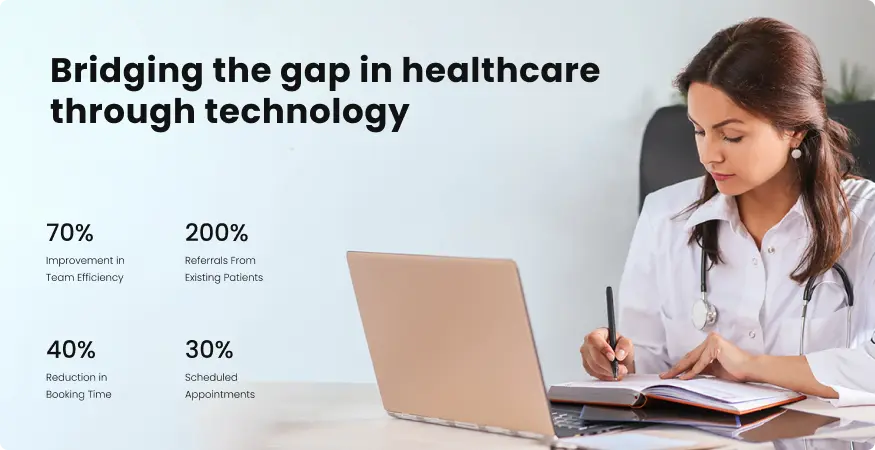
The Impact at a Glance:
- 70% Improvement in Team Efficiency
- 200% Increase in Referrals From Existing Patients
- 40% Reduction in Booking Time
- 30% Improvement in Scheduled Appointments

Frequently Asked Questions
Got questions about where AI is taking FinTech, InsurTech, and HealthTech next? We’ve got clear, no-fluff answers to help you stay ahead of the curve.
What role will AI play in shaping the future of FinTech software by 2026?
AI is becoming the new engine of financial innovation. By 2026, AI in FinTech won’t just automate tasks; it will make finance smarter, faster, and more personalized. From fraud detection that predicts risks in milliseconds to chatbots offering real-time financial advice, AI will transform how people manage money.
AI-driven analytics will also enable banks and startups to understand customer behavior more effectively than ever. Think of AI as the invisible CFO, always learning, optimizing, and helping businesses make smarter financial decisions.
In short, AI will turn FinTech from reactive to predictive, shaping the future of finance around real-time intelligence.
How can generative AI transform insurance platforms and ecosystems?
Generative AI is redefining how insurers design, underwrite, and sell policies. Instead of weeks of paperwork, imagine getting a fully customized quote in seconds. That’s the power of AI-driven automation.
By 2026, insurance platforms will use generative AI to simulate risk scenarios, detect fraud with pattern-based learning, and even draft claim responses automatically. AI can also create personalized policy recommendations by analyzing customer data from lifestyle to spending habits, ensuring coverage fits like a glove.
For insurers, this means lower costs, better risk management, and happier customers. For clients, it means transparency and speed like never before.
Which AI breakthroughs will most significantly impact future health-tech applications?
AI is moving from diagnosis to prevention, and that’s the biggest game-changer. By 2026, advanced health tech will rely on AI breakthroughs in predictive analytics, medical imaging, and generative AI for faster drug discovery.
Imagine an AI that scans X-rays in seconds or predicts heart risks years before symptoms appear. Tools like these are already in trials across the globe. Generative AI will also help medical researchers simulate complex biological systems, cutting R&D costs by up to 40%.
Bottom line: AI isn’t just supporting doctors anymore, it’s becoming their most powerful collaborator in saving lives.
How will AI support deeply personalized care and services in HealthTech?
Healthcare is moving from one-size-fits-all to one-size-fits-you; thanks to AI. By analyzing genetic data, wearable-device metrics, and patient history, AI can create hyper-personalized care plans tailored to each individual’s needs.
Think about a smartwatch that doesn’t just count steps but predicts when you might need to rest or a digital platform that recommends lifestyle changes based on real-time biomarker data. AI in healthcare will make that possible.
For patients, it means earlier interventions, customized treatment, and a better quality of life. For doctors, it’s a smarter way to deliver precision care at scale.
Which specific AI technologies will reshape insurance software solutions?
The next generation of insurance software will be powered by machine learning, predictive analytics, natural language processing (NLP), and computer vision.
– Machine Learning will predict risks, detect fraud, and optimize pricing models.
– NLP will help insurers process claims faster by reading and understanding documents automatically.
– Computer Vision will assess vehicle damage or property loss instantly from uploaded images.
Together, these technologies will make insurance operations faster, more transparent, and customer-centric. The result? Smarter decisions and a better experience across every policyholder touchpoint.
How will AI enable highly personalized insurance experiences for clients?
Imagine an insurance platform that knows your needs before you do. AI makes that possible. By analyzing behavior, preferences, and past interactions, AI algorithms can recommend coverage that matches your life stage and risk profile, whether you’re buying a car or starting a business.
AI-powered chatbots and virtual assistants can also deliver round-the-clock support, helping customers file claims, renew policies, or ask questions instantly. And with predictive AI, insurers can proactively offer policy updates before the client even realizes they need one.
Personalization in insurance is no longer optional; it’s the new standard powered by AI.
Which AI technologies will become critical for next-gen FinTech applications?
The future of FinTech will be built on four AI pillars: machine learning, predictive analytics, natural language processing, and generative AI.
– Machine learning will help detect fraud and improve credit scoring accuracy.
– Predictive analytics will forecast market trends and customer spending habits.
– NLP will power conversational banking assistants for seamless user support.
Generative AI will automate document creation, financial reporting, and portfolio summaries.
Together, these AI technologies will make FinTech applications more efficient, secure, and customer-friendly, fueling the next wave of financial innovation.
What is the future of financial technology?
The future of FinTech is powered by AI, machine learning, and automation. By 2026, we’ll see smarter payment systems, personalized banking experiences, and real-time fraud detection. FinTech solutions will focus on speed, convenience, and secure digital transactions, helping businesses and consumers make faster, data-driven financial decisions.
What does the future hold for healthcare technology?
Future HealthTech focuses on advanced health monitoring, telemedicine, and AI-driven diagnostics. By 2026, healthcare solutions will be more patient-centric, offering predictive insights, remote care, and smarter resource management to improve outcomes and reduce costs.


Conclusion
The future of FinTech, InsurTech, and HealthTech software is intelligent, automated, and customer-centric. AI, automation, and data analytics are not just reshaping operations; they’re redefining how industries think, decide, and deliver.
Businesses that embrace this shift will thrive in 2026 and beyond, while those that resist digital transformation may struggle to stay relevant. The choice for leaders today is clear: adapt, innovate, and evolve.