














































































































Get 2 hours of free consultation!
Hire Spring Boot Developers
Quickly Onboard Experts with Predictable Costs & Seamless CollaborationGet Spring Boot developers to modernize backend architecture, improve cloud efficiency, and enhance scalability. Enable lower infrastructure costs, faster delivery cycles, and resilient, business-critical digital systems.
Our International
Client Network














Why Partner With
Spring Boot Developers From Hidden Brains
We support enterprises in modernizing backend systems through structured delivery, deep engineering capability, and scalable engagement models aligned with long-term digital transformation objectives.

8+ Years of Experience

End-to-End Expertise

15+ Senior Spring Boot Developers

Flexible Engagement Models

Governance-
led Delivery

AI-augmented Software Delivery
led Delivery
Simple, Structured Process to
Hire Spring Boot Developers
We follow a disciplined 5-step engagement model designed to align enterprise requirements with highly skilled Spring Boot talent, ensuring precision in selection, speed in execution, and consistency in delivery outcomes.

Requirement Framing
You provide project details and objectives; we translate them into structured scope, architecture needs, and delivery expectations.
Targeted Talent Mapping
We identify and curate Spring Boot engineers based on domain experience, system complexity exposure, and cloud-native capabilities.
Technical
EvaluationAssess candidates through scenario-based engineering tests, system design validation, and backend architecture problem-solving.
NDA &
OnboardingPost-selection, NDA and onboarding are completed with structured integration, workflow alignment, and a full delivery ecosystem.
Scale as
You GrowScale your development team effortlessly to meet evolving business needs and project requirements.
Technology Stack for
Spring Boot Development
We evaluate and select technologies based on their impact on scalability, maintainability, and integration, ensuring the stack directly contributes to business performance and digital transformation outcomes.

 Spring Boot
- Spring Framework


- Spring Boot
- Spring Framework


- Spring Boot
- Spring Framework


- Spring Boot
- Spring Framework


- Spring Boot
- Spring Framework


- Spring Boot
- Spring Framework


- Spring Boot
- Spring Framework
Hire Our Spring Boot Developers For
Enterprise-Grade Backend Transformation
Our Spring Boot developers enable enterprises to accelerate backend modernization, strengthen system architecture, and build scalable, resilient digital platforms aligned with long-term business objectives.

Enterprise Backend
System DevelopmentHire Spring Boot engineers to build modular, scalable backend systems aligned with enterprise architecture needs.
Legacy System
ModernizationEngage with Java Spring Boot developers to transform legacy systems into scalable, cloud-native architectures with improved agility.
Microservices Architecture
ImplementationHire experts to design microservices-based systems enabling scalability, flexibility, and resilient enterprise operations.
RESTful API Development &
IntegrationBuild secure, high-performance REST APIs and integration layers to connect applications, platforms, and third-party services.
AI & ML
Backend DevelopmentBuild intelligent backend systems with AI/ML integrations, data processing pipelines, and scalable machine learning services using Spring Boot.
Performance & Scale
OptimizationHire Spring Boot experts to optimize performance, reduce latency, and ensure stable operation under high enterprise load.
Our Success Stories
Our Success Stories

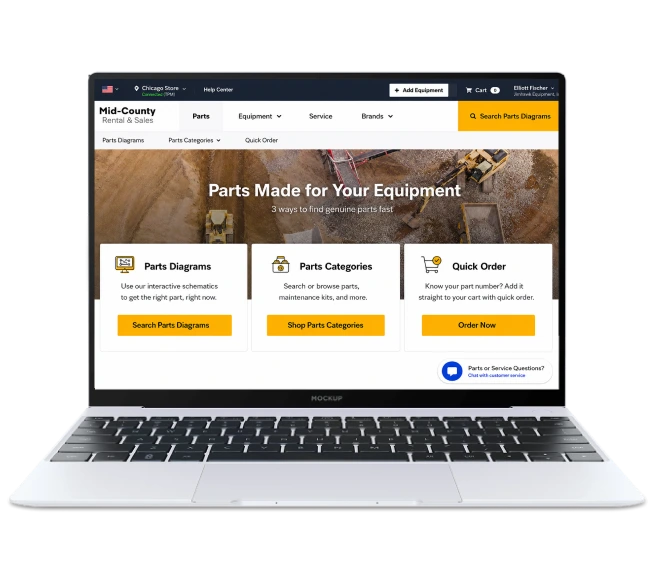
Equipment Marketplace & Management Platform
We built a white-label ecommerce platform that streamlined order placement, booking management, effortless equipment handling, and more for the client.
Our Success Stories

Mall for Africa
Using the CodeIgniter framework, we built a scalable ecommerce platform with Android and iOS apps that connected global retailers with customers through seamless cross-border commerce.

Our Success Stories

FabAlley
Built a mobile-first fashion commerce experience with seamless discovery, browsing, and checkout, improving engagement and conversion through responsive design.

Adaptive Engagement & Talent Scaling Models
We provide flexible hiring structures that allow enterprises to scale Spring Boot engineering capacity based on project demand, delivery timelines, and complexity requirements, ensuring cost efficiency, speed, and optimal resource allocation.
- Recommended
Part-Time Spring Boot Developer
Ongoing Spring Boot support with flexible, scope-based engagement.
- Scope-based engagement aligned to delivery needs
- Weekly or monthly billing flexibility
- Suitable for evolving product and system requirements
- Onboard experienced Spring Boot developers in 48–72 hours
- Recommended
Full-Time Spring Boot Developer
Dedicated Spring Boot engineers for scalable enterprise delivery.
- Dedicated full-time engineering engagement
- Short-term or long-term scalability options
- No hiring overhead or operational delays
- Hire senior Spring Boot specialists for end-to-end delivery
- Recommended
Hourly Developer
On-demand Spring Boot experts for tasks, fixes, and enhancements.
- Flexible hourly or part-time engagement model
- Task-based or milestone-driven delivery approach
- Ideal for debugging, optimization, or feature additions
- Rapid onboarding within 48–72 hours
Things to Evaluate When Hiring Spring Boot Developers
Enterprises should assess Spring Boot engineers across architecture depth, modern Java proficiency, distributed systems capability, and production-grade engineering practices to ensure long-term scalability and resilience.
Modern Java & Concurrency Engineering
Evaluate expertise in modern Java (17/21/25), virtual threads (Project Loom), and reactive programming to handle high-concurrency, low-latency backend systems efficiently.
Core Spring Framework Mastery
Assess deep understanding of Spring internals, including dependency injection, bean lifecycle, custom auto-configurations, and aspect-oriented programming for modular system design.
Data Architecture & Performance Engineering
Verify ability to optimize persistence layers using JPA/Hibernate, solve N+1 query issues, and implement distributed caching and multi-database routing strategies.
Distributed Systems & Cloud-Native Design
Evaluate experience in event-driven architectures using Kafka/RabbitMQ, resilience patterns (circuit breakers, retries), and cloud-native deployment strategies including GraalVM optimization.
API Design & Security Architecture
Assess capability to build secure, scalable API ecosystems with Spring Security, OAuth2, and zero-trust authentication models integrated with enterprise identity systems.
Production Readiness & Observability
Check proficiency in implementing monitoring and observability using Spring Actuator, Micrometer, Prometheus, and Grafana for real-time system health and reliability tracking.
10 Top-Notch Skills Senior Spring Boot Developers Possess
Uses Java 21+ virtual threads to handle massive concurrency with minimal thread overhead.
Builds reusable Spring Boot starters for consistent logging, security, and shared enterprise configs.
Design non-blocking APIs using WebFlux and Reactor for low-latency, high-throughput systems.
Fixes N+1 issues using entity graphs, batch fetching, and optimized Hibernate query strategies.
Implements Redis/Caffeine/Hazelcast caching layers to reduce DB load and improve response speed.
Uses Resilience4j for circuit breakers, retries, and rate-limiting to avoid system-wide failures.
Builds scalable systems using Kafka/RabbitMQ with outbox patterns for reliable messaging.
Compiles Spring Boot apps into native images for fast startup and low-memory cloud deployments.
Package apps using Docker/K8s with Buildpacks for scalable, secure production environments.
Integrates Micrometer, Actuator, and OpenTelemetry for full tracing, logs, and metrics visibility.

Hire Spring Boot Developers From Hidden Brains vs. Other
Hidden Brains delivers Spring Boot engineering capability as a strategic execution layer, enabling organizations to scale backend systems with speed, resilience, and architectural discipline. Unlike transactional hiring models, this approach focuses on delivery certainty, system reliability, and engineering maturity.
| Dimension | Hidden Brains (Dedicated Spring Boot Capability) | In-House Engineering Team | Recruitment Agencies | Freelancers |
| Delivery Velocity | Rapid deployment of production-ready Spring Boot teams within 48–72 hours, reducing time-to-execution risk | Slow ramp-up due to hiring cycles, onboarding, and capacity constraints | Moderate sourcing delays with uncertain onboarding outcomes | Fast start but inconsistent continuity |
| Engineering Maturity | Standardized enterprise-grade Spring Boot architecture practices across microservices, APIs, and integrations | Highly variable based on internal talent density and experience | Dependent on individual candidate quality | Fragmented skill depth, non-standardized practices |
| System Design Capability | Strong alignment with distributed systems design, domain-driven architecture, and scalability planning | Depends on the seniority composition of the internal team | Unpredictable system design exposure | Typically limited to task-level execution |
| Platform & Integration Readiness | Proven ability to integrate Spring Boot with cloud-native ecosystems (AWS, Azure, Kubernetes, Kafka) | Requires internal architectural alignment effort | Varies significantly across candidates | Often lacks enterprise integration depth |
| Engineering Risk Profile | Reduced delivery and production risk through pre-vetted, production-tested engineering practices | Medium to high risk during scaling phases or skill gaps | High variability in quality assurance | High dependency risk and knowledge silos |
FAQs
This FAQ section addresses key strategic considerations for organizations evaluating whether to hire Spring Boot developers for enterprise-grade backend systems, modernization initiatives, or scalable product development.
Build More with Our Expertise
Blogs & Insights




Our Honored Partners
Distinct paths, same result — purposeful, precise, powerful.



to real-world impact.
They were simply the experts in AI technology. What was just an idea for me, they went the extra mile and made it a solution. My business has witnessed a positive change.

in our journey.
Hidden Brains didn’t just develop our platform—they became true partners. Their team understood our vision, offered smart suggestions, and treated Epicquire like their own.

integrations look easy.
Team Hidden Brains has worked tremendously and has easily integrated this complex functionality into our system. They were good at their job and provided continuous support.

with Hidden Brains.
Throughout the project, communication was seamless and efficient. I want to express my appreciation for the wonderful job and the excellent service that Hidden Brains, did in creating my first ever App ControlBabyGender.




Talk to Us
Ideas matter. Our direction makes them real.

