









































































































Quick Summary
- European companies evaluate software partners beyond cost and rankings.
- Key selection criteria include domain expertise, architecture, security, compliance, TCO, seniority, and delivery governance.
- Hidden Brains combines CMMI Level 3 processes, ISO 27001-certified security, and ISO 9001 quality practices.
- Enterprise buyers prioritize GDPR readiness, EU AI Act awareness, and proven compliance frameworks.
- Strong architecture and cloud strategy ensure scalable, future-ready solutions.
- Transparent commercial models provide visibility into total cost of ownership (TCO).
- Offshore partnerships succeed through strong communication, governance, and time-zone alignment.
European companies partner with Hidden Brains when they need an offshore software development partner that operates like an in-house team: certified, senior-led, and accountable for outcomes rather than hours.
According to Gartner, enterprise software sourcing decisions increasingly prioritize delivery capability, governance, risk management, and long-term business value over upfront development costs.
If you are evaluating a software development company or an offshore partner that serves European businesses to the same standards, this is not another “top vendors” list. It’s a practical guide to pricing, engagement models, development processes, compliance, and what to expect when working with an offshore software development partner in Europe.
Hidden Brains, a leading software development company in Europe, brings CMMI Level 3 delivery discipline, ISO/IEC 27001:2025 information-security certification, and a senior engineering mix that European buyers screen hard for.
Below is the framework those buyers use, and where a partner like Hidden Brains fits within it.
| Details | Information |
|---|---|
| Guide Focus | How European companies choose the right software development partner — covering evaluation criteria, compliance requirements, architecture considerations, delivery models, outsourcing approaches, and long-term partnership strategies. |
| Business Challenge | Organisations must balance software quality, regulatory compliance, delivery risk, innovation speed, operational efficiency, and total cost of ownership while selecting a technology partner. |
| Target Audience | CTOs, CIOs, founders, product owners, engineering leaders, procurement teams, technology decision-makers, and enterprises planning software modernisation or digital transformation initiatives. |
| TL;DR | The right software development partner is selected through evidence, not promises. European companies should evaluate domain expertise, architecture maturity, GDPR and EU AI Act readiness, security practices, delivery governance, engineering seniority, communication models, and proven business outcomes. |
| Key Evaluation Criteria | Domain understanding, technical architecture, cloud strategy, cybersecurity, regulatory compliance, delivery processes, team expertise, communication approach, commercial transparency, and client references. |
| Expected Outcome | A clear framework to identify software partners that can deliver secure, scalable, compliant, and business-aligned digital solutions. |
What do European Companies Actually Look for In a Software Development Partner?
European companies evaluate a software development partner against a clear checklist: Domain and business understanding.
- Architecture and cloud strategy
- Security and regulatory compliance
- Delivery process and governance
- Transparent commercial model with clear total cost of ownership (TCO)
- Engineering seniority and technical expertise
- Communication quality and time-zone alignment
- Verifiable track record and past project success
Far less important:
- Location
- Hourly rates
- Technology badges
These are the factors that determine which partners make the shortlist, and which don’t.

Reduce project risks with an expert software strategy review.
Get a 2 Hour Free ConsultationHow to Choose a Software Development Company in Europe: A Practitioner’s Framework
The best evaluation is not “who has the most five-star reviews.” It is a structured check against the four criteria below. Use them on every vendor you consider, including Hidden Brains.
1. Domain Expertise and Business Understanding
Can the partner speak your business, not just your tech stack?
A partner that understands your business ships fewer wrong features. Engineering talent is common; the ability to translate an operational problem, a fuel-retail reconciliation process, a PSD2-regulated payment flow, a multi-country logistics network, into the right software is what actually reduces rework and time-to-value.
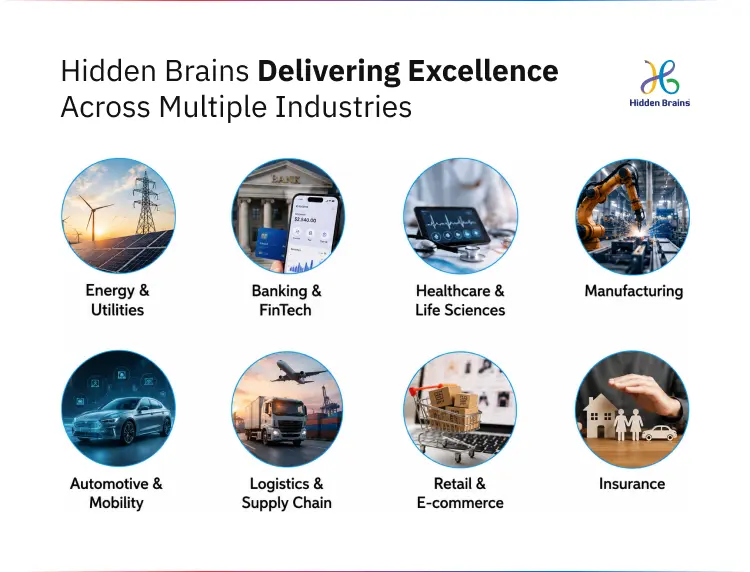
This is where Hidden Brains’ cross-industry delivery matters. The company has built software across energy, fintech, logistics, healthcare, and retail, including work for OMV, the Vienna-headquartered integrated oil, gas, and petrochemical group.
The test for any vendor: in the first conversation, do they ask about your business process, or only about your preferred framework? A partner that leads with your operations is worth more than one that leads with its own tooling.
2. Architecture, Scalability, and Cloud Strategy
Will the system still hold at 10x load?
Architecture decisions made in month one determine whether the system survives year three. A credible partner designs for scale, resilience, and change from the start, not as a rescue project after growth exposes the cracks.
For European companies, this also means cloud and data-residency choices that respect EU requirements: workloads architected on AWS, Microsoft Azure, or Google Cloud with EU regions where data residency matters, sensible service boundaries (well-defined APIs and, where justified, microservices), and an explicit position on observability, security, and cost control.
Hidden Brains approaches architecture as a business decision as much as a technical one; the right pattern for a 50-user internal tool is not the right pattern for a platform serving millions of transactions.
The test: ask a vendor to explain the trade-offs behind one architecture recommendation. A senior partner will give you options and consequences; a weaker one will give you a single “best practice” with no reasoning.
2. Cost, Transparency, and the Commercial Model
Do you see the full total cost of ownership (TCO)?
The build cost is the smallest part of what software actually costs. A transparent partner shows you the full total cost of ownership (TCO), not only initial development, but maintenance, third-party licenses, ongoing operations, and change requests over the life of the system. Vendors who quote only the build number are, intentionally or not, hiding most of the cost.
Here is the TCO picture European buyers should insist on seeing before signing:
| TCO Component | What It Covers | Why It Is Often Hidden |
|---|---|---|
| Build cost | Initial development, design, testing, release | Usually the only number in a cheap quote |
| Maintenance | Bug fixes, security patches, dependency upgrades | Under-scoped or billed ad hoc later |
| Licenses & third-party | Cloud, databases, SaaS APIs, monitoring tools | Passed through without visibility |
| Operations | Hosting, DevOps, monitoring, incident response | Assumed “your problem,” not the vendor’s |
| Change requests | New features, scope changes, regulatory updates | Where opaque vendors recover margin |
Hidden Brains works to a transparent commercial model with defined engagement and delivery models, dedicated team, staff augmentation, or fixed-scope project, so the commercial structure matches the work, and the full cost is visible up front, not discovered later.
The test: Ask a vendor to break down the five-year cost, not the build cost. The quality of that answer tells you how the relationship will actually run.
Start with discovery to reduce risks before development begins
Get in Touch
4. Seniority and Full-Team Support
Are there enough experienced engineers and architects on the team?
Junior-heavy teams look cheap and often cost more. The single biggest predictor of delivery risk is the seniority mix: whether the team has enough experienced engineers and architects to make sound decisions, catch problems early, and keep juniors productive. A rate that looks low usually means the experience sits on the sales call, not on your project.
A dependable partner is explicit about who does the work: how many senior engineers and architects, how involved they stay after kickoff, and how knowledge is retained if someone rolls off. Hidden Brains’ CMMI Level 3 process exists precisely to make delivery repeatable rather than dependent on a single hero developer.
The test: Ask exactly who will be on your team, at what seniority, and for how long. Named, senior, and stable is the answer you want.
5. Security and Compliance
Can the partner deliver under GDPR and the EU AI Act?
For European companies, security and regulatory compliance are not a feature — they are the entry ticket. Any partner touching your data or building AI systems must be able to work under the General Data Protection Regulation (GDPR) and, increasingly, the EU AI Act.
Two obligations that decide the shortlist:
- GDPR: Lawful data handling, a signed data-processing agreement, EU data-residency options where required, and privacy-by-design in the build itself. Certification such as ISO/IEC 27001 gives procurement a governed security regime to point to, rather than verbal assurances.
- EU AI Act (Regulation 2024/1689): The first comprehensive AI law, applying a risk-based approach and phasing in through 2025–2028. It runs alongside GDPR, not instead of it. If your software includes AI, your partner must be able to classify the system by risk tier and build the required controls, data governance, logging, human oversight, and transparency/disclosure to users, plus keep the technical documentation the regulation expects. Some high-risk deadlines were adjusted by the 2026 Digital Omnibus, so a capable partner tracks the current timeline rather than a fixed date.
Hidden Brains operates under ISO/IEC 27001:2022 and ISO 9001:2015 certification, so information security and quality are governed processes, directly supporting your GDPR obligations and enterprise supplier-assurance reviews.
The test: Ask how the vendor handles a GDPR data-processing agreement and, for AI features, how they classify and document the system under the EU AI Act. Vagueness here is a disqualifier.
6. Delivery Process and Project Governance
Is delivery repeatable, or dependent on heroics?
Predictable delivery comes from process, not luck. A dependable partner has documented delivery governance: defined sprints, quality gates, code review, testing, release management, risk tracking, and clear reporting to stakeholders. Without it, timelines slip quietly, and quality becomes a gamble. This is exactly what a CMMI Level 3 process is for.
For Hidden Brains, CMMI Level 3 means delivery is standardized and measured across projects, so a fix caught in review does not reach production, and progress is visible to you rather than hidden until a deadline. Governance also covers the unglamorous essentials: change control, documentation, and knowledge retention if a team member rolls off.
The test: Ask to see the vendor’s delivery workflow and how they report status. A partner that can show you its governance model has used it before.
7. Communication and Time-zone Fit
Will it feel like one team, or a handover across a wall?
Offshore only fails when communication does. The right partner builds in enough working-hour overlap, a fixed communication cadence, and named points of contact so European stakeholders get real-time collaboration, not overnight email round-trips.
Hidden Brains works with clients across 107 countries from global offices, which means cross-time-zone delivery is routine rather than an experiment, with established overlap hours, regular stand-ups and demos, and communication run in clear English. That experience of coordinating with international clients is a large part of why European companies stay with an offshore partner rather than paying a premium for proximity.
The test: ask how many overlap hours you will get with the team each day, and who your day-to-day contact is. Specific answers signal a partner that has done this before.
8. Evidence: Case Studies and References
Can the partner prove it, not just claim it?
The strongest signal is verifiable proof. Before shortlisting, ask for case studies in your sector and speak to real references, not logos on a homepage. Independent review platforms and named client outcomes separate a genuine track record from marketing.
Review their case studies, portfolio, client testimonials, and supporting documentation to validate their industry expertise, technical approach, and ability to deliver similar outcomes.
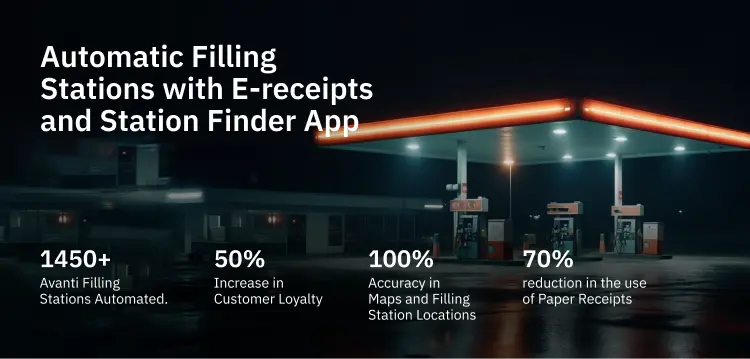
Hidden Brains has proven this with OMV’s Avanti automated filling-station network, unifying location-siloed refuel-receipt data into one centralized platform, with a filling-station finder and a single receipts database spanning Europe, the Middle East, and Africa.
The test: Ask for a reference from a client with a similar problem, in a similar industry, and ideally in a similar region. A confident partner makes that introduction.
Offshore, Nearshore, or In-house: How do European Companies Decide?
The right model depends on cost sensitivity, control needs, and how specialized the work is. There is no one-size-fits-all answer; the best approach depends on your project’s budget, risk tolerance, timeline, and priorities. The comparison below is the one most European buyers weigh.
| Factor | Offshore partner (Hidden Brains) | Nearshore / EU vendor | In-house team |
|---|---|---|---|
| Cost | Lowest for equivalent seniority | Mid | Highest (fully loaded) |
| Time-zone overlap | Partial; managed with overlap hours | High | Full |
| Access to senior talent | Deep pool, certified process | Good, smaller pool | Limited by local hiring |
| Scaling speed | Fast (team scales up/down) | Moderate | Slow (recruit + onboard) |
| Best for | Sustained build + maintenance at scale | Tight-collaboration EU projects | Core IP you must own end-to-end |
For many European mid-market and growing-enterprise buyers, the practical answer is a hybrid: keep product ownership in-house and partner offshore for engineering capacity, with enough time-zone overlap and senior oversight to feel like one team.
Why do European Companies Choose Hidden Brains as Their Software Development Partner?
European companies choose Hidden Brains because it answers the evaluation criteria above with evidence, not adjectives: certified and compliant delivery, transparent cost, governed process, senior-led teams, proven cross-time-zone working, and domain experience across sectors that European enterprises operate in.
- 23+ Years of Experience – Trusted by organisations worldwide to deliver complex digital products with predictable outcomes and long-term value..
- A senior engineering mix and architect involvement on the work itself, so decisions are made by people who have shipped comparable systems before.
- Transparent commercial models via defined engagement and delivery models, with full TCO visibility rather than a headline build price.
- Cross-industry, enterprise-grade domain experience, including delivery for OMV in the energy sector.
Hidden Brains has delivered for clients across 107 countries over more than 23+ years, which is the kind of sustained track record European buyers use to separate stable partners from newer, unproven vendors.
When do European Companies Choose Custom Software Over Off-the-shelf?
European companies choose custom software when off-the-shelf products force the business to change how it works, rather than the other way around. If a process is a competitive differentiator, tightly regulated, or spans systems no single SaaS product covers, a custom build usually returns more over its lifetime than repeated workarounds and licence fees.
A capable custom software development services partner will tell you honestly when not to build, when a configured SaaS product is the better commercial decision. That honesty is itself a shortlist signal. Hidden Brains approaches build-versus-buy as a business case first, then an engineering one.
What Does Outsourcing Software Development to Hidden Brains Look Like in Practice?
Outsourcing to Hidden Brains is structured to feel like extending your own team, not handing work over a wall. Engagement starts with understanding the business problem and success criteria, then a team is assembled at the right seniority mix, with defined communication cadence and time-zone overlap for real-time collaboration with European stakeholders.
Working with a certified software development outsourcing company ensures key concerns of European buyers are addressed through clearly defined processes and agreements:
- Intellectual property protection: Ownership and IP rights are assigned to you through contractual agreements.
- Data security & GDPR alignment: Data is managed under an ISO 27001-certified information security framework aligned with GDPR requirements.
- Quality & process governance: Development, change management, and delivery quality are governed through a CMMI Level 3-certified process.
Frequently Asked Questions
How do I choose a software development company in Europe?
Evaluate every vendor against a clear checklist: domain and business understanding, architecture and cloud strategy, security and compliance (GDPR and the EU AI Act), delivery process and governance, a transparent commercial model with full total cost of ownership, engineering seniority, communication and time-zone fit, and verifiable case studies and references. Location and hourly rate matter far less than these.
Should European companies outsource software development offshore or nearshore?
It depends on cost sensitivity, control needs, and time-zone requirements. Offshore partners offer the lowest cost for equivalent seniority and fast scaling; nearshore offers tighter time-zone overlap. Many European companies use a hybrid — in-house ownership plus an offshore engineering partner with managed overlap hours.
How do European companies stay GDPR-compliant when outsourcing software development?
Choose a partner with a governed information-security regime, for example ISO/IEC 27001 certification, contractual data-processing terms aligned to GDPR, EU data-residency options where required, and clear IP assignment. Certification and contract, not verbal assurances, are what stand up to procurement review.
Does the EU AI Act affect outsourced software development?
Yes, if the software includes AI. The EU AI Act (Regulation 2024/1689) applies a risk-based approach and phases in through 2025–2028, running alongside GDPR. A partner building AI features must classify the system by risk tier and implement the required controls — data governance, logging, human oversight, and user-facing transparency — and keep the supporting documentation. Confirm your vendor tracks the current timeline, since some deadlines were adjusted by the 2026 Digital Omnibus.
What is total cost of ownership (TCO) in software development?
TCO is the full lifetime cost of the software: initial build plus maintenance, third-party licenses, ongoing operations, and future change requests. A transparent partner shows all of it before you sign, not just the build number.
Why does the engineering seniority mix matter so much?
Because junior-heavy teams look cheap but usually cost more through rework, slower decisions, and delivery risk. Enough experienced engineers and architects on the actual project is the strongest predictor of on-time, on-quality delivery.
What certifications should a software development company have?
Look for CMMI Level 3 for delivery process maturity, ISO/IEC 27001 for information security, and ISO 9001 for quality management. These connect directly to buyer concerns: fewer defects, governed security, and repeatable delivery.


Conclusion
Vendor lists and rankings can help identify potential partners, but selecting a software development company requires deeper evaluation. European enterprises must look beyond claims and assess evidence across GDPR compliance, EU AI Act readiness, security practices, architecture capabilities, delivery governance, and long-term business value.
The right partner brings more than development expertise; it brings domain understanding, sound architectural thinking, transparent processes, experienced teams, and the ability to deliver measurable outcomes.
At Hidden Brains, our proven track record, engineering expertise, and compliance-driven approach help European organizations build secure, scalable, and future-ready digital solutions. Move from vendor evaluation to strategic clarity; schedule a free consultation with our experts today.