














































































































































Overview
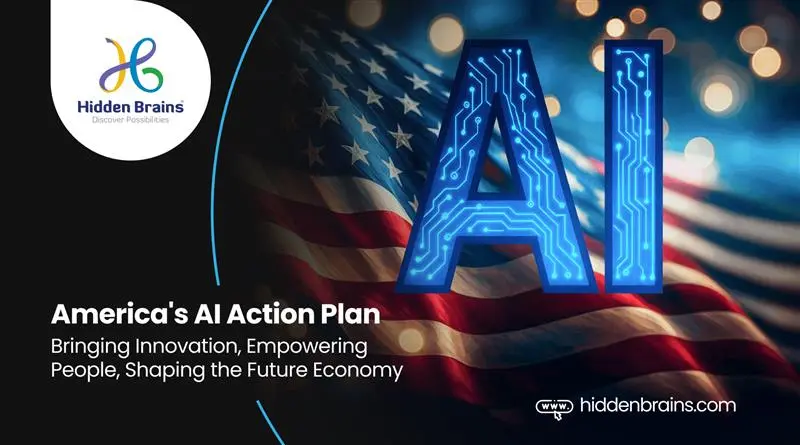
America’s AI Action Plan sets the stage for the U.S. to reclaim the global lead in artificial intelligence through three core pillars: accelerating innovation, building AI infrastructure, and promoting diplomatic leadership. The plan aims to reduce regulatory friction, invest in data centers and chip production, and position U.S. AI policy as a benchmark for fairness and competitiveness. It spells opportunity for businesses, especially in tech, energy, and manufacturing, to ride the AI wave with access to funding, partnerships, and safer, scalable infrastructure. But success hinges on navigating ethical guardrails, infrastructure gaps, and equitable access across sectors and geographies.
The world is moving faster than ever before. ChatGPT, WWDC events latest updates, and now Trump just dropped ‘America’s AI Action Plan’.
Before we unfold the action plan, the huge announcement is built around 3 solid pillars. The administration is solidifying the United States to ensure America sets the technological gold standard worldwide. These are not just steps; they are actionable directives to build a powerful AI system.
This is about giving America a wide-open field, a space where creative and transformative AI applications can lead the world, and where innovation from the private sector is free to grow and succeed.
Let’s understand ABCs and afterthoughts on ‘AI action in plan’
The Core of the America’s AI Action Plan
The plan is built on three foundational pillars designed to accelerate AI development and adoption across industries. More than just a tech initiative, it reflects the momentum of an industrial revolution, the reach of the information age, and the spirit of a modern renaissance.
With shared goals and aligned action, this is a unique opportunity for both government and industry to lead responsibly and drive meaningful change through AI.
1. Accelerating Innovation
The administration is prioritizing speed and agility in AI development by slashing bureaucratic red tape. This means faster approval processes for AI projects, fewer regulatory hurdles, and a focus on getting cutting-edge technologies to market quickly.
For businesses of all sizes, this creates an environment where experimentation and innovation are encouraged, allowing you to integrate AI solutions without being bogged down by excessive compliance requirements.
2. Building the American AI Infrastructure
To support the AI boom, the plan invests heavily in the physical and technological backbone of AI. This includes constructing state-of-the-art data centers to handle the massive computational needs of AI systems and expanding semiconductor fabrication plants to produce the chips that power these technologies.
For businesses, this could mean better access to AI tools and infrastructure, potentially lowering costs and improving scalability.
3. Leading in International Diplomacy and Security
The U.S. is positioning itself as a global leader in AI, promoting American-made AI technologies while countering the growing influence of competitors like China. The plan also emphasizes ideological neutrality, aiming to curb the development of “woke AI” systems that could introduce bias into decision-making processes.
For businesses operating internationally, this focus on neutrality and global leadership could enhance the credibility and marketability of U.S.-based AI solutions.

What does this mean for Your Industry or Business?
The AI Action Plan is poised to have a ripple effect across multiple sectors, creating opportunities for businesses of all sizes. Here’s how it could impact key industries:
Tech Industry
For tech startups, SMEs, and enterprises, the plan is a golden opportunity. Reduced regulations mean you can develop and deploy AI solutions faster, giving you a competitive edge.
Whether you’re building AI-driven apps, automating customer service, or creating predictive analytics tools, the plan’s emphasis on innovation could lower barriers to entry and foster a more dynamic tech ecosystem.
Smaller companies, in particular, stand to benefit from increased competition, as they can now challenge larger players without being pushed by regulatory complexities.
Energy Sector
AI requires immense computational power, which in turn demands significant energy resources. The plan’s push for new data centers will likely increase energy consumption, creating opportunities for businesses in renewable energy and energy efficiency.
If your business operates in the energy sector, you could see growing demand for sustainable solutions to power AI infrastructure. This could also spur innovation in energy storage and grid management, areas where AI itself can play a role.
Economic Growth
By fostering AI advancements, the plan aims to drive economic growth and job creation. For businesses, this means new markets for AI-driven products and services, as well as opportunities to streamline operations and reduce costs.
The ripple effect of AI adoption could lead to increased productivity across industries, from manufacturing to retail, positioning the U.S. economy for long-term growth.
| Healthcare Facility | Use Case | Year of Implementation (Estimated) | Benefits |
|---|---|---|---|
| Mayo Clinic | Drug discovery, medical image analysis, personalized medicine | 2020-2023 | Accelerated drug development, improved diagnostic accuracy, tailored treatment plans |
| Cleveland Clinic | Medical image analysis, predictive modeling, clinical decision support | 2021-2023 | Enhanced diagnostic accuracy, early disease detection, improved patient outcomes |
| MD Anderson Cancer Center | Cancer research, drug discovery, personalized cancer treatment | 2020-2023 | Accelerated cancer research, identification of novel drug targets, precision oncology |
| University of California, San Francisco (UCSF) | Medical image analysis, genomics research, clinical trial design | 2020-2023 | Improved diagnostic accuracy, identification of genetic risk factors, optimized clinical trial design |
| Massachusetts General Hospital | Medical image analysis, natural language processing, robotic surgery | 2021-2023 | Enhanced diagnostic accuracy, improved surgical precision, efficient medical record-keeping |
| Johns Hopkins Medicine | Medical image analysis, drug discovery, personalized medicine | 2020-2023 | Accelerated drug development, improved diagnostic accuracy, tailored treatment plans |
| Stanford University Medical Center | Genomics research, medical image analysis, predictive modeling | 2021-2023 | Advanced genomics research, enhanced diagnostic accuracy, early disease prediction |
| Memorial Sloan Kettering Cancer Center | Cancer research, drug discovery, personalized cancer treatment | 2020-2023 | Accelerated cancer research, identification of novel drug targets, precision oncology |
| National Institutes of Health (NIH) | Biomedical research, drug discovery, clinical trial design | 2020-2023 | Accelerated biomedical research, identification of novel drug targets, optimized clinical trial design |
| Google Health | AI-powered medical devices, health data analysis, personalized healthcare | 2020-2023 | Improved healthcare access, enhanced patient monitoring, personalized treatment plans |
Infrastructure: The Backbone of AI Success
The AI Action Plan isn’t just about ideas; it’s about building the infrastructure to make AI a reality. Key investments include:
- Data Centers: These facilities are critical for processing and storing the massive amounts of data required for AI applications.
- Semiconductor Fabrication Plants: The global chip shortage has highlighted the importance of domestic semiconductor production. The plan’s focus on building these plants ensures a steady supply of AI hardware, which could lower costs and improve access for businesses developing AI solutions.
- Skilled Workforce: The administration is prioritizing training programs to prepare workers for AI-related roles. For businesses, this means investing in AI initiatives. Hire data scientists, machine learning engineers, or dedicated developers to help you maintain AI infrastructure and push goals forward.
These investments create a solid foundation for businesses to build on, ensuring that AI development is sustainable and accessible.
Opportunities for Small Businesses, SMEs, and Enterprises
The AI Action Plan offers tailored opportunities for businesses of all sizes, from small startups to large enterprises. Here’s how each can benefit:
Small Businesses
- Cost-Effective AI Adoption: Small businesses can leverage cloud-based AI platforms, which are becoming more accessible due to infrastructure investments.
- Simplified Compliance: Reduced regulatory barriers make it easier for small businesses to experiment with AI, enabling you to integrate tools like predictive analytics or automated workflows without navigating complex legal requirements.
- Funding and Grants: The plan may include federal or state grants, loans, or tax incentives to support small businesses in adopting AI. This could provide the financial boost needed to invest in AI tools or training.
SMEs
- Scaling Operations: SMEs can use AI to optimize supply chains, enhance customer experiences, and improve decision-making.
- Access to Partnerships: The plan’s focus on collaboration opens doors for SMEs to partner with tech providers, universities, or larger enterprises. These partnerships can provide access to advanced AI tools and expertise, helping SMEs compete in larger markets.
- Market Expansion: With the U.S. pushing for global AI leadership, SMEs can explore exporting AI-driven products or services, tapping into international markets with support from federal initiatives.
Enterprises
- Innovation Leadership: Large enterprises can lead the charge in developing cutting-edge AI solutions, leveraging the plan’s support for rapid deployment and reduced regulations.
- Infrastructure Utilization: Enterprises with the resources to invest in AI can benefit from access to new data centers and semiconductor plants, enabling them to build scalable, high-performance AI systems.
- Global Competitiveness: The plan’s emphasis on international diplomacy positions enterprises to dominate global markets by exporting AI technologies and setting industry standards. This is particularly relevant for industries like finance, healthcare, and logistics.
By aligning with the AI Action Plan, businesses of all sizes can find opportunities to innovate, grow, and compete in an AI-driven economy.
Challenges and Questions to Consider
While the AI Action Plan is full of promise, it also raises important questions that businesses should consider:
- Regulatory Balance: Deregulation is great for innovation, but how will the administration ensure that ethical standards and public safety aren’t compromised? Businesses must stay vigilant to ensure their AI solutions align with best practices and avoid potential backlash.
- Global Competition: The U.S. is in a race with countries like China to dominate AI. Businesses will need to stay agile, adopting the latest AI advancements to remain competitive in a global market.
- Equitable Access: Will small businesses, SMEs, and underserved communities have equal access to AI resources? The plan’s success depends on ensuring that all businesses, regardless of size or location, can benefit from AI advancements.
Addressing these challenges will be critical to maximizing the plan’s impact and ensuring that its benefits are widely shared.
The Global Stage: Positioning the U.S. for Leadership
The AI Action Plan isn’t just about another AI news; it’s about establishing the U.S. as a global AI leader. By fostering international collaborations, the U.S. can set global AI standards and promote American technologies abroad.
This creates opportunities for businesses to build more innovative AI solutions and tap into new markets. Additionally, the plan’s focus on countering China’s influence ensures that U.S. businesses remain at the forefront of the global AI race.
For tech companies, this global focus offers a chance to expand their reach. Whether you’re a small business developing niche AI tools or an enterprise looking for custom software development for enterprises for global industries, the plan’s emphasis on international diplomacy could open doors to partnerships and markets overseas.
Looking Ahead: The Future of AI for Your Business
As the AI Action Plan rolls out, businesses must be proactive to stay ahead. Here are a few steps you can take:
- Invest in AI Skills: Invest in dedicated developers or an AI development service to help make the most of AI and tools.
- Explore Partnerships: Collaborate with tech providers, stay upgraded, and hire AI talents to expand your vision and keep your assets updated ahead.
- Experiment with AI: Start small by integrating AI into specific areas of your business, such as chatbot development, custom AI solutions, and scale up as you gain confidence.
Frequently Asked Questions
How can small businesses leverage the America AI Action Plan?
Small businesses can take advantage of reduced regulatory barriers, access affordable AI tools through cloud platforms, and explore funding opportunities to integrate AI into their operations. This could mean automating tasks, improving customer insights, or developing new products.
What opportunities does the American AI Action Plan present globally?
The plan promotes international collaborations, AI exports, and the establishment of global AI standards. For businesses, this means opportunities to expand into new markets, partner with allied nations, and enhance the global credibility of U.S.-made AI solutions.
Does the American AI action plan open opportunities in healthcare?
While the American AI Action Plan is primarily designed to accelerate AI innovation, strengthen AI infrastructure, and establish U.S. leadership in global AI strategy, healthcare is explicitly recognized as a critical domain for AI deployment and innovation.
The plan lays out multiple pathways where AI can significantly transform healthcare, ranging from clinical workflows to research and patient outcome
What should companies do to be prepared for the American AI Action Plan in action?
The American AI Action Plan is not just a government roadmap; it’s a call to action for business to align, adapt, and act. Companies must bring focus, dedication, and strategic intent to stay in sync with industry shifts and seize emerging opportunities.
From strengthening AI security and ensuring privacy compliance to building an AI-ready workforce and creating new avenues for innovation and deployment—preparation isn’t optional, it’s essential.



How Hidden Brains Can Help?
With over 22 years of experience in innovation and excellence, we’re here to help you lead. Whether you’re building solutions for global markets or need-of-house AI technologies, we are your partners.
AI Strategy & Consulting
Custom Software Development
Mobile App Development
Web Application Development
Cloud Solutions & Migration
Enterprise IT Security