
























































































































































Overview:
The world of commercial real estate is changing fast, and AI is leading the charge. From smarter buildings that manage themselves to automated deal workflows and data-driven insights, technology is redefining how you work, decide, and grow. Imagine saving hours of manual effort while making sharper, faster business decisions. With AI-powered automation, you can track deals, manage properties, and engage clients, all in one seamless platform. Whether you are a property manager, investor, or developer, this is your moment to embrace the future of real estate and stay ahead in an industry that never stands still.
The commercial real estate world is changing fast. Deals that once took weeks now need to happen in days. In 2025, about 69% of commercial real estate leaders say technology is a top strategic priority for their organizations, and it’s easy to see why. AI in commercial real estate alone can cut operational costs and streamline processes. In fact, around 37% of real estate tasks are now automatable, unlocking nearly $34 billion in potential annual efficiency gains for commercial property firms.
Imagine what that means for your business! Faster deals, fewer manual errors, and more time for high-value decisions. The future of commercial real estate isn’t just about buildings; it’s about building real-estate workflow automation that helps you close deals with confidence. That’s where you need real estate software development. If you want to know more, this blog is for you.

The Challenges of Managing CRE Deals Manually
Managing commercial real estate deals isn’t easy. There are too many interlinked operations, too many people, and too much paperwork. If you do things manually, even the most experienced realtors can struggle. Let’s look at some of the biggest challenges that slow down the process.
Multiple Stakeholders, Endless Coordination
Every deal involves buyers, sellers, brokers, legal teams, and finance departments. Keeping everyone in the loop can feel like a full-time job. One missed update or delayed response can easily throw the whole deal off track.
Tedious Paperwork and Contract Management
Contracts, lease agreements, and due diligence documents pile up fast. Managing them manually means endless scanning, emailing, and chasing signatures. It’s time-consuming and leaves plenty of room for mistakes. To streamline this process, you can learn how to parse PDF documents efficiently, which can save time and reduce errors.
Delays from Human Error and Miscommunication
Emails get lost. Files go missing. Tasks slip through the cracks. Manual coordination often leads to confusion and costly delays that could have been avoided with better systems in place. It increases the cost, too. According to many developers, traditional CRE deals can lead to 25% higher operational costs.
No Clear View of Deal Progress
Without an automated system, it’s hard to know where each deal stands. Tracking updates, approvals, or performance metrics becomes a guessing game, making it tough to plan or make quick decisions.
Benefits of Automating CRE Deals
Real estate workflow automation is changing how you manage deals. It helps you move faster, work smarter, and save time.
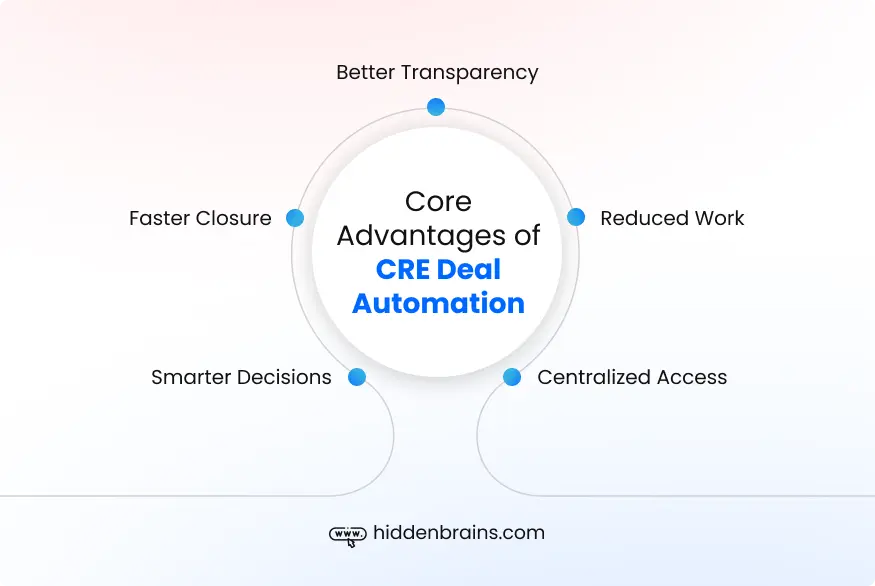
Here is how it makes a difference.
Faster Deal Closure
Automating property management keeps deals moving. You no longer wait for manual follow-ups or approvals. In some areas, about 85 percent of customer interactions now happen through digital systems. That means faster deals and smoother communication.
Reduced Administrative Work
Automation handles routine tasks for you. It sends updates, tracks documents, and manages reminders. In self-storage, this kind of automation has reduced staff hours by up to 30 percent. You get more time to focus on clients and strategy instead of paperwork.
Centralized Data Access
With property management workflow automation, everything stays in one place. You can find documents, messages, and updates without having to search through emails. Everyone involved in a deal works with the same information, which keeps things simple and clear.
Better Transparency
Automation in property management makes every step visible. You can see who approved what and when. It builds trust and helps you stay on top of every deal without extra effort.
Smarter Decisions
Smart buildings already use AI and IoT to cut energy costs and improve security. These technologies play a critical role in the automation of commercial real estate. The same technology helps you make better investment choices. Predictive analytics delivers accurate property valuations and insights that support confident decision-making.
The Role of AI in Commercial Real Estate
AI is transforming how you develop a property. AI in commercial real estate helps you predict, plan, and perform better. AI speeds up, makes it more transparent, and improves accuracy.
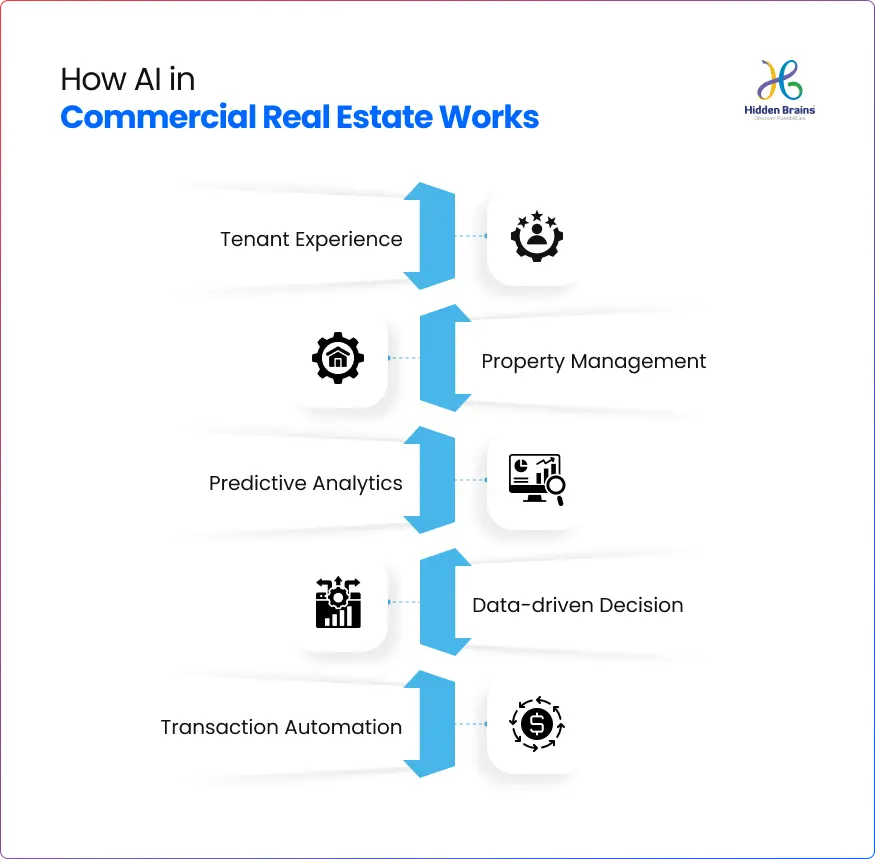
With AI on your side, you can manage properties, close deals, and so on. Let’s explore how AI works in real estate:
Smart Buildings and Property Management
Real estate workflow automation leverages Big Data systems to improve property efficiency. They estimate maintenance requirements and manage a property’s energy consumption. IoT sensors in smart buildings detect and rectify issues before they escalate.
Transaction Automation
The AI leasing assistants can respond to questions, make appointments, and handle contracts. You waste less time on manual labor and spend more time closing deals quickly.
Predictive Analytics
AI analyzes tenant trends, pricing, and market trends. It helps you predict risks and invest smarter.
Data-driven Decision
AI systems transform vast amounts of data into intelligible information. You can take advantage of opportunities and simulate investment conditions in real time.
Customer/Tenant Experience
Voice assistants and AI chatbots provide fast and personalized support. They enhance lead conversions and simplify the interactions with tenants.
Key Features of a Custom CRE Automation Platform
Think of a custom automation platform as your all-in-one command center for real estate deals. Custom-built real estate workflow automation keeps everything organized, connected, and easy to manage. No jumping between tools or chasing updates. Here is what makes it so useful.
Deal Pipeline Management
You can see every deal in one view. From the first client chat to the final signature, you always know what stage it is in and who is handling it. It helps you stay focused and move deals faster.
Document Automation
No more printing, scanning, or endless email threads. With automation, contracts and agreements are created, shared, and signed in minutes. E-signatures and built-in templates make the whole process simple and error-free.
Integrated CRM
Your client relationships become easier to manage. All your calls, emails, and updates are stored in one place. You can follow up quickly, respond on time, and never lose track of a lead again.
Analytics and Reporting
Data becomes your guide. You can track performance, measure ROI, and spot trends right from your dashboard. It helps you make decisions based on facts, not guesses.
Automated Notifications and Alerts
You do not have to remember every deadline or approval. The system reminds you automatically, so nothing gets missed or delayed.
Secure Data Storage
All your files and records stay safe in the cloud. You can control who sees what and access everything anytime, from anywhere. It keeps your business secure and stress-free.
Why Choose Custom Platform Over Off-the-Shelf Solutions?
Off-the-shelf tools can get the job done, but they are built for everyone, not for you. They often miss the small details that make your business unique.
A custom platform fits your real estate workflow perfectly. You can add features you need, remove what you don’t, and scale as you grow. It works the way your team does, making every task faster, smoother, and more efficient.
Steps to Build Your Own Custom CRE Automation Platform
Building your own custom CRE automation platform might sound big, but it becomes simple when you take it step by step. Here is how you can get started.
- Understand your workflow: List the key tasks and challenges you want to automate.
- Set clear goals: Define what success looks like for your team.
- Choose the right tech stack: Pick tools that support growth and flexibility.
- Start small: Build an MVP first, test it, and gather feedback.
- Keep improving: Update features, fix gaps, and refine the platform as your needs evolve.
Real-Life Use Cases of Automation in CRE Deals
Automation is already changing how leading real estate firms work. Here are a few real examples that show what is possible.
JLL: Smarter Lease Management
JLL turned to AI to handle lease abstraction. Their NLP platform reads thousands of contracts and pulls out key terms, clauses, and renewal details. What used to take hours now takes minutes. The team spends less time on paperwork and more time making decisions.
CBRE: Smart Buildings and Virtual Tours
CBRE uses IoT and AI to manage buildings more efficiently. Energy use, security, and maintenance all run automatically. They also offer virtual and augmented reality tours. Clients and investors can explore spaces anytime without visiting in person.
Home Hub Pro: Better Client Engagement
Home Hub Pro built a cloud-based platform for real estate agents. It automates client follow-ups, manages leads, and tracks every deal in one place. Agents save time, build stronger relationships, and grow their business with less effort.

How Hidden Brains Can Help
With over 22 years of experience, Hidden Brains knows how to build technology that works for you. We create custom platforms that perfectly fit your real estate business. Our goal is simple: to help you close deals faster and manage operations with ease. Let’s build your automation journey together.
Frequently Asked Questions
Real estate workflow automation can feel complex, but you have options. Here are some simple answers to the most common questions about automating and managing your CRE operations.
How to automate property management?
Start by using tools that handle routine tasks like rent collection, maintenance tracking, and communication. A custom platform can connect everything in one place, making property management seamless.
What are the benefits of workflow automation for property managers?
Automation saves time, reduces manual errors, and keeps everyone on the same page. It helps you focus on building relationships instead of managing paperwork.
How to automate commercial real estate transactions?
Use automation for document management, deal tracking, and digital signatures. It shortens deal cycles and improves accuracy across every stage of the transaction.
How can I build the best custom software for real estate management?
Start with a clear understanding of your workflow. Work with an experienced tech partner who can design a flexible, scalable system tailored to your goals.
Is automation expensive to implement?
Not necessarily. You can start small with essential features and scale as your business grows. The long-term savings and efficiency gains often outweigh the initial setup cost.



Conclusion
Automation is reshaping the future of commercial real estate. AI in commercial real estate is transforming modern property transactions. With the right custom platform, you can manage deals faster and make smarter decisions. It is time to move beyond manual work and embrace technology. Automation is the key to ensuring long-term success in every transaction.