



























































































































































Summary
The blog explains how businesses can integrate a payment gateway into Android and iOS applications to enable secure online transactions. It outlines the role of payment gateways in processing digital payments. It highlights the steps involved in integration, such as selecting the right gateway, generating client tokens, testing the system, implementing security certifications like PCI-DSS and SSL, and configuring payment processing. The article also discusses merchant account types and best practices to ensure smooth, secure, and reliable payment experiences for mobile app users.
Mobile applications have become an integral part of our lives. With the number of mobile phone users across the globe growing at a constant pace, the number of app downloads is also expected to increase. As of the first quarter of 2021, there are nearly 3.5 million apps available on the Google Play Store. On the other hand, there are around 2.2 million apps on the Apple App Store.
Today, we use mobile applications for different tasks. The use of mobile phones has transcended beyond just making calls or sending text messages. Undoubtedly, mobile app revolution has created a profound impact on our lives. There are several companies providing android development services and iOS development expertise to build your app idea into reality.
The impact of COVID-19 pandemic on app usage has brought about an unprecedented surge in use of mobile applications. However, the pandemic might have just completely transformed the adoption trends while kickstarting mobile usage for activities typically assocaited with laptops or other digital devices.
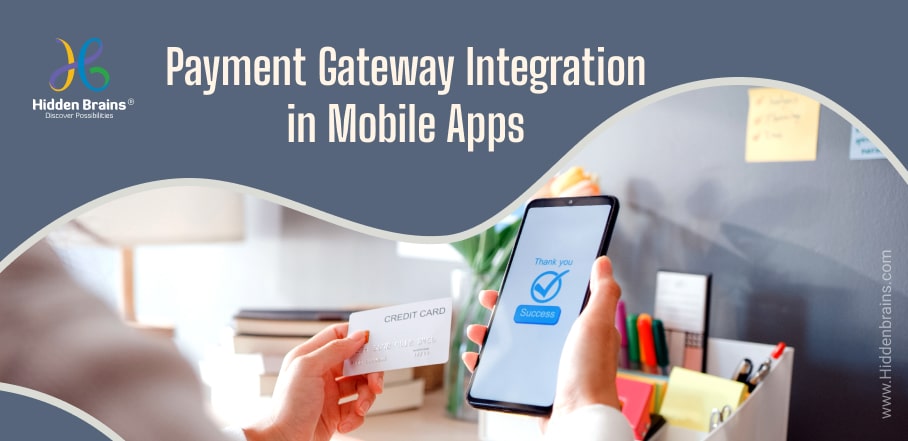
People across the globe are now buying products and services while on the go. If you want your business/organization to leverage the app world, it is important to provide payment gateway integration. In this article, we will guide you through how to integrate a payment gateway into your app via SDK.
What is a Payment Gateway?
Payment gateway technology helps merchants accept payments made with debit or credit cards from customers. In the modern era, payment gateway plays an important role in the digital economy. These systems eliminate hazards of online commerce by empowering customers to make secure payments using credit and debit card information.
While the first payment gateways consisted of simple card-reading devices, they are now sophisticated systems to collect and authenticate PIN numbers, signatures, and other data for merchant transactions. Payment gateway encompasses the physical card-reading devices in retail stores, payment processing portals found in online stores, as well as phone-based payments using QR codes or Near Field Communication (NFC) technology.
How Does Payment Gateway Work
Payment gateway technologies are rapidly changing to meet new consumer tastes and technical capabilities. With the development of chip technologies, the signature phase is making way in favor of a personal identification number (PIN) that is directly entered into the payment gateway hardware. Today, contactless purchases are made using smartphones as a payment device instead of credit cards.
The architecture of a payment gateway will differ depending on whether it is an in-store gateway or an online payment portal.
How to implement payment gateway in Android and iOS Applications
Here is a quick guide to find out the steps on how to begin payment integration work for your Android application or iOS app.
- Step 1: Research
Before you begin, it is important to narrow down on the payment gateway to initiate the integration process. Several factors play an integral role in determining the type of payment gateway such as magnitude of business, industry & geographic factors such as targeted country. - Step 2: Client Tokens
Obtain a client token once the server sends a request from your application. Considering all the best practices, it is crucial to generate a new token upon the launch of an app. It allows authorization and configuration specifics to initialize the SDK. - Step 3: Testing
QA engineers and testers will check the seamless functioning of the payment gateway integration with sensitive credentials & information such as merchant ID, public and private keys. - Step 4: Security Certifications
Improve the level of security by installing certifications that comply with the PCI-DSS. Secure Sockets Layer (SSL) provides comprehensive protection to crucial and sensitive clients’ and merchant’s information. - Step 5: Payment Processing
One-time payment method needs to be configured on the server when processing a transaction. Upon receiving the client’s card data, you move it to the server, and it uses the information to carry out the transaction.
Mobile Payment Gateway Integration Best Practices
Here is a quick checklist of mobile payment gateway integration
Types of Merchant Accounts to Choose
Merchant accounts accept online payments and essentially represent an online bank account for your business, typically holding money from sales in your app before delivering to your regular business bank account. In the case of a payment gateway system—transactions are verified by your provider and sent to your merchant account. The merchant account can be started in different banks and integrated with payment gateways and supported by the bank. Alternatively, you can use credit card payment gateway providers providing customers an all-in-one solution as well as support merchant accounts (e.g. PayPal and Stripe).
Based on your needs and business requirements, here are the two types of merchant accounts you should choose from:
- Dedicated merchant account
Merchant account dedicated solely for your business. While this type of account provides greater control over finances, it is a very time-consuming and expensive process, requiring numerous security checks. - Aggregate merchant account
This type of merchant account indicated that money generated by your business is pooled with different businesses. It is a cell that is shared giving you less control with longer time to withdraw money. On the brighter side, it is not very time consuming or expensive.
Types of Goods You Sell
If you are planning to sell your products or services on mobile, it is essential to follow Play Store or App Store policies. There are guidelines for iOS developers and Google prepared a dedicated API for Android developers. If you’re going to sell physical goods use mobile payment gateway providers.
Security Certificates
In order to deal with banking data, you require PCI DSS certification. As such, PCI DSS certification is a complex verification procedure. The first thing is to ensure that the information system that contains the customer credit card data is always compliant with the demands of PCI DSS.
Frequently Asked Questions
What is a payment gateway in mobile applications?
A payment gateway is a technology that allows businesses to securely accept online payments through credit cards, debit cards, or digital payment methods within a mobile application. It encrypts transaction data and connects the user, payment processor, and bank to complete transactions safely.
Why is payment gateway integration important for mobile apps?
Payment gateway integration enables apps to process digital transactions securely and conveniently. It improves user experience, supports online purchases, and allows businesses to monetize their mobile applications effectively.
What are the main steps to integrate a payment gateway into a mobile app?
The process generally includes selecting a suitable payment gateway, generating client tokens, integrating the SDK, testing the system, ensuring security compliance (PCI-DSS/SSL), and configuring payment processing on the server.
What security measures are required for payment gateway integration?
Developers must implement security certifications such as PCI-DSS compliance and SSL encryption to protect sensitive financial information and ensure secure communication between users, servers, and payment processors.
What types of merchant accounts can be used with payment gateways?
There are two common types: dedicated merchant accounts, which provide full control but require more setup and security checks, and aggregate merchant accounts, which are easier to set up but share processing infrastructure with other businesses.
How can developers test payment gateway integration?
Developers typically use sandbox or test environments provided by payment gateway services. These environments allow QA teams to test transactions, validate credentials, and ensure smooth functionality before going live.


Conclusion
Integrating a payment gateway into Android and iOS applications is essential for businesses that want to offer seamless and secure digital payment experiences. By selecting the right gateway, following proper integration steps, and ensuring compliance with security standards such as PCI-DSS and SSL, developers can build reliable payment systems within mobile apps. Proper testing and optimization further ensure smooth transactions and improved user trust. Ultimately, successful payment gateway integration not only enhances the functionality of mobile applications but also helps businesses scale their digital services and monetize their platforms more effectively.