










































































































Overview
iOS 26 is more than just an update. It’s a game-changer for mobile apps. With Liquid Glass design, Apple Intelligence, and tighter ecosystem integration, users now expect smarter, sleeker, and privacy-focused experiences. Businesses must rethink design, AI features, monetization, and device management to stay competitive. From startups seeking early adoption advantages to enterprises updating security and performance strategies, iOS 26 reshapes expectations across the board. This guide breaks down everything developers, UX leads, and product managers need to know to future-proof their apps, delight users, and maximize growth in Apple’s evolving mobile ecosystem.
Remember when every Apple event had someone asking where the big leap is?
Well, September 15, 2025, changed the game. Apple finally dropped iOS 26. And it is not just an update. It is a whole vibe.
We are talking about the stunning Liquid Glass design for feeling alive interfaces. Apple Intelligence levels up with real-time call screening. It brings live translations. It even adds AI tools for creativity. Suddenly, your users expect apps that think smarter. They want apps that look sharper. They want privacy protected. All at the same time. These changes will undoubtedly have a significant impact on iOS app development services.
So what does this mean for your mobile app business? Let us break it down.
How Apple Intelligence Changes User Expectations?
Apple has always used version numbers. iOS 15. iOS 18. Now iOS 26. But signs point to a shift. Apple may soon adopt a yearly naming format, similar to iOS 2026, for its operating systems.
Why does this matter? Because the iOS 26 developer beta is already gaining traction, the availability of beta downloads is expanding fast through the Apple Developer Beta Program. A yearly naming format now feels inevitable.
And here is what it means for you:
- Clearer updates for users: A yearly format gives users a more straightforward way to link OS features with new Apple devices.
- Frequent, more minor updates: Apps will need regular optimisation. No more waiting for big yearly overhauls.
- Faster user expectations: With Apple Intelligence evolving every cycle, users will expect apps to stay ahead in real time.
For developers and UX leads, this is the future. Smaller, faster updates. Higher user expectations. And zero room for outdated experiences.
Do You Need to Redesign Your App for Liquid Glass?
Apple’s new design language is about fluid layers, translucent panels, and dynamic tab bars that move with intent. If you ignore it, your app looks like it belongs in 2023.
But this is more than a fresh coat of paint. Motion now adds depth. Backgrounds adapt in real time. Even small details like typography and scaling affect readability and accessibility. Designers and front-end devs cannot skip the testing phase.
Your checklist. Test typography scaling. Check tab bar behaviour under motion. Play with layered backgrounds with stress-test animation performance on real devices.
If any of this feels off, users will feel it too. Liquid Glass is here. Your UI has to keep up.
Also Read: iOS App Development Cost: A Comprehensive Breakdown
How Will It Impact the Integration with Apple’s Ecosystem?
With iOS 26, Apple keeps the ecosystem tightly woven together. Compatibility spans from iPhone 12 models onward, so that most users can jump in.
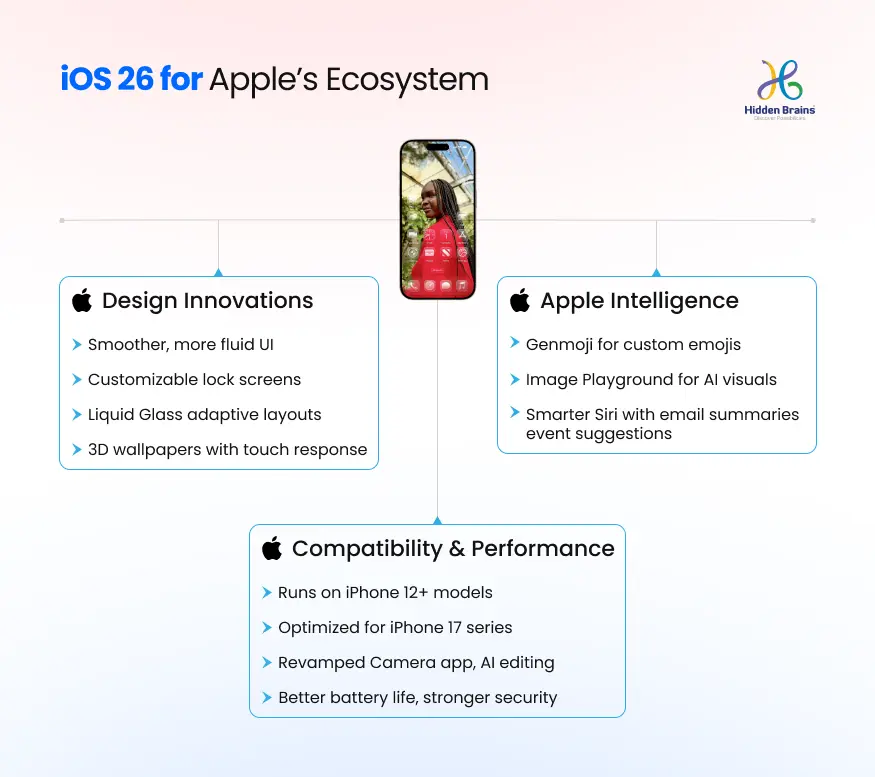
But the real magic shows on the iPhone 17 series, where speed, visuals, and battery life shine brightest.
Early adopters suggest starting with:
- Revamped Camera app for quicker shots and AI-powered editing tools.
- Battery life improvements that offset the initial drain seen by some users.
- Stronger security patches that defend against emerging cyber threats.
And then comes Liquid Glass. Safari now adapts layouts on the fly and will soon adapt to World Knowledge Answers, an AI-powered search engine to deliver dynamic, context-aware results that enhance user experience. Home screens get 3D wallpapers that respond to touch. Even lock screen clocks and quick-access buttons are now customizable.
Users on X are already buzzing about the fluidity and personal touch these bring.
But the real star is Apple Intelligence:
- Genmoji creates custom emojis on demand.
- Image Playground crafts AI-generated visuals for creative projects.
- Smarter Siri now summarizes emails and suggests calendar events automatically.
All these features blend seamlessly across apps and devices, pulling users deeper into Apple’s world. For businesses, it means one thing. Your apps must feel native to this ecosystem or risk being left behind.
Also read: Siri’s AI Makeover 2026: What Apple’s Search Means for Business
How Will It Affect Your Subscription and Monetization Strategy?
With iOS 26, your monetization playbook needs a refresh. Why? Because Apple just handed you new tools to make apps smarter, faster, and more personal.
Here is what matters:
Monetization now depends on experiences that feel seamless and personal. iOS 26 gives you the tools. The question is how fast you adapt.
What Must Enterprises Change in Device Management and Security?
With iOS 26, enterprise must rethink how they manage devices and protect data.
- On-device AI keeps user information local. Enterprises must update their security policies to leverage this privacy-friendly approach while remaining compliant with data protection laws.
- New Security Patches address emerging cyber security threats. Apple’s release notes highlight improved encryption and proactive threat detection, so delaying OS adoption is no longer an option.
- On-device Machine Learning with enhanced Core ML brings predictive text, personalized content, smart filters, and object detection directly into apps while keeping data secure on the device.
- Unified Management across iPhones, iPads, and Macs simplifies app permissions, remote wipes, and user provisioning.
For enterprises, iOS 26 is not just another update. It is a call to modernize mobile device management and embrace AI-powered solutions, privacy-first security models.
Also read: WWDC 2025 Highlights: Apple’s Biggest Announcement
How Can Startups Get a First-mover Advantage on iOS 26?
Apple loves early adopters. Apps that embrace iOS 26 features often get showcased, driving downloads and brand buzz. Startups should:
- Stay Compatible and Reliable: Ensure smooth performance across all supported devices.
- Boost App Store Visibility: Use new design elements and AI tools to stand out.
- Future-proof Your App: Align with Apple’s yearly update cycle to stay ahead.
- Leverage AI Features: Personalization, smarter Siri, Genmoji. The more native you feel, the better your chance to shine.
How You Can Stay Ahead with Hidden Brains?
At Hidden Brains, we leverage 22+ years of legacy to help businesses stay ahead. We prepare apps for future compatibility, smarter version control, and seamless adoption of Apple’s latest innovations, partnering with us to be an early flagbearer in the evolving iOS ecosystem. Hire iOS app developers from us right now!
Frequently Asked Questions
iOS 26 updates app design, AI features, and ecosystem integration. These FAQs answer common questions to help developers and businesses stay compatible, future-ready, and maximize opportunities with Apple’s latest innovations.
Will iOS 26 break my existing app?
Most apps keep working, but UI/UX and some integrations may need updates; test on iOS 26 devices.
Do I have to rebuild features to use Apple Intelligence?
Not always. Start with lightweight on-device features (suggesters, summarizers) and iterate.
Is Liquid Glass mandatory?
Not mandatory, but apps that don’t adapt may feel visually outdated and risk lower engagement.
Will CarPlay require special certification?
No special certification, but CarPlay compatibility and driving-safe UX rules must be followed.
Do StoreKit changes mean new revenue opportunities?
Yes. New StoreKit types and App Store Connect updates give merchandising and subscription options; plan testing.

Conclusion
iOS 26 lays a new path for the mobile application business, combining more intelligent AI, innovative design, and better integration into the ecosystem. Adopting at an early stage will result in visibility, future-readiness applications, and monetization ability. These changes will help businesses to remain competitive, spur growth, and become leaders in the dynamic mobile world of Apple.