































































































































Summary:
AI-powered cloud application development is changing the game for businesses everywhere. Imagine building apps faster, cutting costs, and delivering personalized experiences without worrying about servers or downtime. That’s the power of combining AI and the cloud. From Netflix’s smart recommendations to Pfizer’s lightning-fast data analysis, companies are using AI-driven cloud services to innovate, scale, and stay ahead.
Automation, predictive analytics, and real-time insights make it easy to create smarter, faster, and more secure applications. If you want to see how the future of app development looks, this guide will walk you through every trend, benefit, and real-world example.
Software development has come a long way in the last 20 years. Before, coding and fixing bugs took a lot of time and effort. Now, things are faster and wiser. New technologies, automation, and digital tools have completely changed the future of software development. These changes are shaping the future of this industry.
Just a few years ago, software updates took months. Now, with automation, companies roll out new features and bug fixes in days or even hours. AI, cloud tools, and DevOps have made software development easier. They help reduce mistakes and make work faster and more productive.
But let’s face the reality. Strong competition exists among businesses in addition to rapidly increasing user demands. Software product development prediction allows businesses to outperform their competition in both the present and the future. The center role goes to automation, driving this transformative change.
The automation software market is expected to grow to $823.86 billion in 2029 at a compound annual growth rate of 11.7%. Technologies like IoT and Edge computing are helping to reduce manual work, cut down on mistakes, and speed up innovation.
Let’s dive into how you can make fintech outsourcing work for your growth journey in 2026.
Benefits of Automation in Software Development
Automation is changing the future of software development. It’s making things faster, smoother, and more reliable. It also enables solutions and various tools like AI reel maker etc. to streamline your work. Working with an experienced enterprise software development company can help you improve your business. A strategic collaboration of such can put you ahead of your competitors.
Let’s break down the core benefits of using automation:
- Speed and Efficiency
Time is money, and automation saves plenty of it. Software development tasks like testing, debugging, and deployments used to take hours. Now, they can be done in just minutes. This allows developers to focus more on building new features instead of wasting time on repetitive work. Faster development means quicker releases, and that’s a win for everyone.
- Fewer Errors, Better Quality
Humans make mistakes. That’s just how it is. But automation helps catch those mistakes before they become big problems. Automated testing and code reviews ensure issues are found and fixed early, making software more reliable and stable.
- Cost Savings
Less manual work means lower costs. When tasks like testing, security checks, and deployments run on their own, companies need fewer resources to get the job done. That’s why automation is a smart investment. It saves money in the long run.
- Scalability & Flexibility
As businesses grow, so do their software needs. Automation makes it easy to scale without a significant increase in effort. It takes care of repetitive tasks, so teams can focus on being creative, building new ideas, and solving real problems.

The Rise of Automation in Software Development
Automation is changing how software is built, tested, and deployed. Today’s technology makes it easier to handle repetitive tasks. It helps teams avoid mistakes and work faster. As a result, businesses can develop software more quickly and with greater confidence.
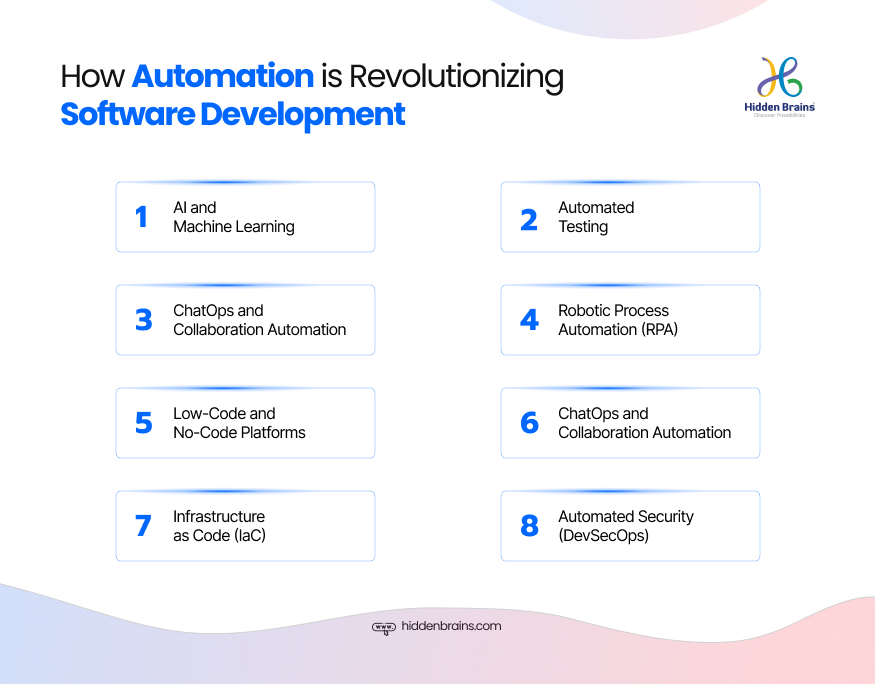
Smart tools now help developers spend less time on manual work and more time on complex tasks. But what’s causing this change? The answer lies in key technologies that are shaping the future of software development.
AI and Machine Learning in Development
AI-powered tools are changing how software is built. They can write code, find bugs, and improve existing code through automation. With AI, the future of software development looks faster, wiser, and more efficient.
Technologies: Three AI tools are becoming popular among developers. GitHub Copilot helps with code completion. Amazon CodeGuru handles automated code reviews. Tabnine offers smart code suggestions. These tools make coding faster and easier.
Impact: Using these tools helps developers work faster and write better code. They also reduce the time needed for debugging and improve the overall quality of the code.
DevOps and Continuous Integration/Continuous Deployment (CI/CD)
DevOps is about helping development and operations teams work better together with automation. With CI/CD pipelines, code changes are tested and deployed automatically. It makes the whole process faster, smoother, and more reliable.
Technologies: Tools like Jenkins, GitLab CI/CD, CircleCI, and GitHub Actions make testing and deploying apps much easier. They automate the process and help teams work faster with less effort.
Impact: This system brings many benefits. It helps avoid mistakes, delivers software faster, and keeps the quality high.
Low-Code/No-Code Platforms
Another big change in software development is using low-code and no-code tools. These tools help people make apps, even if they don’t know how to code. They use simple drag-and-drop editors and ready-made parts. You don’t need to write much code, or any at all.
Technologies: Some popular low-code and no-code tools are OutSystems, Mendix, Microsoft Power Apps, and Bubble. These tools help people build apps without needing to write a lot of code.
Impact: With low-code and no-code tools, anyone can build apps fast. You don’t need to know much about coding.
Infrastructure as Code (IaC)
The task of IaC is to automate the deployment and management of the infrastructure through code, hence the provision of the same environment. Therefore, the developers need not worry about installing a server manually, which may enhance scalability and apparent uniformity with the help of the line code.
Technologies: Some popular tools for setting up servers with code are Terraform, AWS CloudFormation, Ansible, and Pulumi. These tools make it easy to build and manage servers without doing it by hand.
Impact: It helps manage servers easily. It also stops mistakes that happen when people do things by hand. This makes it easier to build apps that can grow on the cloud.
Automated Testing
Automated testing tools help check if software works properly. They do this job faster and better than people. These tools also help find mistakes quickly so developers can fix them without slowing down their work.
Technologies: Selenium, Cypress, Jest, and TestComplete are a few tools for automated testing.
Impact: It helps test more parts of the software. It also lowers the chances of old mistakes coming back. Developers get faster feedback, so they can fix problems quickly.
Robotic Process Automation (RPA)
RPA (Robotic Process Automation) helps with boring and repetitive tasks like entering data. It also checks if software systems are working properly. This saves people time so they can focus on more important work.
Technologies: The three main RPA platforms are UiPath, Blue Prism, and Automation Anywhere. These tools help automate repetitive tasks.
Impact: RPA helps developers by doing boring tasks for them. This lets developers focus on important projects and finish work faster.
ChatOps and Collaboration Automation
ChatOps combines team chats and work tasks in one place. It uses automation to help teams work better and faster. This new technology can change how software is made in the future.
Technologies: Slack, Microsoft Teams, and Mattermost with bots like Hubot and Botkit.
Impact: Using this new idea makes it easier for teams to work together. It also helps them stay focused and work better as a group.
Automated Security (DevSecOps)
Security is added to the software building process using automated tools and steps.
Technologies: Tools like SonarQube, OWASP ZAP, and Snyk automatically find and fix security problems in software.
Impact: Businesses use methods that make apps safer. This helps lower risks and follow important rules.
The Factors Influencing the Future of Software Development
Automation is helping software development move faster. In the next 10 years, big changes will happen in how software is built and managed.
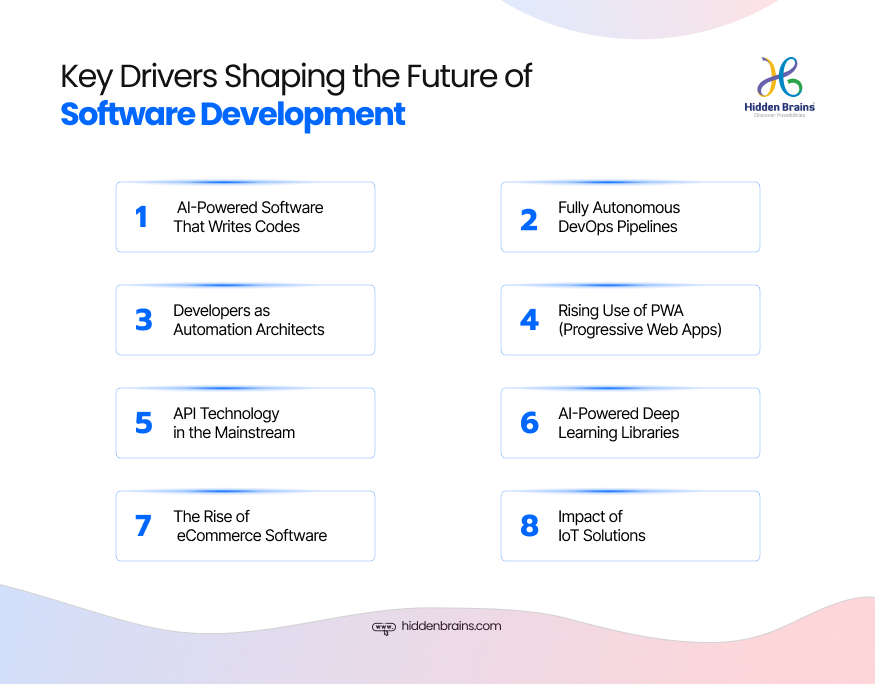
The future of software depends on using automation to help developers work better.
AI-powered Software That Writes Codes
Thanks to AI, we can imagine the kinds of software that can write codes in the future! AI is getting smarter, and soon, we’ll see systems that can generate entire applications with minimal human input. Developers will focus more on guiding AI rather than writing every single line of code. The future of software development with AI will soon become a reality.
Fully Autonomous DevOps Pipelines
DevOps automation already helps make work easier. In the future, it will do everything on its own. From writing code to updating software, it will all happen smoothly without people needing to do it. This means faster updates, fewer mistakes, and better software
Developers as Automation Architects
Automation will do the boring coding work. Custom software development experts will have new jobs. They will plan how automation works, teach AI, and make tools better. This will help everyone work faster and easier.
Rising Use of PWA (Progressive Web Apps)
Web apps have changed a lot with Progressive Web Apps (PWAs). They load fast and work even without the internet. They feel like mobile apps but don’t need to be downloaded from app stores.
API Technology in the Mainstream
APIs are very important for making modern software. They help different apps connect and work together easily. As more businesses use cloud systems, APIs will be even more important for building software that can grow and change.
Emergence of AI-powered Deep Learning Libraries
The software application development services of the future operate under the dominant power of AI as it advances beyond current marketplace trends. Developers use deep learning libraries that simplify application development, learn autonomously from experience and adapt to improve performance.
The Rise of Ecommerce Software
Modern society will continue using online shopping services. The fast evolution of ecommerce software occurs due to the growing number of businesses shifting operations to the Internet. The automation in ecommerce will redefine software development entirely in the coming years.
Impact of IoT Solutions in Software Development
IoT rests in all corners of our modern world, including smart homes as well as connected automobiles. With an increasing number of devices connected to the network, the software demands enhanced capabilities to handle enlarged data volumes. The expansion of the IoT market necessitates developers who will create secure, efficient, scalable solutions.

Make Your Business Future-ready with Hidden Brains
The future of making software is changing a lot. It will be smarter and use more robots. We help businesses stay ahead with new and strong software at Hidden Brains.
If you need smart apps, easy workflows, or software that works for a long time, we can help you.
We are experts with more than 22 years of experience. We make innovative software for all kinds of businesses, big or small. We help businesses grow and be seen around the world.
We build all types of software, offer software integration services, and give good advice.
Our work helps your business get ready for the future.
Frequently Asked Questions
Automation is moving fast, and many businesses and developers have questions. Today, AI helps with testing, writing code, and running DevOps automatically.
If you want to see how automation shapes the future of software development, read these common questions and answers.
How is automation influencing software development future?
Automation is now widely used in software development because it can help write code, test, launch, and monitor apps. It saves time and makes work faster and easier. It also helps reduce mistakes. With automation, developers can spend more time thinking of new ideas instead of repeatedly doing the same boring tasks.
Will automation replace software developers?
No, automation will not replace developers. It will help them do their jobs better.
AI and automation can take care of boring, repetitive coding tasks. It gives developers more time to focus on important work, like designing systems, improving processes, and managing projects that use AI.
In the future, developers will use these tools to work smarter, not to worry about being replaced.
What are the key automation technologies in software development?
Some tools help work go faster. AI means smart computers. DevOps helps teams work together. Low-code tools help make apps easily. Robots can do some jobs. Some tools set up computers with code. Other tools find mistakes fast.
These tools help developers work faster. They improve the quality of software. They also make it easier to grow and scale software projects.
How does automation improve software quality?
Automation is very important in software development. It helps make work faster and better by handling repeated tasks.
Automated testing, code reviews, and security checks can quickly find bugs and weaknesses. It helps keep the software safe, stable, and high-quality.
What impact does AI have on software development?
AI is changing software development in big ways. It can write code, find bugs, improve workflows, and predict system failures.
AI tools, like deep learning and automated DevOps, help make software development faster and smarter.
What industries benefit the most from automation in software development?
Automation is used in almost every industry. It includes finance, healthcare, retail, manufacturing, and IT.
In software development, automation helps with complex tasks. It reduces manual work and makes things run more smoothly and efficiently.
How can businesses prepare for automation in software development?
Switching to AI technologies offers many benefits for companies. Automation helps improve how businesses work. It also saves time and money by handling boring, repeated tasks.
With AI, companies can also connect faster with top software experts. It helps them move forward quickly and confidently with automation.
Is automation expensive to implement?
At first, automation may need some investment. But in the long run, it saves money. It reduces manual work, speeds up development, and reduces mistakes.
The extra efficiency companies gain often saves more money than the initial cost.



Final Note
The future of making software will use robots, smart computers, and new tools.
Businesses that use these tools will do better. Those who don’t may fall behind.
From smart computers helping to write software to robots doing many jobs, how we make software is changing fast.
To do well, people need to learn how to use these tools. Robots will not take jobs from developers. Instead, they help developers make software faster and better.
The future is here. Are you ready?
