




























































































































































Overview:
Step into the future of real estate with immersive virtual experiences that are changing how we buy, sell, and explore properties.
From VR home tours and AR staging to AI-powered neighborhood simulations, 2026 is all about smarter, faster, and more engaging property deals.
Discover how VR-powered apps are boosting sales, reducing costs, and attracting global buyers, and how innovative software partners like Hidden Brains are helping real estate businesses turn imagination into real-world success.
Imagine walking through your dream home, turning corners, opening doors, feeling the vibe, all without leaving your couch. Sounds futuristic? Not anymore. By 2026, virtual real estate will become the new normal. The VR in real estate is set to skyrocket from $4.12 billion in 2025 to $67.40 billion by 2034, growing at a 36.55% CAGR.
And that’s not all, the virtual tour market is racing toward $74.36 billion by 2030, at a 34.3% CAGR. Buyers love convenience. Agents love speed. Developers love reach. The real estate world is stepping into a new era, where virtual experiences are not just add-ons but the foundation of tomorrow’s property deals. If you want to know how real estate software solutions can help you incorporate virtual experiences in 2026, this blog is for you.

Create Virtual Experiences That Sell Homes Faster
Contact UsWhy are Virtual Experiences Expanding in Real Estate
The real estate world isn’t just changing, it’s evolving. People don’t have the time or patience for endless site visits anymore. They want clarity, speed, and trust: all from their screens.
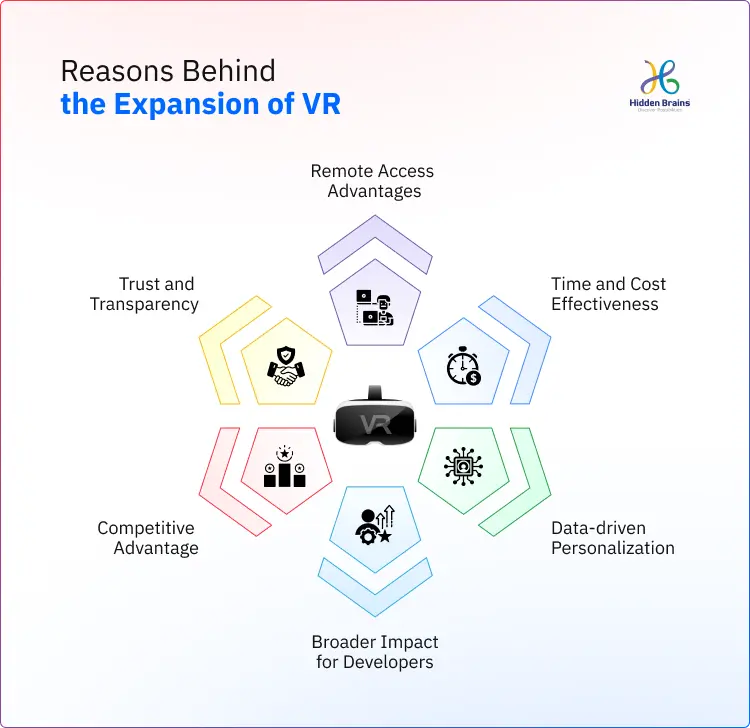
That’s why virtual experiences are taking over. Let’s see what’s driving this shift.
1. Remote Access
With VR tours, buyers can now explore homes from anywhere. No flights. No appointments. Just click, walk through, and compare properties in real time. Agents can reach clients worldwide, breaking every geographical barrier and opening doors to international investors.
2. Time and Cost Efficiency
VR in real estate saves everyone’s time and money. Fewer physical visits mean less travel, smaller marketing costs, and no need for endless printed brochures or expensive staging. It’s faster, smarter, and cleaner.
3. Data-driven Personalization
AI-powered VR property tools now let buyers customize their experience, change layouts, play with wall colors, or try new furniture styles. Every interaction gives agents valuable insights to tailor follow-ups and close deals faster.
4. Trust and Transparency
Commercial real estate VR tours show the real deal, not edited photos. Buyers can zoom in on finishes, see actual spaces, and feel confident about what they’re buying. It builds credibility and removes the guesswork.
5. Competitive Advantage
Listings with virtual tours stand out. They grab attention and convert faster. In fact, such listings get up to 87% more views than regular ones. Tech-savvy clients love the real estate virtual reality experience and remember who offered it.
6. Broader Impact for Developers
Real estate developers can now showcase off-plan projects long before the first brick is laid. Investors can visualize, tenants can explore, and sales begin even before the property exists physically. That’s the power of virtual expansion.
What Virtual Experience Really Means in 2026 for Real Estate
Virtual experience in real estate is no longer about spinning a 360° photo or watching a dull video tour. It’s about living in the property, feeling the light, space, and energy, before it even exists. By 2026, immersive tech is turning “imagination” into “interaction.” Let’s see how.
Immersive VR Property Walkthroughs for Remote Buyers
Buyers now slip on lightweight VR headsets like Meta Quest and instantly step into a 3D-rendered home. They can walk through hallways, inspect kitchen finishes, or check how sunlight hits the balcony at 8 AM, all from another continent.
For international investors, this kills the travel barrier. A buyer in Dubai can tour a Miami condo in minutes; lights, sounds, everything. Agents using VR report up to 30% faster closings and 65% more qualified leads.
AR-enabled Customization and Virtual Staging
Imagine pointing your phone at an empty room and instantly seeing it furnished. AR tech makes that happen. With apps built on a VR app development framework, buyers can drop a sofa, change wall colors, or test out kitchen layouts, all in real time.
It’s perfect for off-plan projects, where spaces don’t yet exist. AR staging reduces buyer hesitation by 40% and cuts traditional staging costs (often $2,000+) to almost zero.
MR Social Tours for Collaborative Decision-making
Buying a home is emotional and often a group decision. Mixed Reality (MR) lets families and investors explore together, no matter where they are. Using MR glasses like Microsoft HoloLens, everyone joins a shared virtual space, walks through rooms, and adds notes like “Let’s turn this into a study.”
With 5G-powered sessions, MR tours cut miscommunications and boost conversion by 25% for family-centric listings.
AI-powered Predictive Neighborhood Simulations
In 2026, VR and AR will go beyond homes. They visualize neighborhood futures. Apps show buyers how parks, metro lines, or schools will evolve around a property. Investors can even simulate future value changes using AI and real-time data.
This feature helps spot undervalued areas early. Investors use predictive simulations for smarter buying and driving faster deal closures.
Agent Training and Client Pitch Simulations
It’s not just buyers benefiting from virtual real estate. Agents are training in VR, too. They can rehearse client meetings, practice pitches, or host mock open houses in lifelike settings. For clients, it’s pure transparency. AR overlays reveal wiring, plumbing, or eco-friendly features before construction.
Industry leaders like CBRE use VR modules to upskill teams, reducing sales errors by 30%. For clients, seeing the invisible (like energy systems or insulation) builds trust.
Why Do You Need a Real Estate App with VR Capabilities?
In 2026, your buyers aren’t just looking for listings; they’re looking for experiences. A website with static images is no longer enough. They want to step inside properties, explore, and connect emotionally, all before scheduling a visit.
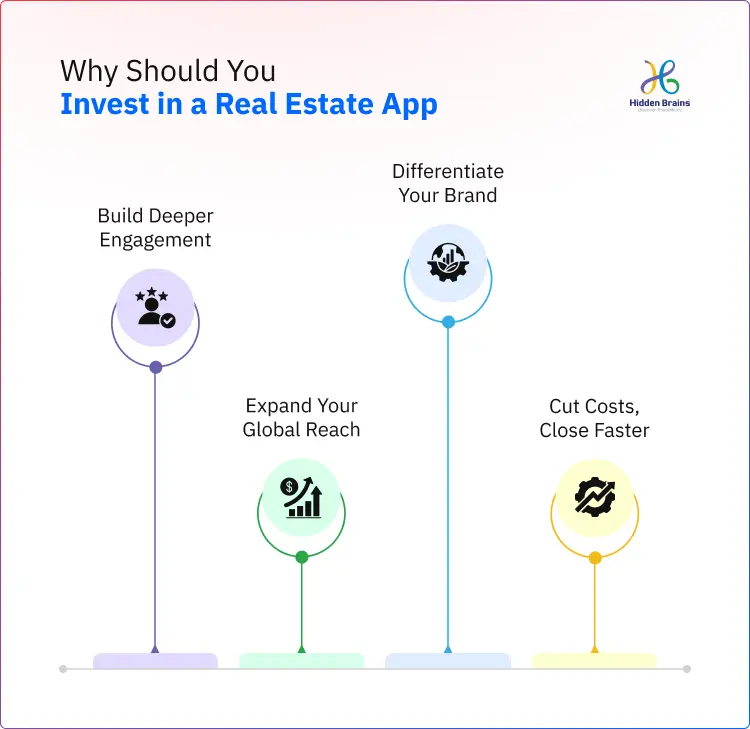
That’s where a custom-built real estate app with VR capabilities becomes a game-changer.
Build Deeper Engagement
VR-enabled apps turn passive viewers into active explorers. When buyers can “walk” through homes, visualize decor, and understand layout flow, their engagement increases. This creates stronger emotional connections and faster decisions.
Expand Your Reach Globally
Your listings no longer need to stay local. With immersive property tours, you can attract international investors and remote clients who can experience every property as if they were there. That means more qualified leads and higher conversions.
Cut Costs, Close Faster
Virtual staging, automated walkthroughs, and AI-driven recommendations drastically reduce real estate virtual tour pricing. Moreover, it reduces travel time and marketing costs. Agents can focus on serious buyers, not endless tours.
Differentiate Your Brand
A VR-powered app positions your business as tech-forward, innovative, and client-focused. It sets you apart from competitors relying on traditional marketing. Furthermore, it helps you win trust in a crowded marketplace.
The Tech Making It Possible
The rise of virtual real estate isn’t magic; it’s smart technology made simple. Here’s what’s powering it all:
- Affordable VR/AR headsets: Devices like Meta Quest and Apple Vision are now within reach for users.
- AI and 3D mapping tools: They create lifelike digital twins of real homes in just hours.
- Cloud streaming: Delivers high-quality virtual tours smoothly on phones, tablets, or laptops.
- IoT integration: Let users control lights or doors virtually during tours.
Behind it all are skilled custom software development teams. Who builds seamless, scalable platforms. Connecting real estate vision with real-world innovation.
The Real Business Impact
Virtual house tours aren’t just futuristic; they’re transforming real estate right now. They save time, cut costs, and open doors to global buyers. Developers close deals faster, even before a property is built. Emotional engagement drives stronger buyer confidence and quicker decisions.
Here’s how industry leaders are already winning with VR:
- Airbnb uses VR staging to boost vacation rental engagement, increasing booking conversions.
- IKEA introduced VR home design tools, helping customers preview furniture and driving higher online sales.
- Toll Brothers lets buyers customize layouts through VR home tours, accelerating pre-sales of unfinished homes.
- Emaar Properties (Dubai) deploys VR staging for off-plan properties, enabling personalized buyer experiences.
- WeWork and other commercial firms use VR tours to speed up leasing and cut physical site visits.
How Hidden Brains Can Help You
With 22+ years of experience, Hidden Brains builds powerful, immersive real estate solutions tailored to your business goals. From VR-enabled apps to AI-powered property platforms, we turn ideas into experiences that sell. Empower your real estate vision. Partner with Hidden Brains today.
Turn Property Showcases into
Immersive Buyer Journeys

Frequently Asked Questions
The future of real estate is virtual, interactive, and data-driven. Still have questions? Here are some quick answers to help you understand how VR works in real estate.
Do buyers still visit properties physically after virtual tours?
Yes, but fewer times. Virtual tours help shortlist properties faster, so buyers only visit their top choices in person.
Are VR property tours expensive to set up?
Not anymore. With affordable headsets and modern tools, real estate businesses can start with minimal investment.
Can small real estate firms use VR technology?
Absolutely. Even small agencies can use mobile-friendly VR or AR apps to create immersive listings and attract more leads.
Is virtual real estate secure for client data?
Yes. Reliable platforms use encrypted systems and secure cloud servers to protect buyer and seller information.
Will VR replace real estate agents?
Never. VR enhances the experience, but human guidance and trust remain irreplaceable. Agents use VR to connect better and close smarter.



Conclusion
VR property experiences are redefining real estate. They make buying faster, selling smarter, and exploring effortlessly.
In 2026, this isn’t the future; it’s the new normal. Those who adapt now will lead the change. It’s time to go beyond listings and create experiences that truly sell.