























































































































































Quick Summary
This blog explains how businesses can match their digital strategy with real goals like growth, efficiency, and customer satisfaction. It breaks down the steps to create a clear roadmap, avoid common mistakes, and choose the right technologies. If you’re not sure where to start or how to measure success, this guide can help you plan the right way.
Is your digital strategy actually driving your business forward? Or just keeping you busy?
Many enterprises chase tech trends without asking: Does this support your real goals?
A digital strategy roadmap should do more than look good. It should fuel growth, streamline operations, and create real value. If your strategy feels disconnected from your business priorities, it’s time to reassess and refocus.
In this blog, we’ll discuss how to connect your enterprise digital strategy with what matters to your business goal. Ready to stop guessing and start growing? Let’s dive in.
What is Digital Strategy?
A digital strategy is a well-researched and predefined plan that guides how enterprises should utilize digital technologies and resources to achieve their business goals.
Knowing a business’s digital strategy is essential if you are looking to align it with your goal. But before that, some similar terms overlap and need differentiators for clarity.
What are the Benefits of Aligning Your Digital Strategy with Business Goals?
Have you decided to rethink your digital roadmap strategy? If not, the benefits will surely make you take the next step.
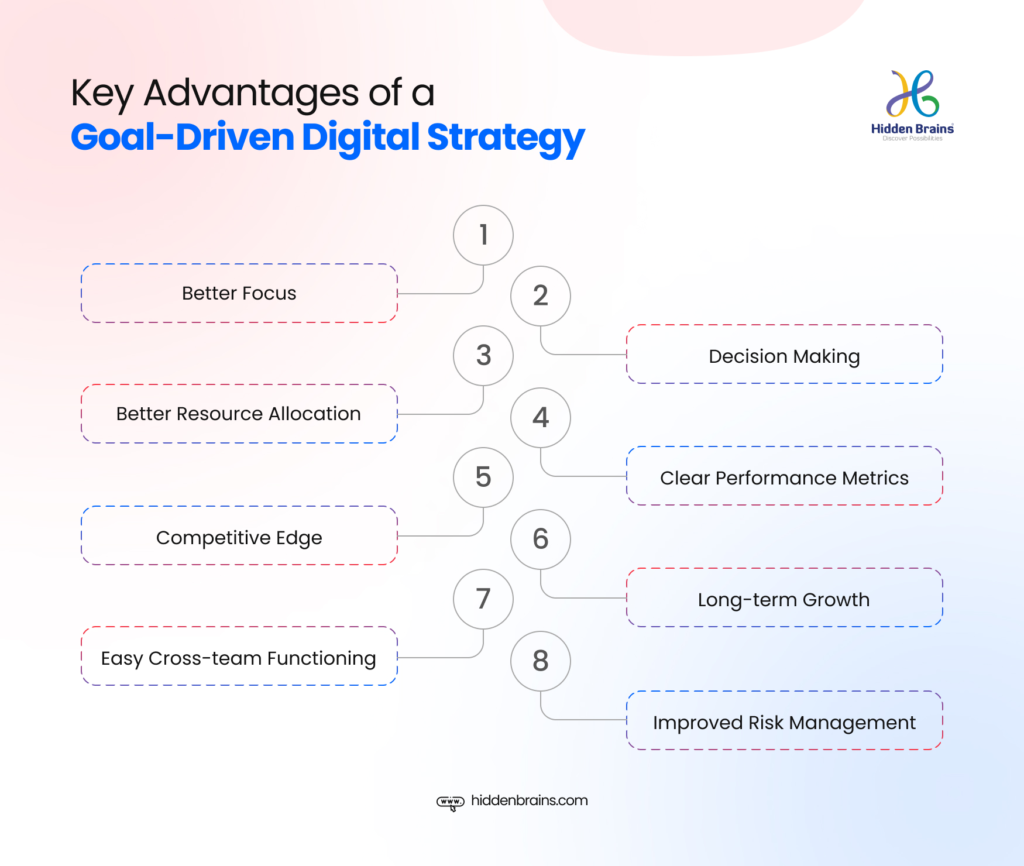
Better Focus
A big enterprise is not limited to one task. It might have multiple agendas, a long list of to-dos, and various plans for business growth. There is a high possibility of getting lost in the chaos of multiple targets. Hence, having a clear focus and a predefined digital strategy roadmap helps to achieve results.
Faster Decision-making
A well-aligned enterprise digital strategy keeps the plan clear and avoids confusion. The entire team is in sync. They can make quicker, better decisions, confident that their digital actions are tied to their desired outcomes.
Easier Cross-functional Collaboration
Aligning plans with goals makes cross-functional collaboration easier. It ensures that all teams, including IT, marketing, and leadership, move in the same direction and work toward a shared mission.

Clear Performance Metrics
Digital strategy development with a set business goal makes one thing. KPIs are directly linked to the impact of the business. Helps measure performance clearly and maintains transparency.
Competitive Edge
Businesses that align their digital technology strategy with their goal are efficient and agile compared to their competitors. They are innovative and responsive, which allows them to outpace their competitors.
Long-term Growth
One of the highlighted benefits for enterprises is long-term growth. They have a clear vision and aligned mission. By following the roadmap properly, the whole enterprise is walking towards achievable and profitable growth.
Better Resource Allocation
Aligning your enterprise digital strategy with the end goal gives a clear idea of the resources needed. Management can clearly define tasks, allocate resources, and a timeline.
Improved Risk Management
Organizations get a clear picture of any upcoming risks. It includes technology limitations, resource planning, budget overruns, and security issues. All of this can be managed with an action plan in place.
What are the Key Elements of Enterprise Digital Strategy?
An effective business digital strategy is not just about using the latest technologies. It’s about using the right tools, having the right team, and, in the future, the right approach to grow your business. Here are some key elements to include in your digital strategy roadmap.
Clear Business Objectives
Begin with a very simple question, “Why?”
- What do you want to achieve?
- Know if it is improving customer experience, increasing efficiency, or getting new revenue channels.
- Your goal drives your decisions.
Customer-centric Approach
Any tech updates in your digital transformation strategy roadmap should simplify customers’ lives.
- Conduct thorough research on their pain points.
- Use data to understand their needs.
- Personalize their experiences with your services.
- Ensures that technology adds value.
Scalable IT Infrastructure
Your digital roadmap strategy must take into account your IT infrastructure. Ensure it is ready for the significant changes you are planning. Build a tech stack that grows with you.
- Cloud platforms, APIs, and micro services facilitate easier scaling.
- Replace outdated legacy systems that hinder your progress.
- Plan for migration if necessary.

Data & Analytics
Data collection and analysis are core to any digital strategy. With AI development and integration, the new era is about making data-driven decisions. Hence, one of the key elements is the integration of AI and data analysis at every step.
- Invest in tools that collect, store, and analyze data.
- Utilize insights to inform decisions, enhance services, and discover new opportunities.
Cybersecurity Framework
Security is not an option. It is a must-have for every small, growing, or established enterprise. Your digital transformation strategy roadmap must include technological advancements to safeguard data and systems.
- Blockchain development for data integrity, tamper-proof records, and software update authenticity.
- Quantum Cryptography to secure communication and provide unhackable channels.
- Implement multi-layer security and regular audits.
1. A cyber attack occurs every 39 seconds, or approximately 2,244 times a day.
2. The average cost of a ransomware attack service is only $66.
3. Any account credentials can be purchased for $1 on the dark market.
4. Human error accounts for 68% of all data breaches.
Agile Technology Stack
Timely transformation is the key to sustainable success. Go for tools that can adapt.
- Modern, flexible software development platforms.
- Low-code or no-code platforms to move faster.
- It helps you respond to change without having to start from scratch.
Integration & Automation
Connect your systems to ensure they work together seamlessly. IoT development can help you with connected devices. Automation can reduce manual tasks and help you achieve your enterprise goal quickly.
- Automate routine tasks.
- Improve efficiency and reduce errors.
- Easy management with connected devices.
Continuous Innovation
A good enterprise digital strategy is never set in stone. Adapting innovation – Flawless integration – Better results.
- Test which technologies can be a good fit for your business.
- Assess if your business and team are ready for the change.
- Encourage testing and learning.
When these elements come together, your digital strategy becomes more than a plan—it becomes a powerful engine for growth.
How Can Hidden Brains Help Create Your Digital Strategy Roadmap?
Get maximum business impact with a robust digital transformation strategy roadmap. Being a digital transformation expert with vast industry experience, Hidden Brains can help.
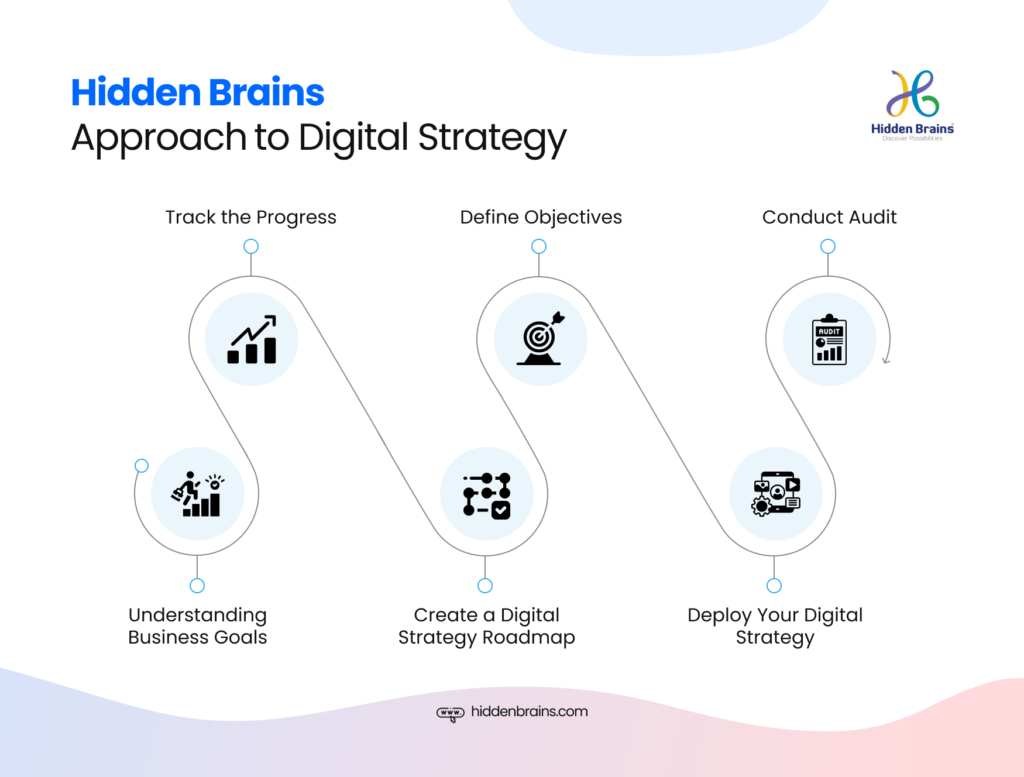
Understanding Business Goals
An enterprise can have different goals. Some of these benefits include increased profits, more customers, business expansion, increased resources, and many others. The very first step is to understand the goal. Ensure the goals are specific, measurable, and achievable within a set time frame.
Key Steps
- Define Duration – Start by defining short-term goals. Set both mid-term and long-term goals that your enterprise aims to achieve.
- Set Achievable Goals – While setting your enterprise goals, be practical and realistic. It will help drive business success.
Conduct an Audit
Conduct an in-depth audit before you start aligning your enterprise’s digital roadmap. It will help you understand the flaws in existing operations. Review your current digital assets, including your website, mobile app, and social media platforms. Knowing their strengths and weaknesses will also give them opportunities to improve. Including these findings in your strategy can drive success.
Key Steps
- Assess Platforms & Tools – Check whether the existing tools and technologies are equipped to follow the digital technology strategy. Evaluating current systems and platforms contributes immensely to achieving the next goal.
- Competitor Analysis – Conduct a competitor analysis to understand their strategies for achieving a similar goal.
Define the Objectives of the Business Digital Strategy
A roadmap can only be created if there is a destination. Define objectives based on the end goal to achieve and ensure they are measurable, allowing for easy tracking of progress.
Key Steps
- Set KPIs – Define key performance indicators according to the target. For example, if you want to increase the profit of your eCommerce platform, your key performance indicator (KPI) should be online sales or the number of converted customers.
- Fulfill Customer Needs – Ensure your enterprise digital strategy aligns with your target audience and customer needs.
Create a Digital Strategy Roadmap
Having a strategy that fits well with the enterprise’s agenda is essential. A business digital strategy must include resource allocation, a timeline to achieve the objective, and milestones to check progress.
Key Steps
- Focus on the Prime Agenda – Avoid losing focus with multiple agendas in play. Define the primary agenda and create a roadmap that works towards achieving it.
- Allocate Resources – Properly allocate all resources, including manpower, budget, technology, and other necessary resources.
Deploy Your Strategy
Once the digital strategy roadmap is in place, the next step is perfect execution. Execute your initiatives and integrate them into your current enterprise operations.
Key Steps
- Utilize Technology – Leverage the right digital tools to support your strategy, such as marketing automation, data analytics, or CRM systems.
- Cross-team Support – Ensure all the departments and teams work together to achieve the desired goal.
Track the Progress
Achieving the business goal with the planned digital roadmap strategy needs continuous tracking. Review the performance, track the progress, and determine if it aligns with the plan. Regular reviews ensure that the team follows the roadmap properly and the plan is in motion. To support this process, using the best AI productivity tools can help automate progress tracking, generate actionable insights from performance data, and streamline task management, ensuring your digital roadmap stays on course efficiently.
When considering succession planning for your digital roadmap strategy, remember to identify key team members who can step into critical roles to ensure continuity and success.
Key Steps
- Monitor Actions – Note all key actions the team takes and whether they are effective in achieving the end goal.
- Training – Training the team to understand the goal, use necessary tools, and follow the strategy accurately.
Success Stories of Enterprises That Aligned Their Strategy and Goal
This blog is not just words of knowledge. Top enterprises have adapted it and achieved success. Let’s explore their secret sauce of success.
One of the largest enterprises in the oil and gas industry, operating in over 700 retail stores. They planned for complete digital transformation, having the following business goals in mind:
Business Goals
- Streamline different activities by using platforms that are centered around data and are critical to business.
- Provide an all-around view of the activities undertaken throughout the value chain.
- Be a vital guide to evaluate each activity and distinguish advanced jumps.
Hidden Brains created a digital transformation strategy roadmap and helped them achieve the following:
- 100% – Automation across 5 terminals
- 100% Going digital
- 60% Increase in efficiency
- 40% of cost saving
- 50% Unwanted activities eliminated
- 75% Improvement in turn-around time
- 30% Increase in revenue
- 20% Increase in loading capacity
- 10k+ Employee onboarded
- 500k+ Warehouses & microsites
- 500B+ Naira transactions through the system
- 60% Improved customer satisfaction
- 100k+ Documents managed
- 36M+ Employee hours accounted
- 700 Retail stations automated
- 500+ Loading tickets processed per day
CreditPulse
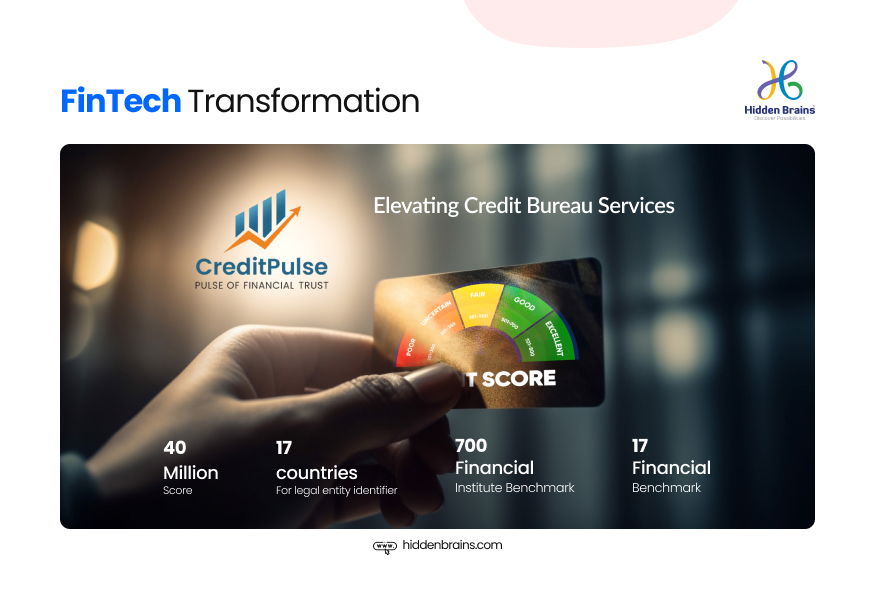
It is a leading national credit bureau licensed to provide consumer and commercial world-class products and services. They were looking for a digital transformation from the old system to a modern one. They wanted to simplify compliance regulations, address data security concerns, and deliver seamless platform integration.
Business Goals
- Automated workflows
- High-end security & compliance
- Enhancing user experience
- Advanced insights
- Modernization of legacy systems
By understanding clients’ requirements and creating a foolproof plan, Hidden Brains helped CreditPulse achieve FinTech transformation.
Results Achieved
- 62% Increase in revenue
- 40% Increase in business clients
- 94% User satisfaction rate
- 1.5M Increased user registration
To learn more about how they achieved success through proper planning and expert execution, read the full case study.

Frequently Asked Questions
Know everything about creating a strategy for your business success. We have covered any query that you might have in mind.
What is a digital strategy roadmap?
A digital strategy roadmap is like a GPS for your business in the digital world. It helps you plan how to use technology to reach your goals.
Here’s what it usually includes:
Your business goals. (short-term and long-term)
The tools and technologies you’ll use.
A timeline of actions and milestones.
Who’s responsible for each task.
It keeps your team focused and moving in the right direction.
Why is it important to align digital strategy with business goals?
If your tech plans don’t match your business goals, you may end up wasting time and money. When aligned, you get better results and faster growth.
Here’s why it matters:
Better focus: Every tool and task supports your main goal.
Smarter spending: You only invest in what truly helps.
Faster decision-making: Everyone knows the direction.
Stronger results: Clear alignment drives real business impact.
How do I create a digital strategy roadmap for my business?
Start with a clear picture of where your business is and where you want it to go.
Follow these simple steps:
Define your goals. (e.g., grow sales, improve customer service)
Assess your current tools and systems.
Find the gaps where new tech can help.
Choose the right solutions. (software, platforms, automation, etc.)
Create a timeline with action steps and deadlines.
Track progress and adjust as needed.
How often should I review or update my digital roadmap?
Technology changes fast—and so do business needs. It’s smart to check and update your digital roadmap regularly.
We recommend:
Review every 6–12 months.
Update after big changes like new goals, products, or market shifts.
Keep listening to customer feedback and team input.
Staying updated helps you stay ahead.
Can small businesses also benefit from a digital roadmap?
Absolutely! A digital roadmap isn’t just for big companies. It can be even more helpful for small businesses.
Here’s how it helps:
Stay focused on what matters most.
Use limited resources wisely.
Avoid costly mistakes.
Grow faster with smart digital tools.
Even a simple plan can make a big difference.
Who can help me build a digital strategy roadmap?
You don’t have to do it alone. A trusted technology partner like Hidden Brains can guide you from start to finish.
We help with:
Understanding your business needs.
Recommending the right tools and platforms.
Building a step-by-step digital strategy.
Supporting your growth with scalable tech solutions.
Ready to build your roadmap? We’re here to help.


Wrapping Up
Taking many steps in different directions leads nowhere. But taking the same steps in one direction leads to the destination. So, give your business the right direction. Create a well-researched enterprise digital strategy roadmap and achieve your business goal. A clear plan, correct technological choices, the right software development partner, and continuous monitoring. These are all the elements needed for digital success.