





























































![Sales & Distribution [Oil & Gas]](https://www.hiddenbrains.com/blog/wp-content/themes/blankslate/assets/images/sales_and_distribution-icon.74d08193.svg "Sales & Distribution [Oil & Gas]")

![Fluid Terminal Management [Oil & Gas]](https://www.hiddenbrains.com/blog/wp-content/themes/blankslate/assets/images/fluid_terminal_management-icon.4b3a27a4.svg "Fluid Terminal Management [Oil & Gas]")


![Sales & Distribution [Oil & Gas]](https://www.hiddenbrains.com/blog/wp-content/themes/blankslate/assets/images/sales_and_distribution-icon.74d08193.svg?1.0.0 "Sales & Distribution [Oil & Gas]")
![Fluid Terminal Management [Oil & Gas]](https://www.hiddenbrains.com/blog/wp-content/themes/blankslate/assets/images/fluid_terminal_management-icon.4b3a27a4.svg?1.0.0 "Fluid Terminal Management [Oil & Gas]")






















































































Quick Summary
This blog is designed for UAE business leaders navigating digital transformation, written by our tech expert. It highlights why most transformation initiatives fail, focusing on resistance to change rather than tech limitations. Tailored to the UAE’s 2030 vision of becoming a digital and AI hub, the blog covers key areas like overcoming resistance, bridging skills gaps, managing costs, and selecting the right technologies. Offering practical, battle-tested strategies and real case studies, it helps businesses avoid common pitfalls and provides actionable steps for successful transformation.
Let us be direct: your competitors are moving faster than you think.
Global digital transformation spending will reach $3.9 trillion by 2027. That’s not just big companies throwing money around; it represents a fundamental shift in how business gets done.
The UAE gets this. The government has set clear targets: grow the digital economy from 12% of non-oil GDP to 20% by 2030. AI alone is projected to contribute $96 billion to the UAE’s economy by 2030, roughly 14% of GDP.
Here’s what this means for you: while you’re reading this, competitors are already implementing. Dubai supported 1,210 digital startups in a single year, up 120% from the previous year. The UAE has attracted data center investments exceeding $1 billion in 2026, with AWS, Microsoft, Oracle, and Google all expanding their regional presence.
Your customers already expect digital-first experiences. Your employees want modern tools. Your board demands efficiency. The window for digital transformation in the UAE is closing faster than many organizations expect.
The Real Challenges (And How to Beat Them)
In our 22+ years helping businesses transform, we have learned one uncomfortable truth: only 35% of digital transformation initiatives succeed.
That means two out of three projects fail. These aren’t small failures; they’re expensive mistakes costing millions in wasted investment, lost time, and damaged morale.
Why? Because leaders underestimate complexity. They buy technology expecting magic. But digital transformation isn’t about technology alone; it’s about people, processes, culture, and yes, technology too.
Let’s understand the digital transformation in the UAE, its specific challenges, and how to overcome them.
UAE businesses face specific challenges:
People resist change because it’s genuinely scary. Will their job exist tomorrow? Can they learn fast enough? Will they look incompetent? These fears are real.
Skills gaps create bottlenecks. Up to 90% of organizations will face IT talent shortages, with projected losses from skills gaps alone reaching $5.5 trillion in 2026.
Costs spiral unexpectedly. Data migration takes twice as long as planned. Legacy system integration requires expensive custom work. Training needs expand.
Security threats multiply. Cybercrime will cost the world $23 trillion in 2027, up 175% from current levels. Every new digital touchpoint is a potential vulnerability.
Infrastructure shows its age. Legacy platforms don’t talk to modern applications. Integration becomes a nightmare of workarounds. And then you call it a ‘code red’.
Each challenge can be solved with the right approach.
Why Resistance to Change Kills Transformation
Think of your organization as a ship. Technology is the engine, but your people are the crew. If the crew fears the new navigation system, it doesn’t matter how powerful the engine is.
Resistance isn’t about stubbornness. It’s about fear.
Nearly half of business leaders identify employee resistance as their top transformation challenge. But here’s the disconnect: 74% of leaders believe they include employees in change strategies, while only 42% of employees feel they have any say.
That gap? That’s where transformation dies.
How to Turn Resistance into Momentum:
- Strategize: Begin by creating a clear strategy that aligns with your goals and sets the foundation for transformation.
- Hire Talents that Align with Your Goals: Bring in individuals who not only possess the right skills but also share your vision and are passionate about driving change.
- Build Infrastructure that Actually Works: Ensure your infrastructure is scalable, efficient, and able to support digital transformation, making the transition smoother and more effective.
- Deliver Quick, Visible Wins: Start with use cases that show time savings and measurable results within 60-90 days. Change the narrative from “extra work” to “this makes my life easier.”
- Invest in Continuous Learning: Digital transformation requires constant upskilling. Nearly a third of business leaders haven’t enrolled employees in digital training over the past two years. This is a critical oversight.
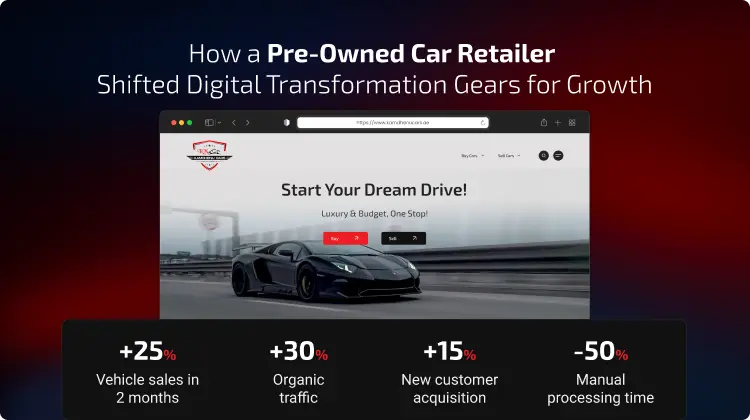
Kamedhenu, a legacy-owned automotive car retailer, sought digital transformation in the UAE for its operations. Overhauling their entire system required a collaborative team effort, and that’s where we came in. We aligned with their team, trained them, and helped modernize their operations. The result? A 50% increase in new customer acquisition.
Bridging the Skills Gap Without Breaking the Bank
Here’s an uncomfortable truth from my experience: you can’t hire your way out of the skills gap.
There simply aren’t enough qualified people, and the competition for digital talent is fierce. Even if you could hire them, integration takes time.
But here’s the insight most leaders miss: they often get caught in a cycle of hunting, retaining, handpicking, and deploying multiple hires. What if we told you that instead, you could hire dedicated developers who work in your time zone, specialize in your niche, and are the perfect fit for your industry?
Build a sustainable skills program:
Audit honestly. Map current capabilities against future needs. Where are the biggest gaps? Which skills are most critical?
Build, don’t just buy. Focus on building a team aligned with goals. They invest in your success. They understand your niche and industry.
Partner strategically. You don’t need every capability in-house. Partner with specialized firms for expertise you’ll use occasionally, such as the need to hire Oracle Fusion developers in the UAE for specific enterprise resource planning modernization efforts. With our easy, flexible engagement model, scale up or down as needed.
Hire for potential and attitude. When hiring externally, don’t just chase years of experience with specific tools. Those tools will change. Look for problem-solvers who are curious and adaptable.
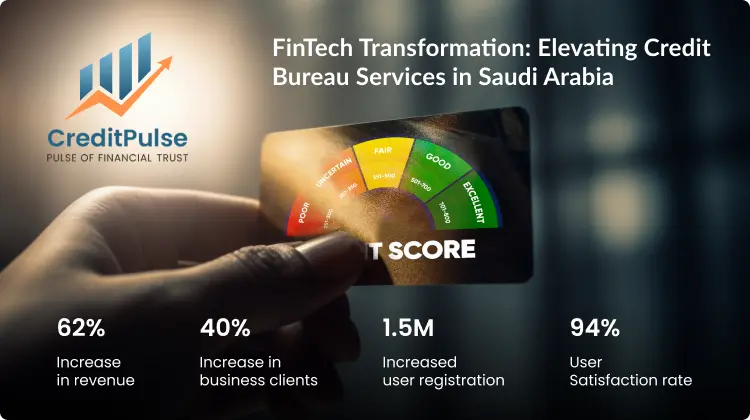
We partnered with CreditPulse, a financial firm in Saudi Arabia, to deliver end-to-end solutions, from understanding client requirements to data analytics and scalable, secure systems. We focused on understanding their needs and crafting a strategy to build a solution that solved their challenges.
With 5 years of collaboration and 2 years of on-site deployment by a 15-member team, we revolutionized credit scoring and risk management for Credit Pulse.
Cost Management Strategies That Actually Work
Let’s talk about money. By 2028, digital transformation spending will reach nearly $4 trillion globally. But here’s what that number doesn’t tell you: much of it delivers minimal return because it’s poorly managed.
We have seen companies spend millions on systems that sit unused. We have watched organizations buy cutting-edge technology before understanding what problem they’re solving.
Control Costs Without Compromising Outcomes
Start with business outcomes, not technology features. Don’t ask “What technology should we buy?” Ask “What business problem are we solving?” Then find the most cost-effective solution.
Phase the investment. Don’t try to transform everything at once. Identify high-impact, lower-complexity initiatives first. Generate quick wins. Use success to fund the next phase.
Leverage cloud economics. Pay-as-you-go models reduce upfront infrastructure costs and improve scalability, making them particularly attractive for SMEs and fast-growing enterprises. Choose a cloud infrastructure that aligns with your business goals.
Prioritize integration over replacement. Your legacy systems often contain valuable business logic and data. Sometimes the right answer isn’t replacing them, it’s integrating them with modern platforms with small integrations.
Build realistic budgets with contingency. Most transformation projects run 30-50% over initial estimates. Build that reality into planning. Surprise budget requests destroy board credibility.
Measure and adjust continuously. Track metrics monthly. If something isn’t delivering value, adapt or abandon it. Sunk cost fallacy kills companies.
Unlock Value with Legacy System Modernization
Refine Strategy Now!
Modernizing Your Infrastructure with Strategic Improvements
Your infrastructure is probably your biggest bottleneck. And you might not even realize it.
Most UAE businesses run on a mix of modern and legacy systems. Cloud platforms have co-existed with on-premise servers since 2010. Cutting-edge AI tools try to pull data from databases that predate smartphones.
The UAE has invested heavily. The data center market is growing at nearly 10% annually, reaching AED 9.7 billion by 2029. But your internal infrastructure might not be ready to use it.
Address Infrastructure Systematically:
Conduct an honest audit. Map every system. Identify dependencies. Understand data flows. Know what you’re working with before making decisions.
Prioritize by business impact. You can’t fix everything at once. Focus on infrastructure that directly impacts customer experience or creates significant business risk.
Adopt a hybrid approach. Not everything needs to move to the cloud immediately. Keep stable legacy systems running while migrating high-value workloads to modern platforms.
Invest in integration capabilities. Build or buy middleware and API management platforms. Good integration architecture lets you modernize incrementally.
Plan for security from day one. Don’t treat security as an afterthought. Every infrastructure decision should include security implications from the start.
The UAE data center market is expected to grow at 3.43% annually through 2027. Take advantage of this momentum. Use regional cloud platforms. Reduce latency. Comply with data residency requirements.
What Are Effective Strategies to Manage Costs During Digital Transformation?
If you’re leading an SME, you’re probably thinking: “This sounds great, but we don’t have enterprise resources.”
You’re right. And that’s actually your advantage.
Large organizations move slowly. They have legacy infrastructure. They have bureaucracy. They have layers of stakeholders. You have agility. You can move faster. You can adopt new technologies without navigating approval mazes.
The UAE has created an ecosystem specifically to support SME digital transformation. The Dubai Chamber of Digital Economy provides resources and support. Government initiatives offer funding and training.
Maximize limited resources:
Start with low-code/no-code platforms. You don’t need a team of developers. Modern platforms let business users build applications with minimal coding.
Leverage SaaS. Avoid massive upfront investments. Pay monthly for what you use. Scale up or down as needed. Get enterprise capabilities at startup prices.
Focus obsessively on quick wins. You can’t afford long payback periods. Choose initiatives that deliver tangible value within 3-6 months.
Build strategic partnerships. You don’t need to do everything in-house. Partner with specialized firms for capabilities you’ll use occasionally.
Prioritize ruthlessly. Large companies can work on 20 initiatives simultaneously. You can’t. Pick 2-3 initiatives with the biggest impact. Execute brilliantly before moving to the next set.
Leverage government support. The UAE offers various programs to support SME digitalization. Research available grants, training programs, and advisory services.
Security: Ensuring It’s a Priority Without Compromising Speed
Here’s what keeps C-suite executives awake: one security breach can destroy years of progress.
Cybercrime will cost the world $23 trillion in 2027, a 175% increase from recent years.
Every organization asks: “How do we transform without making ourselves more vulnerable?”
It’s the right question. Digital transformation does expand your attack surface. But ignoring transformation to avoid security risks is like refusing to drive because cars can crash.
The security landscape for 2026 and beyond:
By 2027, 17% of all cyberattacks will involve generative AI. Attackers use AI to craft convincing phishing emails, automate vulnerability scanning, and scale attacks faster than human defenders can respond.62% of organizations have already experienced deepfake-based attacks. Zero-trust in security is now a must-have.
Build security from day one:
Adopt a zero-trust architecture. The old model of “trust everything inside the firewall” is dead. Verify continuously. Grant minimum necessary permissions.
Implement identity-first security. 97% of organizations experiencing AI-related security incidents lacked proper access controls.
Encrypt everything. Data in transit. Data at rest. Data in use.
Build security awareness. Up to 40% of security incidents trace to employee behavior. Training isn’t a checkbox; it’s continuous education.
Plan for breaches, not just prevention. Build incident response plans. Test them regularly. Know exactly what to do when (not if) a breach occurs.
Leverage AI for defense. Organizations using AI in security operations report $1.9 million in cost savings compared to those that don’t.
Secure your supply chain. 30% of breaches involve third-party vendors. Vet vendors carefully. Require security standards. Monitor continuously.
The UAE government understands these risks. The cybersecurity market in the UAE is expected to grow at 11.1% annually, reaching $4.51 billion.
Security isn’t a separate workstream; it’s integrated into every decision from the beginning.
Technologies That Will Actually Drive Growth in 2026
Not every advanced technology matters for your business. Some create a real competitive advantage. Others are expensive distractions.
Technologies that actually make an impact and drive value.
Artificial Intelligence and Machine Learning
AI spending will reach $309.6 billion in 2026. The real story isn’t spending, it’s capability.
AI is moving from pilot projects to platform integration. Companies aren’t running small experiments anymore. They’re embedding AI throughout operations.
The UAE is at the forefront. With AI expected to contribute $96 billion to the economy by 2030, the government and the private sector are aligned.
What this means for your business: If you can collect data, you can apply AI. Start with high-impact use cases. Customer behavior prediction. Demand forecasting. Process automation.
Don’t build from scratch. Leverage pre-built AI services from cloud providers. Focus on business outcomes.
Cloud Computing and Hybrid Infrastructure
More than 50% of enterprises have migrated the majority of their workloads to the cloud, with adoption accelerating.
By 2028, cloud computing will shift from technology disruptor to business necessity.
The trend for 2026: hybrid and multi-cloud strategies. Use multiple providers for different workloads. Maintain some systems on-premises while moving others to the cloud.
Don’t view cloud as all-or-nothing. Start with workloads that benefit most: variable demand applications, development environments, and collaboration tools.
Internet of Things (IoT)
48% of large enterprises already use IoT technology. In the UAE, IoT is transforming industries. Smart city initiatives. Predictive maintenance in manufacturing. Real-time inventory tracking.
IoT generates data that reveals patterns invisible to human observation. Equipment failures before they happen. Customer behavior in physical spaces. Supply chain bottlenecks in real-time.
Automation and RPA
Hyper-automation is becoming mainstream. Organizations are automating complex, end-to-end workflows.
Every repetitive process is a candidate. Data entry. Report generation. Invoice processing. Customer onboarding. Compliance checks.
ROI is often dramatic, with cost reductions of 30% or more in automated processes.
5G and Advanced Connectivity
By 2027, connectivity improvements will enable entirely new application categories. Low latency and high bandwidth enable real-time applications that weren’t previously practical.
Blockchain and Digital Assets
Dubai’s Blockchain Strategy aims to move 100% of government documents to blockchain by 2030. Dubai targets 90% of transactions to be cashless in 2026.
Focus on practical applications, contract automation, supply chain visibility, and digital identity verification.
The Combinations That Create Advantage:
Real magic happens when you combine technologies. AI analyzes IoT data to predict equipment failures. Blockchain is creating audit trails for AI decisions. Automation executes actions based on AI recommendations. Cloud provides infrastructure for all of it.
How Do Businesses Keep Momentum After Go-Live?
Here’s the hardest truth: transformation never ends.
The finish line keeps moving. The technology you implement today needs to be upgraded tomorrow. Processes you optimized this year need reimagining next year.
This is where most organizations stumble. They execute a successful initiative. Everyone celebrates. Then momentum stalls. The team disbands. People return to old habits. Competitors catch up.
Build a culture of continuous innovation:
Make experimentation safe. Create space for controlled failure. Innovation requires risk tolerance.
Dedicate resources to innovation. Don’t expect it to happen “when people have time.” Create dedicated innovation time.
Measure what matters. Track business outcomes. Customer satisfaction. Revenue growth. Cost reduction. Time to market. Keep focus on value, not activity.
Stay connected to customers. Create feedback loops. Monitor behavior. Adapt quickly to changing preferences.
Invest in continuous learning. The skills that matter today won’t matter in three years.
Celebrate progress regularly. Transformation is hard. People need to see that their effort produces results.
Scan the horizon constantly. Assign someone to monitor emerging technologies and competitive moves.
Review and refresh regularly. Schedule quarterly strategy reviews. What’s working? What isn’t? What’s changed? Adapt quickly.
The UAE’s digital ecosystem continues evolving rapidly. Dubai’s Metaverse Strategy aims to create 40,000 virtual jobs by 2030. Web3 technologies are being integrated into government services. Flying taxi services are set to launch in 2026.
This pace isn’t slowing; it’s accelerating.
Want to Build for
the UAE’s 2030 Vision?

How Hidden Brains Can Help
The digital transformation race in the UAE is accelerating, and competitors are already taking the lead. As your customers demand more and your competitors innovate rapidly, the window for effective transformation is shrinking. With over 22 years of experience, we understand the challenges of navigating this shift. Success lies in crafting a clear strategy, fostering committed leadership, and balancing bold ambition with practical execution.
1. Strategic Digital Transformation Assessment
Schedule a 90-minute consultation where we’ll analyze your current state, identify high-impact opportunities, and create a customized roadmap. We’ll help you avoid the pitfalls that kill most transformation initiatives.
Book a 2 Hour Free Consultation
2. GCC Technology Implementation Services
We’ve helped dozens of enterprises and SMEs across the GCC implement transformation initiatives that actually deliver ROI. From AI integration to cloud migration to complete digital overhauls, we bring hands-on experience that keeps projects on track and on budget.
Don’t let your organization become part of the 65% that fail at digital transformation. The strategies in this guide work, and we have seen them succeed hundreds of times across industries, company sizes, and markets.
The question isn’t whether to transform. It’s whether you’ll lead the change or watch competitors pull ahead.
Contact us directly to discuss your digital transformation journey in the UAE.

Ready to Make Your Move?
Digital transformation in the UAE is moving fast, and businesses need to act quickly to stay competitive. With the right strategies, leadership, and flexibility, success is within reach. While the challenges are real, the right guidance and technologies can help you navigate them and fuel growth. As your competitors move forward, the time to act is now.