









































































































































Quick Summary
The decision to use end-to-end and integration tests is not an either-or one but a matter of balance. This blog separates both types of tests and explains how and why combining them results in more successful applications. Based on real-life experience with the best practices, problems, toolsets, and trends in AI-aided testing, you will understand how to enhance quality, speed, and UX. Are you new to building an app startup or enterprise? These two testing strategies will help you conserve time, minimize bugs, and maximize performance. Are you ready to make your app battleproof? Dive in!
Being a business owner who decided to invest in the software, the smooth functioning of your product is out of the question. That is why knowing end-to-end testing vs Integration Testing is essential.
These two quality assurance techniques can assist you in identifying problems early, minimizing downtime, and providing a smooth user experience without unpleasant surprises after launching.
However, it is necessary to understand that both testing strategies have different functions in the life of your software. This blog discusses what each of them does, why it is essential, and how to use them to make better decisions, eliminate technical debt, and ensure your users are happy.

When the operations of your business rely on software, it is vital to ascertain that everything is running fine without a user or customer reaching it. This is when End-to-end Testing vs. Integration Testing comes into play. To simplify, we are going to tell you what each of them means.
What is End-to-end Testing?
End-to-end testing is the check of the whole path the user could make in your software, starting with logging in, going to purchases, and getting the confirmation. It checks that your entire tech stack, from UI to APIs, operates flawlessly together. It is always like being in your customers’ shoes, so nothing breaks. This test assists you in identifying issues that may interfere with the entire experience.
What is Integration Testing?
The integration testing concerns communication between separate elements of your system. It does not cross-check everything at the moment. Rather than testing everything simultaneously, it ensures that key functions like payment, email, and login are correctly connected and work smoothly with other components.
Think of it as checking the wiring behind the scenes before turning the lights on.
Why Do You Need Both?
Both tests serve different purposes but are equally important.
- Integration testing detects minor issues before they become too serious.
- With end-to-end testing, every click and interaction feels effortless to your users.
If your software is growing, using both gives you more control, fewer surprises, and happier users.
End-to-end Testing vs Integration Testing: Where They Fit in the SDLC & STLC
In software development, end-to-end testing and integration testing are used at different stages of the process.
- Integration testing comes after unit testing. It usually happens during the development or integration phase. Many teams automate this step using CI/CD pipelines. It helps catch issues early.
- End-to-end testing comes later. It starts after all the modules are in place. It is often part of system or user acceptance testing (UAT). The goal is to make sure everything works together before going live.
In simple terms, Integration testing checks if the parts of your system work well together. From login to checkout, end-to-end testing ensures nothing breaks the flow.
How Missing These Tests Can Lead to Failure
If your business relies on software, and most do these days, missing out on End-to-end testing or integration testing isn’t just a tech issue. Not choosing a software development company that offers software quality assurance and testing services can affect your bottom line, brand, and growth plans.
Here’s what you risk without the proper testing in place:
Broken Customer Journeys
A customer adds items to their cart… and then the payment fails. These kinds of problems often go undetected without end-to-end testing. You lose trust and sales.
Bugs That Slip Through
Integration testing will be essential when integrating various components of your system, without which your system may end up talking to each other incorrectly. If overlooked, it can reveal unexpected issues and lead to a frustrating user experience.
Slower Launches
Fixing problems late takes time and money. Testing early often helps you go to market faster and with fewer surprises.
Missed Revenue
One minor checkout or sign-up flow glitch can cost you thousands of missed revenue. Testing helps keep these critical flows running smoothly.
Poor Scalability
Want to grow fast? Make sure your systems are solid first. Without proper testing, scaling your business becomes a risky move.
Also read: Role of Performance Testing in Ensuring Speed and Stability for Web & Mobile Apps
Understanding the Core Differences Between These Two Testing Types
To understand the ongoing debate around End-to-end testing vs Integration testing, here’s a side-by-side look at how the two stack up:
| Feature | End-to-end Testing | Integration Testing |
|---|---|---|
| Scope | Runs your app like a real user would, from click to database. | Focuses on how specific components or modules interact with each other. |
| Purpose | Validates real-world user flows and system behavior as a whole. | Tracks how data moves and modules talk flawlessly and in sync. |
| Environment | Recreate your live system so every connection gets an actual test. | It can run in isolated test environments with mocks or stubs in place. |
| Complexity | More complex and sensitive to changes across the entire system. | No extra noise, just targeted tests that are easy to run and maintain. |
| Execution Time | Slower because it tests the entire workflow end-to-end. | Faster since it only focuses on the integration points between modules. |
| Feedback Speed | Slower feedback; best used before releases for system-wide assurance. | Provides quick feedback during development or CI builds. |
| Tools Used | Selenium, Cypress, Playwright, and TestCafe for simulating user actions. | Postman, JUnit, Pact, and WireMock for backend and API integration validation. |
| Test Focus | Best for catching issues that affect user experience and end-to-end workflows. | Best for identifying bugs in interactions between services or data dependencies. |
Challenges You Might Face
End-to-end and integration testing are helpful, but each comes with its challenges. If you know these early, you can avoid bugs and save time later. Here are a few things to watch out for:
- With End-to-end Testing, one major challenge is maintenance. Since it tests the entire application, even small UI changes or backend tweaks can break tests. It can lead to inconsistency, where tests fail for reasons unrelated to functionality. It’s also slower, so you might not run these tests as often.
- Integration testing brings particular problems. You could miss flaws in your app if your data isn’t realistic. Tests might fail because of differences, not actual issues, if your versions or documentation aren’t handled correctly.
The key is balance, knowing when to rely on each type and keeping your test environments as realistic and stable as possible.
Testing Tips to Help Your Team Deliver Better Software
You desire to deliver your software smoothly with fewer bugs and delays when in business. The positive news?
You do not have to know all the technical stuff to make sensible decisions. All you need to do is ensure that these are the testing habits your team should adhere to whenever they are working:
Layer your testing
Ask your team to test component by component: go small, check combinations between parts, and finally, check the whole system. It covers more and identifies problems in the early stages.
Automate smartly
Automation is time-saving, although not all things require it. Concentrate on the automation of essential business processes such as payment or booking. In other parts, I would like to keep it simple.
Keep tests clean
Old or broken tests can slow things down. Encourage your team to clean up tests regularly for faster and more accurate results.
Use CI/CD pipelines
Your developers can run quick integration tests every time they update the code. It helps spot problems early before they grow.
Work as a team
Testing isn’t just for developers. Make sure QA, product leads, and other teams talk to each other so your software meets real business needs.

Trends to Watch in 2025–2026
The best way to get great results from end-to-end and integration testing is to work smart. You must partner with a company that offers custom software development services, instead of just putting in more effort. The experts can help you leverage innovative strategies that give you better coverage and help you catch bugs faster.
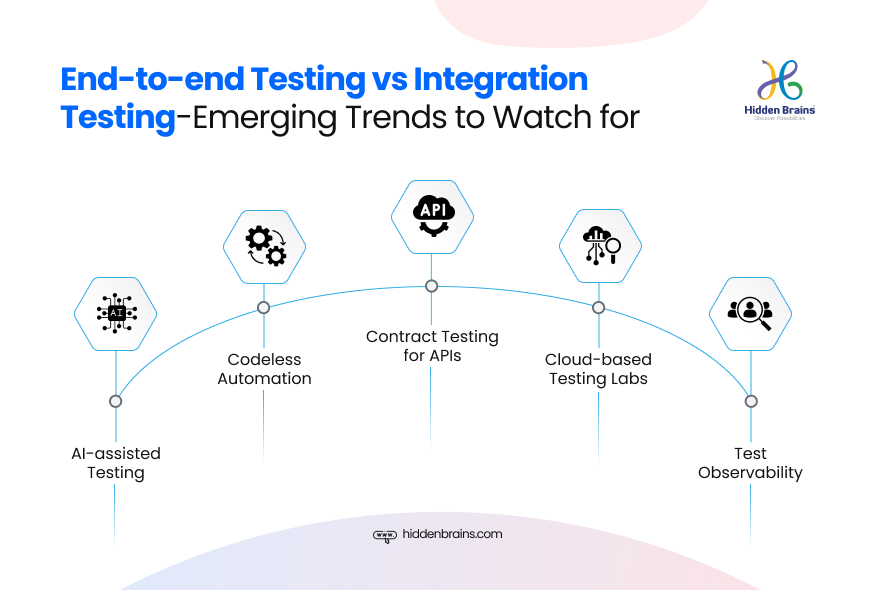
It leads to quicker and more reliable releases. Here are some helpful techniques:
- AI-assisted Testing: Smart tools now help teams create and manage tests more easily.
- Codeless Automation: Tools like Testim and Katalon let non-developers build strong tests without writing code.
- Contract Testing for APIs: Tools like Pact are essential for teams working with microservices.
- Test Observability: Teams use dashboards and analytics to track test health and fix issues faster.
Also read: AI in Quality Assurance: The Next Era of Automated Testing
Frequently Asked Questions
Software testing raises many questions, especially about end-to-end vs. integration testing. This section answers common questions that QA teams and developers often ask. Let’s jump in!
Which testing practice has more competitive edge?
It really depends on the goal.
End-to-end (E2E) testing shows how the whole system works together. It’s great for checking user experience and complex tasks.
Integration testing helps find early issues between parts of your app. It keeps things running smoothly without testing the entire system every time.
Pro Tip: Teams that combine both smartly usually have a real competitive edge.
Which testing practice is more popular among QA professionals?
Integration testing happens regularly because it’s fast, cost-effective, and easy to automate early in the development cycle.
End-to-end testing is becoming more popular too. It gives the highest confidence that important user journeys like signing up, making payments, or logging in work smoothly from start to finish.
Most QA teams use a mix of both. They choose between structural (integration) and end-to-end testing based on the current phase of development.
What roles do they play in test-driven development (TDD)?
In test-driven Development, integration testing happens early. It checks if small parts of the system work well together after unit testing. End-to-end testing comes in later, once the core features are ready. It helps test full user flows and ensures the system works smoothly inside and out.
Can you rely only on one type of testing?
Not a good idea.
Relying only on integration tests means you might miss critical end-to-end workflow issues.
Relying only on E2E tests slows you down and makes debugging harder.
Smart teams layer their testing as: unit → integration → end-to-end, to get complete coverage without burning time and resources.
How often should you run end-to-end vs integration tests?
Integration tests: Ideally, run them on every code push (they’re fast enough to catch issues early).
End-to-end tests: Run them at major checkpoints like before releases or after big feature merges to validate user journeys.
Which testing approach is faster?
Integration testing is faster because it only checks how connected parts of the system work together. End-to-end testing takes longer since it follows real user actions across the whole app.

Conclusion
Integration and end-to-end testing are compatible with one another. One assures the complete user experience, whereas the other makes all components of your system work together. Missing any of them will result in bugs, delays and dissatisfied customers. However, with the innovative use of both, there are fewer problems, improved software, and a release process. It is just a small change that significantly changes your product’s performance.