












































































































































Summary
- UAE dealerships struggle with fragmented automotive digital transformation.
- Core issue is disconnected inventory, pricing, and lead systems.
- Marketplaces enable real-time visibility and faster conversions.
- High-performing dealers use integrated CRM + marketplace models.
- Connected operations drive better efficiency and sales growth.
UAE car dealerships are investing heavily in software, online platforms, and digital tools, yet many still struggle to see measurable results from automotive digital transformation. If your dealership is still dealing with disconnected inventory, delayed lead responses, inconsistent pricing, or fragmented sales operations, technology alone will not solve the problem.
This blog breaks down why digital transformation in car dealerships often fails in the UAE market, where operational gaps are hurting revenue, and how marketplace-driven ecosystems are helping modern dealerships improve visibility, lead conversion, and inventory movement.
Why Are UAE Car Dealerships Struggling to Transform Digitally?
Many UAE dealerships are investing in custom software development services, digital marketing, and online platforms to modernize operations and improve efficiency. When implemented correctly, software development becomes a key enabler that helps eliminate operational inefficiencies, streamline workflows, and ultimately improve growth and profitability. The challenge is not the absence of technology; it is the lack of operational alignment between inventory, sales, pricing, and customer engagement.
Most digital transformation in car dealerships fails because core dealership operations still depend on fragmented processes, manual coordination, and disconnected systems.
The Most Common Operational Gaps in UAE Dealerships
- Fragmented inventory visibility across multiple branches
- Manual vehicle listing updates across platforms
- Weak CRM-to-sales pipeline integration
- Inconsistent pricing across digital channels
- Delayed response to online leads
- Poor coordination between sales and inventory teams
- Heavy dependence on third-party marketplaces without data control
These issues directly affect sales velocity. Delayed inventory updates slow vehicle movement. Poor lead routing reduces conversion opportunities. Slow pricing adjustments impact competitiveness in a fast-moving market.
Losing Car Sales Due to Outdated Systems?
Talk to Our Experts
How Marketplaces Fix Digital Transformation Gaps
Many of the automotive industry challenges UAE dealerships face today come from disconnected operations, poor visibility, and slow manual processes. Automotive marketplaces help solve these issues by creating a more connected, data-driven, and demand-focused sales ecosystem.
Instead of managing inventory, pricing, and leads separately across multiple channels, your dealership gets a more centralized and streamlined way to operate.
Unified Listing Ecosystem
- Vehicle listings can be managed across multiple platforms from one connected system.
- Inventory updates become faster and more consistent.
- Reduced risk of outdated pricing or unavailable stock appearing online.
- Better visibility across digital sales channels.
It helps your dealership maintain accuracy while reducing the operational burden of manually updating listings everywhere.
Data-driven Pricing Intelligence
- Real-time visibility into competitor pricing
- Faster pricing adjustments based on market demand
- Better understanding of buyer trends and inventory performance
- Improved pricing decisions for faster vehicle movement
In a fast-moving UAE market, pricing delays can reduce visibility and slow down conversions. Marketplace-driven pricing insights help dealerships stay competitive.
Better Lead Tracking and Attribution
- Centralized lead capture from multiple channels
- Clearer visibility into where inquiries are coming from
- Faster lead routing to sales teams
- Improved tracking of conversion performance
This helps your dealership understand which channels generate actual revenue instead of relying on disconnected lead data.
Improved Inventory Liquidity
- Wider exposure to active buyers across the UAE
- Faster inventory discovery by customers
- Reduced stock stagnation across branches
- Better inventory turnover cycles
Vehicles move faster when they are visible to larger pools of demand in real time.
What High-performing UAE Dealerships Are Doing Differently
While many UAE dealerships are still dealing with fragmented systems, manual coordination, and disconnected sales channels, high-performing players have already moved into a more integrated operating model. For them, automotive digital transformation is not a tool upgrade but a complete redesign of how the business runs.
A clear example of this shift can be seen in Kamdhenu Cars, which reflects how modern automotive retail is evolving into a connected, data-driven ecosystem where core functions operate in sync rather than in silos.
Hybrid Model Adoption (CRM + Marketplace Integration)
High-performing dealerships integrate CRM systems with marketplaces to create a unified flow.
- CRM manages leads, follow-ups, and customer relationships
- Marketplaces generate demand and visibility
- Systems are connected to avoid lead leakage
- Sales teams work from a single view of customers and inventory
In Kamdhenu’s case, a custom CRM development reduced cost and manual effort, improving speed and accuracy in handling leads across channels.
Centralized Inventory Management Systems
Leading dealerships manage all inventory from one centralized system.
- Real-time updates across branches and channels
- Reduced duplication and listing errors
- Full visibility of stock at any time
- Faster operational decisions
Kamdhenu’s approach shows how centralization removes fragmented stock visibility and improves coordination across teams.
Real-time Pricing Optimization
High-performing dealerships adjust pricing dynamically based on market conditions.
- Pricing responds to demand signals
- Continuous competitor benchmarking
- Faster repricing for market alignment
- Improved competitiveness and inventory movement
Kamdhenu uses data-driven pricing decisions to reduce stagnation and improve sales velocity.
Digital-first Sales Funnels
Instead of treating digital as secondary, dealerships now build digital-first journeys.
- Buyers start online before visiting showrooms
- Inquiry and booking flows are digitized
- Structured digital sales pipelines
- Reduced dependency on walk-ins
Kamdhenu has structured its customer journey digitally, improving engagement early in the buying cycle.
Unified Data Insights Platform
Decisions are now driven by real-time data analytics tool instead of intuition.
- Live dashboards for performance tracking
- Demand visibility across branches
- Smarter stock allocation
- Unified insights across departments
Kamdhenu’s model enables faster, more aligned decision-making across the entire organization.
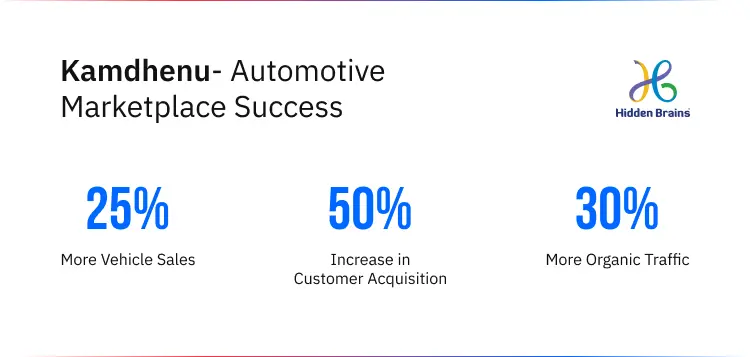
What has worked for Kamdhenu cars? Well, numbers don’t lie.
- 25% more vehicle sales in 2 months.
- 30% more organic traffic.
- +50% new customer acquisition.
With 22+ years of experience and on-ground experts, our custom software development company in Dubai and the Middle East understands the operational, compliance, and technology requirements businesses across the region work with every day. We specialize in scalable, high-performance automotive platforms that help dealerships modernize operations, improve visibility, and stay ahead in the evolving automotive market.
The Marketplace Disruption Model for Seamless Digital Transformation
The UAE automotive market is no longer controlled by traditional dealership-driven selling. Your buyers now discover, compare, evaluate, and shortlist vehicles through digital marketplaces long before they interact with your sales team. This shift has fundamentally changed how dealerships generate visibility, manage inventory, and compete for conversions.
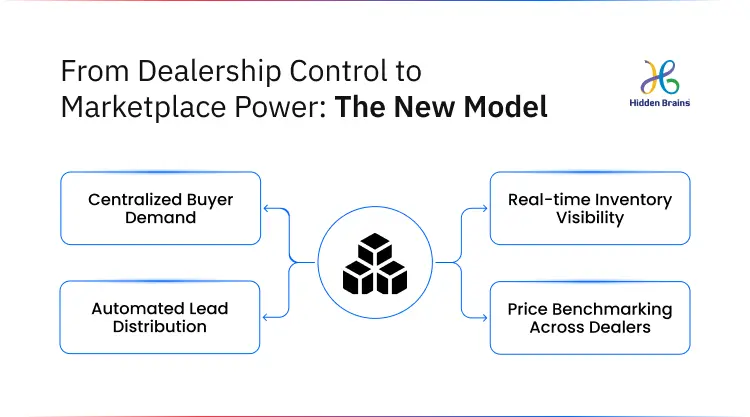
Today, marketplaces are not just listing platforms, they have become powerful distribution ecosystems that influence pricing, buyer behavior, lead flow, and inventory turnover speed.
Centralized Buyer Demand
Automotive marketplaces bring massive buyer demand into one centralized ecosystem. Instead of visiting individual dealership websites separately, your customers now compare multiple dealers, prices, and vehicle options on a single platform.
It gives marketplaces a major advantage in capturing demand earlier in the buyer journey while increasing visibility for dealerships that can respond quickly and manage listings efficiently.
Real-time Inventory Visibility
Modern marketplaces operate on speed and availability. Buyers expect accurate inventory, updated pricing, financing information, and vehicle details in real time.
If your dealership still relies on disconnected systems, maintaining consistency across multiple platforms becomes difficult. This often leads to outdated listings, pricing mismatches, and missed opportunities. Marketplaces reward dealerships that can keep inventory synchronized and digitally accessible at all times.
Automated Lead Distribution
Traditional dealership sales models still rely heavily on manual follow-ups and disconnected lead management processes. Marketplaces, however, streamline the entire flow through automated lead routing, inquiry tracking, and centralized customer engagement.
It helps your dealership reduce response delays, improve lead handling efficiency, and manage higher inquiry volumes without losing visibility into customer interactions.
Price Benchmarking Across Dealers
Marketplace platforms have significantly increased pricing transparency across the UAE automotive market. Buyers can now instantly compare similar vehicles from multiple dealerships before making a decision.
As a result, your dealership can no longer rely on static pricing models or delayed updates. Real-time pricing intelligence has become essential for staying competitive and maintaining healthy inventory movement.
Comparison: Traditional vs Marketplace-driven Dealership Operations
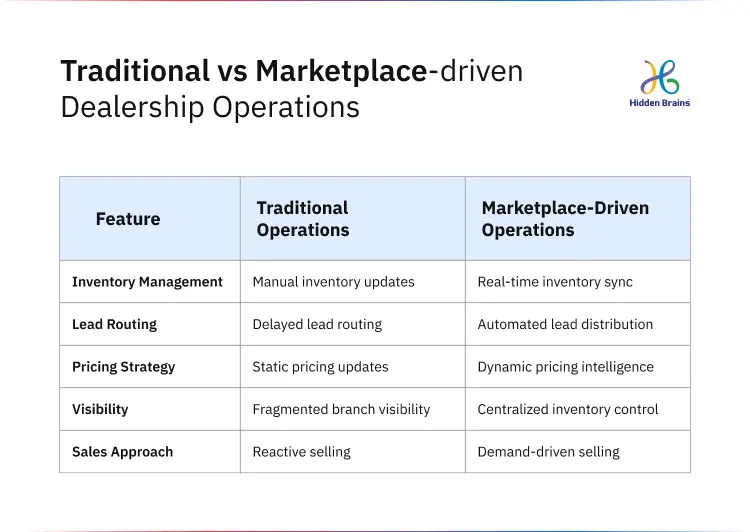
Dealerships still operating through fragmented workflows are struggling to keep pace with changing buyer behavior in the UAE automotive market.
Frequently Asked Questions
Why do UAE car dealerships struggle with digital transformation?
Most dealerships rely on fragmented systems, manual workflows, and disconnected sales channels, which prevent true operational integration.
What is Automotive Digital Transformation in simple terms?
It means connecting inventory, sales, pricing, and customer data into one unified digital system for faster and smarter operations.
Why do digital tools alone not solve dealership problems?
Because tools like CRM or listing platforms don’t fix underlying workflow gaps or lack of system integration.
Can Modern Dealership Software Simplify Multi-branch Operations?
Modern automotive businesses need centralized systems that connect inventory, CRM, pricing, lead management, and marketplace integrations across multiple dealership branches. A scalable dealership management solution helps improve visibility, reduce manual coordination, and streamline operations for better business performance.
Can AI Solve Operational Challenges in Legacy Dealership Businesses?
Yes, AI integration in legacy dealership businesses can overcome operational challenges by automating inventory management, lead handling, pricing, and customer engagement. It connects fragmented systems, improves efficiency, reduces manual work, and enables faster, data-driven decision-making across dealership operations.



Conclusion
UAE car dealerships are not just facing a technology gap, they are facing an operational disconnect that limits growth and visibility. As the market shifts toward demand-driven ecosystems, Automotive Digital Transformation is no longer optional. Dealerships that integrate systems, streamline inventory, and align with marketplace dynamics will stay competitive. The future belongs to those who move from fragmented operations to fully connected, data-driven automotive retail models.