













































































































































Overview
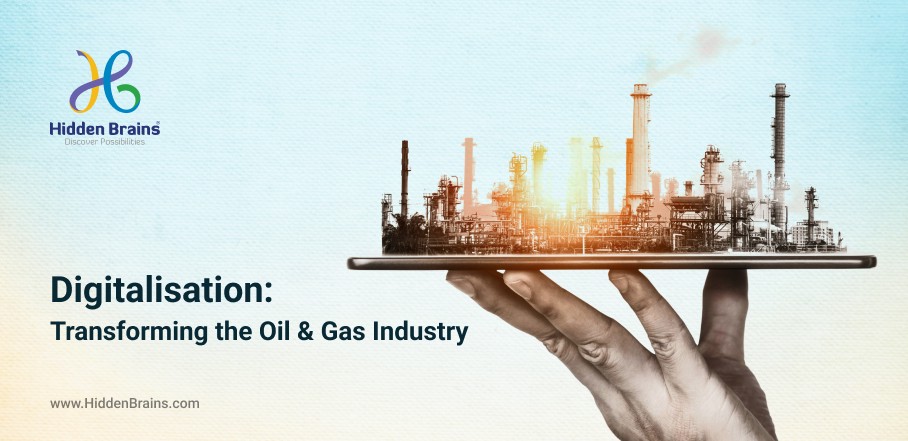
Digitalization has transformed the Oil and Gas industry with disruptive solutions. Recently, Oil and Gas businesses have begun to increase production, improve safety, and enhance communication among workers by adopting digital technologies into their operations. Let’s find out how seamless the Oil and Gas Industry processes are with digitalization.
Artificial Intelligence (AI), Machine learning, Blockchain… You have heard these buzzwords multiple times, either from scrolling through the internet or conversations with people. Every day, you wake up to a new invention, and you are questioning while the world is running at a fast pace. Well, that’s because digitalization is the new kid in the building.
Digitalization has revolutionized every facet of society, intruding into the business structure of industries, including the Oil and Gas industry. This industry requires a more efficient approach to handle complex processes like digging, exploration, processing, and refining resources in a smarter and safer way for workers.
That is where digitalization comes in to simplify these processes.
Before we dive into the role digitalization plays in this industry, let’s take a drive into how Oil and Gas industry work and the challenges faced by the industry.
How Does the Oil And Gas Industry Work?
It is common knowledge that the Oil and Gas industry contributes immensely to the growth of a nation’s economy. In the USA alone, the Oil and Gas industry accounts for 10.3 million jobs and 8 percent of the nation’s GDP.
However, many people need to be made aware of its operations or can give an account of how these resources are used to generate electricity and other industrial products we use every day. In a simple way, the Oil and Gas industry is classified into three streams: upstream, midstream, and downstream.
Another term for the upstream sector is the Exploration and Production (E&P) sector. It is the preliminary phase of Oil and Gas production. Have you ever wondered how oil is produced? The exploration stage is where the magic happens. This process is the part that results in the resources we use.
Exploration and Production (E&P) companies start by employing geologists to survey the lands – using testing subsoil or seismic depending on onshore or offshore exploration – in order to nitpick possible oil reserves and estimate the amount of oil before drilling from the earth. Once a place has been approved, the workers drill out hydrocarbons, which produce petroleum and natural gas.
Large manpower and heavy machinery are needed to extract the resources successfully.
After extracting the raw resources from the earth, what do these companies do with it? We will find out in the next phase: the midstream sector.
Midstream involves the processing, storing, and transporting of hydrocarbons in their pure state. Miners transfer the resources from the well to a nearby facility, where it is broken down into different components. For example, water is channeled to a separate pipeline, while oil and natural gas go to another storage.
It sieves the waste to produce refined products usable by the end users. Companies use storage tanks to store crude oil and gas before transporting it through trucks, rails, ships, and pipelines. Often, pipelines are used because they are easier to transport large amounts of oil from one location to another.
The last phase of the oil and gas processes is referred to as the downstream. The downstream sector often overlaps with the midstream sector. It is also where the marketing and distribution of the final products take place. During the refinery, crude oil is transformed into usable products like gasoline, fertilizer, pesticides, lubricant, and natural gas.
Some companies focus on upstream activities, while some integrate both upstream and downstream sectors, like ExxonMobil.
With all the activities that we have seen so far, it is only possible to operate with loopholes or challenges. Let’s take a look at the challenges plaguing this industry.
What Are The Challenges In The Oil And Gas Industry?

There are numerous challenges facing the Oil and Gas industry, which affect its operations and annual production.
Complex Operations
Only someone with first-hand experience can understand the complexities of the exploration and drilling of hydrocarbons. If you have been to an onshore site, you will notice the heavy-duty machines powered by humans.
Most times, it takes months to drill a well, and there is a possibility of failing to dig the right place, especially when the company relies on inaccurate data. The exploration stage requires heavy-duty equipment, logistics materials, and manpower. There is also the possibility of equipment downtime, which puts a halt to production. Companies are faced with high costs of exploration and drilling.
Accidents/Hazardous Environment
The midstream and downstream sectors have turbulent activities that disrupt the smooth running of their operations. First, there is a high risk of accidents due to the heavy-duty machine involved. There have been sad cases of accidents that could have been avoided if the proper measures were in place.
Also, hazardous gas release affects the health of field workers, resulting in complicated medical issues. These incidents happen accidentally but could be minimised with smarter technology. Plus, the outburst of pipelines pollutes host communities, and vandalism results in low supply.
Low Visibility
Visibility of operations is a critical challenge affecting the industry. Refining and transporting crude oil from the warehouse to the end-user takes ample time and resources. And this is the reason why operational managers should have insights into operations to make strategic decisions. However, this is not the case.
Most Oil and Gas firms need comprehensive reports of their operations. Imagine a situation without visibility on the refining process; how do these companies account for work ethics and safety rules?
Unsteady Communication
Uninterrupted communication is a hassle for most Oil and Gas businesses. Keeping contact with suppliers, vendors, and customers is an uphill task for companies with minimal infrastructure. At times, there is a disruption in communication between managers and field technicians. In this scenario, proper monitoring could be more effective.
However, despite these challenges, there has been a change in the operations of the industry with the evolution of the fourth industrial revolution technology. Operations have been made faster and more efficiently with these innovative technologies.
But how has digitalisation revolutionised the Oil and Gas industry?
Interested in knowing more about Oil & Gas Industry?
How Digitalization Is Enabling Smarter And Safer Ways Of Operation
Digitalization is the process of incorporating digital technologies in business operations to improve efficiency and minimize risk. These digital technologies include the following:
- AI
- Blockchain
- Machine Learning, and
- Data Analytics
Due to the complexities of the Oil and Gas industry, companies are leveraging technologies like AI, IoT, robotics, and machine learning to improve operational models.
Think about what a miner or field technician has to go through to drill or refine hydrocarbons. It would take human energy, and accidents or injuries are also possible. Now, take your mind to how technology can solve this and make operations seamless.
Here is how digitalization is enabling smarter and safer ways for the Oil and Gas industry:
Artificial Intelligence
One of the ways digitalization is enabling smarter operations is Artificial Intelligence. Everyone is talking about AI. Even though it is more pronounced now, AI has existed for a long time. Large oil and gas firms now use AI-powered robots to drill hydrocarbons from the earth instead of drilling manually.
These robots analyze land conditions before drilling to check for the presence of an oil reserve in order to save time and minimize cost. When the hydrocarbon is refined, AI-driven thermal imaging tracks the liquid level in the tanks. Plus, an AI-enabled drone that detects leaks in pipes before it worsens.
Increase Communication Flow
The Internet of Things (IoT) is another game-changer in digitization. An IoT connects physical devices to the internet through technologies, enabling communication and collection of data. Is that a technical term? No, it’s not.
Think of devices like Bluetooth connecting different devices that can share data. That’s what an IoT does. For Oil and Gas, IoT sensors monitor pipelines, storage facilities, and drilling rigs. Once it detects a breakdown, it quickly notifies the firm before it escalates and puts a halt to production.
Inventory Management
Many Oil and Gas firms need help tracking inventory from production to transportation. Often, there are cases of vehicle breakdown, overstocking, and under stocking. However, IoT has changed the dynamics. IoT sensors monitor resources in the warehouse, constantly updating inventory records to help these firms predict demand and plan production.
IoT devices track vehicle location during transportation, ensuring inventory safety and timely delivery. With the presence of IoT, Oil and Gas firms can optimize routing to reduce fuel consumption and minimise risks.
Data Management
Digitization has resolved data management. All Oil and Gas operations are data-inclined. They need exploration, production, inventory, supply chain data, and other processes. Availability of data is crucial for smooth sailing.
Technologies like the IoT provide real-time data on operations from land surveys to drilling, processing, storage, and transportation. These big data are hosted on a cloud for accessibility. Now, a site manager can gain insights into production through accurate data and make informed decisions that would improve operational efficiency.
Improve Workplace Safety
For the safety of workers, companies provide wearable devices with sensors to monitor workers. These devices span from safety glasses to wristbands and smart helmets. They track field workers’ vital signs and movements and check for exposure to hazardous substances. The data is transmitted to the system, where immediate action will be taken.
Automate Routine Tasks
Overall, software bots (Robotic Process Automation) have taken over mundane and repetitive tasks, reducing workers’ workloads and allowing them to concentrate on essential tasks. In the oil and gas industry, there are tasks that employees spend ample time on.
These tasks follow a routine that software bots could easily replace. Oil and Gas companies automate back-office processes, like recruiting new employees, processing payroll and invoices, and reporting.
Professional software providers like Hidden Brains have a Robotic Process Automation that automates routine tasks, and Oil and Gas businesses can leverage them.
Digitalization has truly transformed the Oil and Gas industry. However, there are things to consider before implementing digital technologies.
Factors To Consider Before Implementing Digitalisation

Implementing digitalization is a different bone of contention. Oil and Gas businesses should focus on the factors enumerated below in order to utilize technology to the maximum:
Technical Skills /Expertise
Do your workers possess the technical skills to handle these smart technologies? Most Oil and Gas industries are transforming at a slow pace because their employees need more technical skills to handle digital devices.
The solution is to invest in training to bring them up to speed with the digital change in the world to fasten production and reduce human error.
Innovation
Another factor to consider is innovation. Digitalization isn’t static; it changes at the speed of light. As people’s needs evolve, technology evolves to meet demand. Oil and Gas businesses must stay updated with technological advancements and upscale operations to fit recent trends.
Remember, the end goal is customer satisfaction; to achieve this, companies must continue to update to the global technical standard.
Cybersecurity
Oil and Gas businesses should also consider cybersecurity. Using technology solutions invites cyber fraud; however, that should not deter anyone. Companies should employ a genuine and professional software Solution company with the right tools to make transitioning seamless and safer.
A genuine software provider has a highly-encrypted system to safeguard data and prevent data silos.
In summary, implementing digital technologies requires a high budget, which can be challenging for companies with limited budgets. The simple solution is mapping out a digital financial plan to enable proper planning and adoption of these digital tools.
Need help for Oil & Gas Solution?
Frequently Asked Questions (FAQs)
Let’s clear up some of the biggest questions around digital transformation in oil & gas and how it’s helping companies work smarter, safer, and faster.
1. What benefits does digitalization bring to the oil & gas sector for smarter and safer operations?
Digitalization helps oil & gas companies predict problems before they happen. It improves equipment performance, reduces downtime, and boosts worker safety. From real-time data dashboards to automated monitoring systems, companies gain visibility into every part of their operations, onshore or offshore. In short, digital tools turn complex processes into intelligent, data-driven decisions.
2. How is AI improving predictive maintenance and reducing downtime in oil & gas operations?
AI can “listen” to machines and detect early signs of failure.
It analyzes vibration, temperature, and performance data to predict when maintenance is needed. This means fewer breakdowns, lower repair costs, and zero unplanned downtime.
By acting early, companies save millions in lost production and extend asset life.
3. In what ways do digital twins help oil & gas companies optimize assets and improve safety?
A digital twin is a virtual replica of physical assets like rigs or pipelines. It helps engineers test “what-if” scenarios before taking real-world actions. For example, a digital twin can simulate equipment stress or safety risks. This boosts operational efficiency and helps prevent costly accidents or production delays.
4. How does digitalization enhance document and data security, compliance, and reporting in oil & gas?
With hundreds of contracts, permits, and safety reports, managing data securely is a challenge.
Digital platforms and ECM (Enterprise Content Management) systems encrypt sensitive information and control access. They also automate compliance reporting, so audits are faster and more accurate. No more manual errors or lost files, everything is tracked and stored safely.
5. What are the key challenges of digital transformation in oil & gas, and how can companies overcome them?
Legacy systems, data silos, and resistance to change are the biggest barriers.
The solution? Start small.
Begin with high-impact use cases like predictive maintenance or digital twins.
Train teams, invest in the right tech partners, and align leadership with a clear digital roadmap.
Digital success happens step by step, not overnight.
6. How is real-time IoT and AI data analytics changing decision-making in oil & gas operations?
IoT sensors collect millions of data points every second, from pressure to temperature. AI turns this raw data into meaningful insights for faster decision-making. Managers can see pipeline leaks, production inefficiencies, or safety alerts in real time. It’s like having a 360° live dashboard of your entire operation.
7. How can digitalization help oil & gas firms manage sustainability and reduce emissions?
Digitalization and sustainability now go hand in hand. Smart sensors and AI models help track energy use and detect leaks or waste. Companies can measure carbon footprints accurately and meet ESG goals. This shift to “green operations” isn’t just good for the planet; it’s good for business, too.
8. What role does leadership play in driving digital transformation in oil & gas enterprises?
Leadership sets the tone for change.
Without executive buy-in, digital initiatives often stall. Great leaders communicate the “why” behind transformation, not just the “how.” They invest in talent, technology, and culture to create a mindset of innovation across teams.


Final Thoughts
Digitalization is here to stay. It has become a necessity for any industry seeking growth. By leveraging digital technologies like AI, Blockchain, Machine Learning, and Data Analytics, Oil and Gas businesses can increase production, improve safety measures, have wider visibility, and gain total control of operations.
However, for effective implementation, an Oil and Gas business owner should empower his workers with technical skills, stay abreast with technology advancements, and ensure watertight cybersecurity. Digitalization is a continuous process; hence, the Oil and Gas Industry needs to embrace the evolving pace of digital innovations.
If you seek a smooth digital transition, Hidden Brains has you covered. As a genuine software solutions company, we have innovative IT Solutions for the Oil & Gas Industry.
Experience the power of digitalization with Hidden Brains by connecting with us.