

















































































































































Summary
- An Order Management System (OMS) streamlines order processing, tracking, and fulfillment.
- It improves inventory visibility and reduces errors in order handling.
- Enhances customer experience through faster and more accurate deliveries.
- Integrates multiple sales channels into a unified system.
- Helps businesses optimize operations and reduce costs.
- Provides real-time data for better decision-making and forecasting.
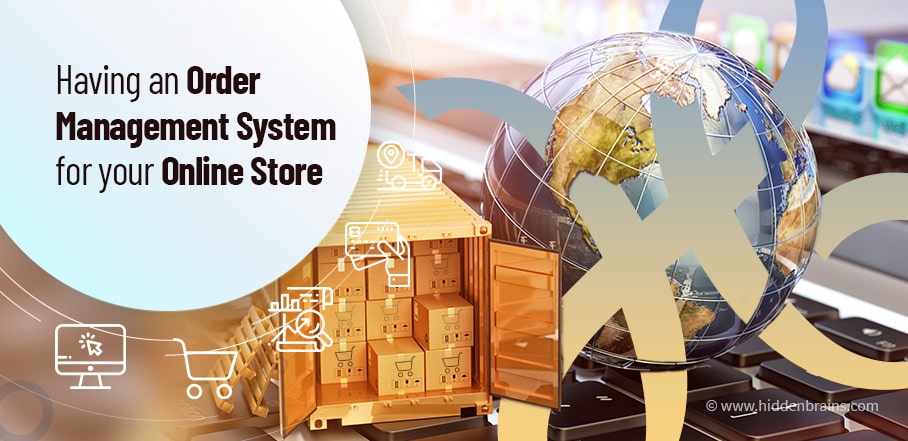
Looking at the current market scenario we can say that customer expectations and product demands have changed dramatically. Customers increasingly drive the buying journey today and so the merchants have to adjust quickly to ensure they are delivering a seamless customer experience where it does not burn a hole in the pocket of the business.
And, this is where an order management system comes to the rescue. It provides key benefits that align a company with evolving customer expectations and rising market demands.
An order management platform can offer a huge amount of benefits and features from which a surprising number of commerce merchants are not aware. It does not matter if you are a small business with two stores or a large or a multibillion-dollar company, an order management system is imperative for continued growth and profitability.
If you pair an order management system with a strong digital commerce platform, it can help you provide the additional capabilities which are required to meet growing customer demands and expectations. The competition is fierce in the market and your business needs to rely on more than just the traditional methods of order management.
One should consider investing in a system that provides seamless orders, tracking, customer service, and omnichannel functionality.
Here are some of the major benefits of an order management system:
Centralized Customer Services
Customers expect to be informed every step of the way across their buying journey; be it regular email updates, tracking information, and delivery status alerts. In order to compile customer information and filter data into one place, an order management system can help you achieve those tasks seamlessly.
You can put all customer data and order information centralized in one location. This helps every customer service rep be more informed via a complete view across sales channels and fulfillment centers to address any inquiries about shipping, delivery, or even cancellations.
Omni-channel Store Fulfillment
Right from buy-online/pickup in-store or BOPIS to same-day shipping, every customer today expects as much choice in delivery as they do in channels of engagement. The shoppers of today expect to be able to have an order fulfilled in a way, time, and place that is most convenient to them. Every touchpoint in the journey provides an opportunity to give a great customer experience and boost retention and revenue consequently.
You can get in touch with a Magento development company that can offer capabilities in terms of options that are expected today by the customers like, ship from store, ship to store, BOPIS, and a limitless aisle of inventory. Such an endless aisle provides customers more options to purchase items from a global inventory that can be fulfilled anywhere.
Inventory and Sourcing
Regardless of the size of business you operate, it should not limit your opportunities for growth. If you show your customer live inventory, it can be immensely powerful; and this can be easily made possible by an order management system.
By using global inventory control, your customers can view real-time information about where they can purchase and obtain their required products or services. If your business has a couple of inventory locations like a store and a warehouse, with a robust management system in place, you have the ability to determine the fastest and most cost-effective way to get your products to customers.
Suppose you are managing multiple channels, in that case, you can have more fine-tuned control of your inventory to specify which SKUs and what quantity of those items are sold on which channel. This way you can prioritize channels to align to demand and margins, all critical for success at peak sales periods like Black Friday or Cyber Monday.
Seamless Order Management
The process of order management begins as soon as a customer places an order, and it ends when the service or items are received. Right from the time a sale is made to the time, it is in-hand, the whole process needs to be as seamless as possible for the customer. An order management system makes the entire process flow across all touchpoints. And this should happen without a glitch.
Any hiccups or roadblocks are perceived as a disturbance to the overall buying experience, that person is more likely to become unhappy with your company. It is imperative to understand that if your order management system fails to meet or surpass customer expectations, it can put you at the risk of losing clients, and they will take their business elsewhere.
Frequently Asked Questions
What is an Order Management System?
An OMS is a software solution that manages the entire order lifecycle, from placement to delivery. It helps businesses track and fulfill orders efficiently. It ensures better coordination across operations.
Why is OMS important for businesses?
It improves efficiency by automating order processing and reducing errors. Businesses can handle higher order volumes with ease. It leads to better customer satisfaction.
How does OMS improve customer experience?
It ensures faster delivery and accurate order tracking. Customers receive real-time updates on their orders. It builds trust and enhances satisfaction.
Can OMS integrate with other systems?
Yes, it integrates with inventory, CRM, and eCommerce platforms. It creates a unified system for managing operations. Integration improves efficiency and data accuracy.
Is OMS suitable for small businesses?
Yes, scalable OMS solutions are available for businesses of all sizes. Small businesses can benefit from improved organization and efficiency. It also supports growth.
What are the key benefits of OMS?
Key benefits include automation, accuracy, cost reduction, and improved visibility. It helps businesses streamline operations. It leads to better decision-making.



Conclusion
An Order Management System is essential for businesses aiming to scale efficiently and deliver seamless customer experiences. By centralizing order processing and improving visibility, OMS reduces operational complexities and enhances accuracy. It enables businesses to manage multi-channel sales effectively while optimizing inventory and logistics. As customer expectations continue to rise, investing in a robust OMS becomes a strategic move to improve efficiency, reduce costs, and drive long-term growth in competitive markets.