

Project Overview
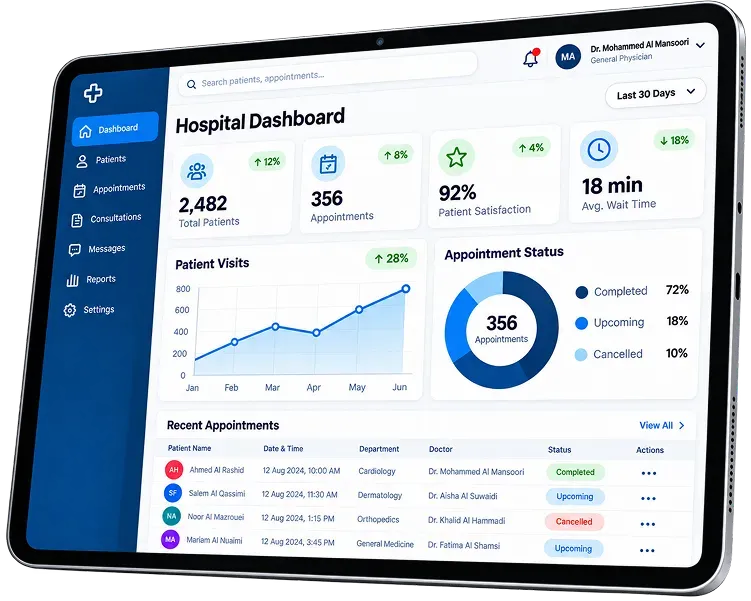
A leading multi-specialty hospital group in the Gulf unified a fragmented patient journey — appointments, reminders, reports, billing, and follow-up — into one connected web and mobile experience, cutting digital appointment and service completion time while leaving its core clinical systems in place.
The Challenge: A Fragmented Digital Patient Journey
Patients expect seamless digital journeys, but fragmented platforms, manual handoffs, and legacy systems still
make care access harder than it should be.

Disconnected
digital channels
Website, web/mobile services, appointments, reports, billing, and communication operated across separate systems.

Staff absorbed
the gaps
Teams spent time handling questions and tasks that could have been managed digitally.

Booking without
connected follow-through
Appointment booking did not flow seamlessly into reminders and follow-up communication.

Repeated information
across channels
Patients often had to move between channels and re-enter information to complete simple tasks.

Growing
technology backlog
Supporting older applications while delivering new patient-facing features made even small changes complex and time-consuming.

Risk of
Inaction
A widening gap between patient expectations and experience, increasing manual support, and a growing delivery backlog as more facilities and features were added.
Our Approach
We treated the patient journey as a connected system, not a collection of digital touchpoints. The architecture brings patient
and staff channels, hospital systems, enterprise applications, and data into one interoperable platform.
We mapped the full patient journey from discovery and registration to booking, reminders, visits, reports, billing, and follow-up before writing code.
We designed a digital engagement layer that connects to existing systems via APIs rather than replacing them.
We modernized legacy components only where they created delivery or maintenance bottlenecks.
We used configurable workflows and shared components to handle each facility's slightly different processes.
Manual QA, automation QA, and integration testing ran alongside development, not after it.
We ring-fenced AI experiments from live clinical decisions, starting with lower-risk, human-reviewed use cases.
Why It Matters
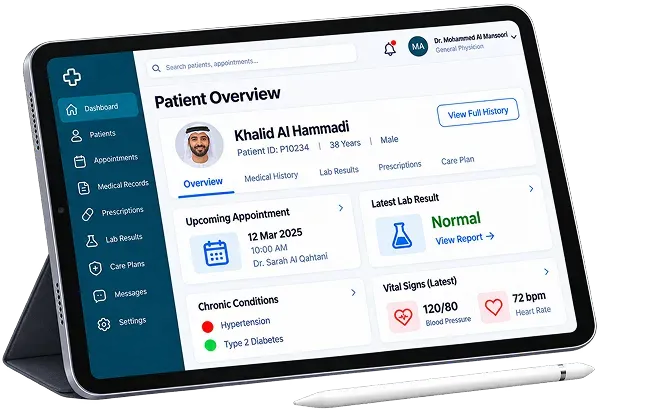
The hospital group is now positioned to scale a consistent digital front door across more facilities and add new patient services faster, because the foundation is a connected, integration-led layer rather than another siloed system.
A repeatable pattern. New services plug into the same engagement layer instead of spawning new silos.
A safer path to AI. With AI readiness work already ring-fenced and human-reviewed, future patient-support use cases can be adopted on the group's terms.
Lower drag on the roadmap. Automated regression coverage and modernized components mean each new release costs less to ship and verify.
Tech Stack
The stack was chosen to work with the hospital's existing systems, not replace them. A microservices core in .NET Core, Node.js, & Spring Boot
connected over secured APIs to the systems already running the hospital, with React, Angular, & React Native delivering one consistent experience
across web and mobile. Generative & Agentic AI were included only as a controlled, human-reviewed track, kept well clear of core patient transactions.


Why They Chose Hidden Brains
The client needed real engineering expertise and a collective, single-team approach- a partner that could bring product engineering, architecture, development, integration, and QA together under one roof, backed by proven experience in healthcare software development.

Our Solution
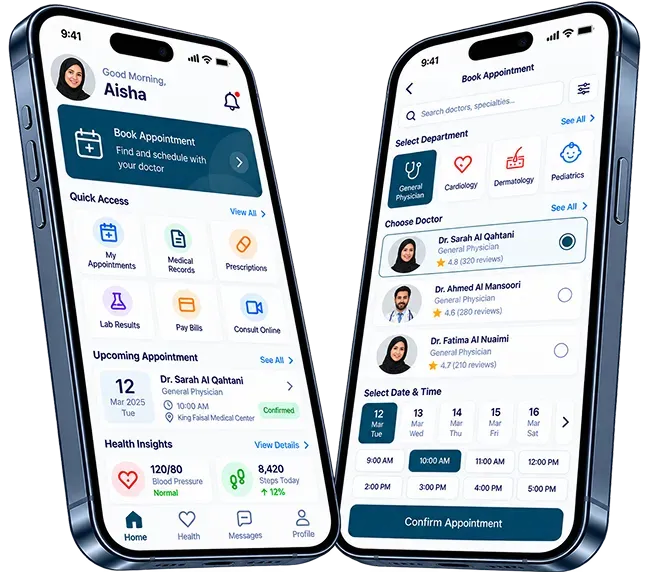
Patient profile & communication preferences - One place, consistent everywhere.
Automated reminders & follow-up - Booking now flows into Communication.
Visit information, reports & post-visit interactions - Surfaced in the patient experience.
Appointment discovery & booking - Unified across web and mobile.
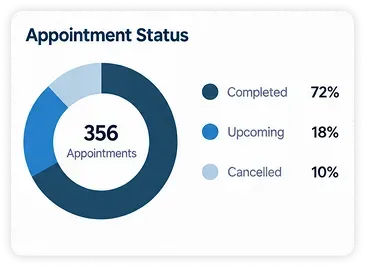
Operational dashboards & workflows - For hospital teams to manage digital requests and exceptions.
Controlled AI POC track - Information assistance and admin support, human-reviewed.
Configurable multi-facility workflows - Shared components adapted to facility-specific processes.
Automated regression coverage - Across key patient journeys.
Features
Hidden Brains built a connected digital patient-engagement layer that integrates patient-facing web and mobile experiences with the hospital's existing systems through secure APIs.
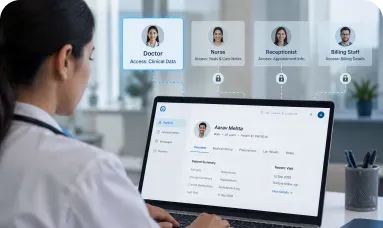
Role-based access
Patient information is exposed only within the user's authorized context, ensuring access is limited to relevant data and permitted actions.
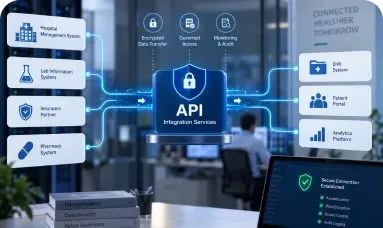
Secured API data exchange
Integration services provide controlled and secure access to connected systems, with data exchanged through protected and governed APIs.
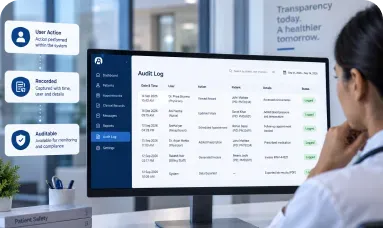
Traceability
Patient-facing actions and operational updates remain fully recorded and auditable, supporting accountability, monitoring, & operational transparency.
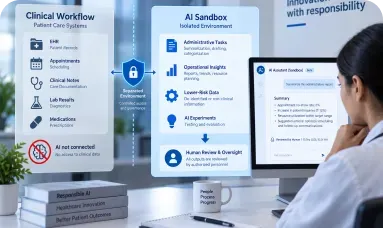
AI isolation
Experiments are separated from live clinical decision-making, human-reviewed, and limited to lower-risk information/admin use cases.
Key Takeaways
In a live hospital environment, integrating around the core beats replacing it, and restraint is a feature, not a limitation.
Every change had to leave clinical and operational systems running, so building the engagement layer around existing systems, and modernizing legacy components only where they blocked delivery, mattered more than moving fast.
Configurable workflows and shared components absorbed those differences instead of forking the platform per site.
Patient-facing healthcare workflows demand stronger review than a consumer app, so keeping AI in ring-fenced, human-reviewed POCs protected trust while still building readiness.
Frequently Asked
Questions (FAQ)
Hospitals can use an API-led digital layer to connect existing clinical, hospital, scheduling, CRM, and communication systems with modern web and mobile experiences. This enables modernization without replacing core systems.
By connecting key touchpoints—appointment discovery and booking, patient profiles, reminders, visit information, reports, and post-visit interactions—through a consistent digital experience across web and mobile.
A shared engagement layer with configurable workflows and reusable components can support facility-specific processes without creating separate platforms for every location.
Hospitals can automate routine communication, reminders, digital requests, and follow-up workflows while giving staff dashboards to manage exceptions and requests that still require intervention.
Modernize selectively rather than attempting a big-bang rewrite. Identify legacy components creating delivery or maintenance bottlenecks, modernize those areas, and keep the rest of the existing environment operational.
Start with lower-risk use cases such as information assistance and administrative support. Keep AI experiments separate from core clinical workflows and introduce human review before expanding their role.
Use an integration-led approach that builds around existing systems, introduces new capabilities progressively, and modernizes only where legacy technology creates operational or delivery constraints.
Got an Idea?
Get FREE Consultation
- 1 Drop your requirement and
our expert will analyze further - 2 Outlining it, we will build roadmap
and connect with you - 3 Further, finalize the approach
and begin implementation


