

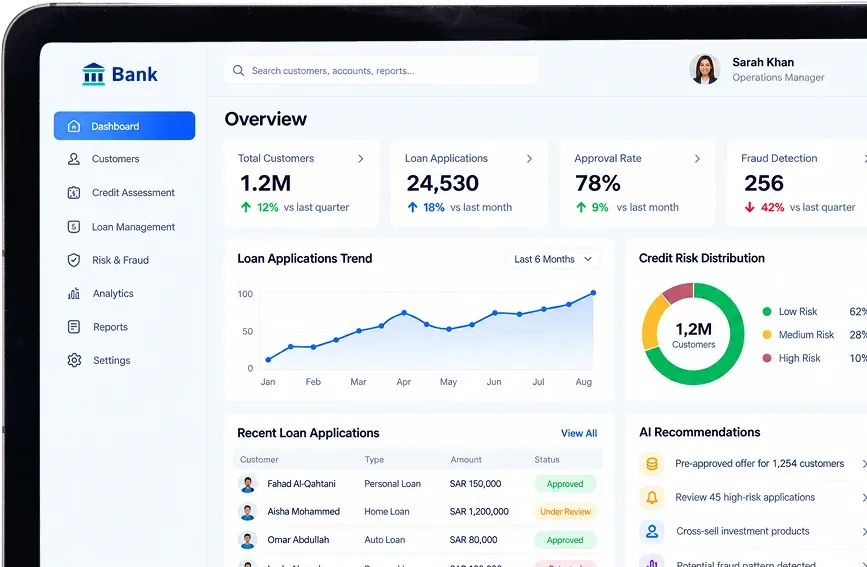
Project
Overview
A Tier 1 bank in the GCC was dealing with growing delivery backlogs, slower feature releases, heavy regression effort, and legacy systems that were becoming harder to change without risk.
Hidden Brains stepped in with a managed engineering model to strengthen delivery capacity, modernize applications progressively, improve QA automation, and create a controlled path for AI adoption, resulting in faster digital releases, lower testing effort, a reduced backlog, and a stronger foundation for future banking innovation.
Challenges
Modernizing Middle Eastern digital banking operations required overcoming architectural legacy hurdles, compliance demands, and accelerating product releases safely.

Slow Feature Delivery
Small digital enhancements took several weeks from requirement to release.

Growing Backlog
Urgent fixes kept displacing planned work, causing digital priorities to pile up.

Legacy Knowledge Bottlenecks
Critical changes depended on a small group familiar with the older codebase.

Manual Credit Workflows
Credit teams gathered and checked information across multiple systems before making decisions.

Stretched Internal Teams
The same specialists handled feature delivery, production support, maintenance, and regression testing.

AI Ambition, High Risk Sensitivity
The bank wanted AI-driven improvement, but sensitive banking data required controlled adoption.
Why They Chose Hidden Brains
The bank needed more than extra developers; it needed a partner that could take ownership inside a live, complex banking environment. Hidden Brains brought deep expertise, proven development experience, and a dedicated modernization team, working with the systems already in place.
Work inside the existing estate, not replace it. The bank needed a partner to strengthen its platform, not force a rebuild.
Technology Stack We Used


Integrations


Our Approach
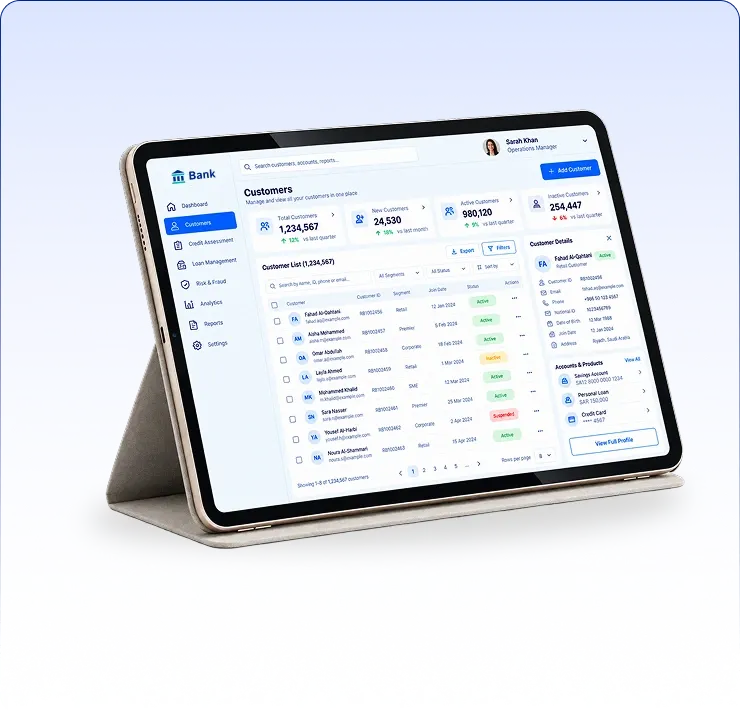
Hidden Brains embedded a managed engineering team inside the bank's environment, took ownership of defined product modules, stabilized
the release rhythm, and modernized legacy .NET components progressively, alongside live support rather than through a risky all-at-once
migration. AI was introduced only through governed readiness assessments and POCs.
Discover First
We mapped existing applications, release process, dependencies, and ownership before changing anything.
Embed, Don't Disrupt
We took over defined modules and release activities gradually, while the bank retained product direction.
Stabilize the Rhythm
We cleaned and prioritized the backlog and broke large requirements into sprint-ready work.
Parallel Build & Test
Development and QA ran in parallel, with automation wrapped around repeatable regression areas.
AI, Governed
We led with AI readiness and controlled POCs (credit intelligence, information assistance) before any production consideration.
Modernize Progressively
Legacy .NET components were modernized in stages, never in one high-risk rewrite.
Review Before You Leap
Architecture reviews gated every larger technical change.
Security & Compliance Handling

Role-Based Access
Access was controlled by role throughout, so sensitive data was never exposed unnecessarily.

AI Ring-Fenced
Sensitive banking information was kept out of AI experiments, and every POC ran with human review.

Staged Modernization
Core banking and digital services were never subjected to a high-risk, all-at-once migration.
Our Delivery Methodology
Agile, managed-team model: the bank kept product and business direction;
Hidden Brains ran day-to-day technical execution:


Plan &
Prioritize
Sprint planning and backlog refinement aligned each cycle to clear, sprint-ready deliverables.

Validate the
Approach
Architecture reviews helped assess larger technical changes before development began.

Build &
Review
Features and modernization work progressed in parallel, with peer code reviews built into delivery.

Test &
Stabilize
Manual and automated QA validated functionality, protected regression areas, and maintained release stability.

Demo, Release &
Support
Working software was reviewed with stakeholders each sprint, followed by deployment and post-release support.
Results


Related Capabilities
If you're evaluating similar work, these show how Hidden Brains delivers it

Frequently Asked Questions (FAQ)
Want to dig deeper into digital banking and understand how software development can impact your operations? Here are answers to some of the most common questions.
Modernization happens in stages, alongside your active support cycle, so services keep running and customers feel nothing. There's no big-bang migration, which means no platform freeze, no outage risk to core banking, and no revenue-affecting downtime while the work happens.
In this engagement, measurable business gains- roughly 38% faster feature delivery and a 31% faster credit-information cycle- landed about 12 months after the team was fully onboarded and the release process stabilized. You feel a steadier, more predictable release rhythm well before the headline numbers arrive.
It takes it off. The managed team absorbs day-to-day delivery, production support, and regression testing, freeing your specialists from being pulled into every urgent fix. You keep product and business direction; we run execution.
Yes. Access stays role-based, sensitive banking data is ring-fenced from any AI experimentation, and AI is introduced only through governed POCs with human review. Nothing reaches production until it has earned that step, which is how AI ambition and compliance coexist.
No. The managed-team model flexes capacity up or down as your backlog shifts, so you're paying for delivery that tracks real demand rather than carrying idle headcount or falling behind in peak periods.
Yes. The same managed-team and progressive-modernization approach applies to any enterprise running a live, business-critical platform that needs faster delivery without disruption, the sector changes, the risk-managed method doesn't.
Got an Idea?
Get FREE Consultation
- 1 Drop your requirement and
our expert will analyze further - 2 Outlining it, we will build roadmap
and connect with you - 3 Further, finalize the approach
and begin implementation


