





































































![Sales & Distribution [Oil & Gas]](https://www.hiddenbrains.com/blog/wp-content/themes/blankslate/assets/images/sales_and_distribution-icon.74d08193.svg "Sales & Distribution [Oil & Gas]")

![Fluid Terminal Management [Oil & Gas]](https://www.hiddenbrains.com/blog/wp-content/themes/blankslate/assets/images/fluid_terminal_management-icon.4b3a27a4.svg "Fluid Terminal Management [Oil & Gas]")


![Sales & Distribution [Oil & Gas]](https://www.hiddenbrains.com/blog/wp-content/themes/blankslate/assets/images/sales_and_distribution-icon.74d08193.svg?1.0.0 "Sales & Distribution [Oil & Gas]")
![Fluid Terminal Management [Oil & Gas]](https://www.hiddenbrains.com/blog/wp-content/themes/blankslate/assets/images/fluid_terminal_management-icon.4b3a27a4.svg?1.0.0 "Fluid Terminal Management [Oil & Gas]")
































































































Summary
- Warehouse inefficiencies often arise from repetitive processes, manual handling, and poor workflow design, increasing time and costs.
- Inventory inaccuracies and a lack of real-time visibility disrupt order fulfillment and decision-making.
- Workforce challenges like high turnover and skill gaps impact productivity and consistency.
- Inefficient layout and space utilization slow operations and increase handling errors.
- Technology integration issues create resistance and operational disruptions.
In the process of warehousing, distributors have to deal with trade-offs because of resource limitations, leading to a below-par performance in important functional areas. Warehouse managers handle the challenge of maximizing production while evaluating trade-offs under unknown conditions.
Top Five Warehouse Management Problems & Solutions
1. Repetitive Processes
Classically, warehouse employees handle a product numerous times due to the nature of the warehousing process. This trend lingers on in current practices as well. A striking redundant process in warehouses is where warehouse workers pass the same ticket through recurring hands.
- Even though it is necessary, such redundant procedures are time-consuming and increase the cost of labor in some instances.
- Employing barcode technology streamlines the warehousing process, removing redundant processes while maximizing resource utilization.
- Automated systems are evolving fast with the rise in the number of available technologies globally. There are intricately designed programming languages that support functions in the manufacturing industries.
- Such technological advancements are the byproduct of a React development company or C# development infrastructure, considering ReactJS and C# are two of the best tools for designing manufacturing-grade solutions.
2. Inadequate Facility Layout
Clever use of space is a significant achievement factor in warehousing. Sparse storage space and inefficient use of accessible storage are common problems in warehouses with poor facility layout. Poorly configured warehouses are a vital cause for managers’ worry because of the innate potential for negative impacts on profits.
- The optimal layout factors include both the floor space and the vertical space open for use.
- Along with maximizing the use of space, a great layout maximizes the use of machinery and labor, convenience to all items, and the security of all things.
- Utilizing forklifts that reach the roof of the warehouse enables for a configuration that maximizes both the horizontal and vertical space.
3. Seasonality in Demand
Changes in demand pose difficult challenges for warehouse managers. The decline in sales due to the recent global financial crisis from the pandemic ended in significant cost problems for warehouses due to increased inventory levels. Although it did not hit all industries alike, the issue highlights the challenge of variations in demand due to forces outside the warehouse’s control.
- Managing seasonality in the market requires timely and accurate information about manufacturing, retailing, and the industry.
- Information breaks between the warehouse and other related entities or the industry restrict the distributor’s capacity to monitor and answer to changes in demand effectively.
- Warehouses must use up-to-date and reliable information in planning and forecasting demand and provide supply chain visibility.
- Rearranging the products to match fluctuations in demand helps lessen the negative impacts of seasonal demand. Such a rearrangement requires the correct positioning of the items by putting them with high demand throughout the current season at the front of the picking aisle and the right height.
4. Huge Labor Costs
Warehouse managers try to improve potency while reducing labor costs in a labor-intensive environment. A standard warehouse utilizes expensive equipment and uses a large labor force, presenting a unique challenge to warehousing operations.
- The staff comprises of cleaners and packers to managers and administrative personnel. Efforts to reduce the cost of labor should study the impacts of the move on other expenses.
- The two essential procedures for addressing labor-related problems involve maximizing available labor and replacing work with automated systems with the right kind of manufacturing-IT solutions.
- Developing the appropriate mix of expertise through workforce planning helps managers sharpen the skills required for secure labor force practices.
- A blend of the right skills and motivation, through excellent working conditions, training, and flexible hours, improves employee productivity and the warehouse’s production.
5. Inaccurate Inventory
Efficiency and accuracy in handling inventory in warehousing go hand in hand. An inaccurate list causes problems such as maintaining improper stock levels and buildups of obsolete inventory. Picking problems also arise when pickers rely on erroneous information, leading to inefficient processes. Other costs of inaccurate stock information include increased expenses, lost revenue, and low productivity. Automation is a crucial factor in solving accuracy-related problems.
- Automated systems allow real-time, accurate information about stock levels and production. The technology applied in maintaining inventory in a warehouse is crucial to success.
- The benefit of the automated system is just as good as the quality of the system itself. A low-quality system engages some of the risks associated with inaccurate inventory.
- A careful and educated selection process decreases the risk of obtaining an automation system that does not meet the warehouse’s needs.
- Warehouses encounter more dynamic environments as remote events in the global supply chain become more critical to local business environments.
- When dealing with the difficulties that appear due to new developments, the beneficial approach is to use economical Logistics solutions that offer sustainable best practices.
- Warehouse managers should monitor and track events in the business environment and adopt intelligent solutions.
- Prevalent warehouse problems like redundant processes, poor facility layout, seasonality in demand, high labor costs, and inaccurate inventory information need sound systems that keep managers acquainted with changes and gaps that need consideration.
There’s an underlying flow to the challenges addressed so far, and that is customer expectations. The necessity to go fast and make no errors while also taking into account exactly how long it is going to take you to ship your next sale are all goals focused on providing an excellent customer experience by matching their expectations.
“You have to Click: Logistics Platform Developed By Hidden Brains
Frequently Asked Questions
What are the most common warehouse management problems?
Common issues include inventory inaccuracies, inefficient workflows, poor space utilization, and workforce challenges.
How can inventory issues be resolved?
Using real-time tracking tools like barcode and RFID systems improves inventory accuracy and visibility.
Why is warehouse automation important?
Automation reduces manual errors, speeds up operations, and lowers operational costs.
How does layout optimization help warehouses?
An efficient layout improves movement, reduces picking time, and enhances overall productivity.
What role does technology play in warehouse management?
Technology integrates processes, centralizes data, and enables smarter decision-making.
Can small businesses benefit from warehouse management systems?
Yes, scalable WMS solutions help even small businesses improve efficiency and manage growth effectively.


Conclusion
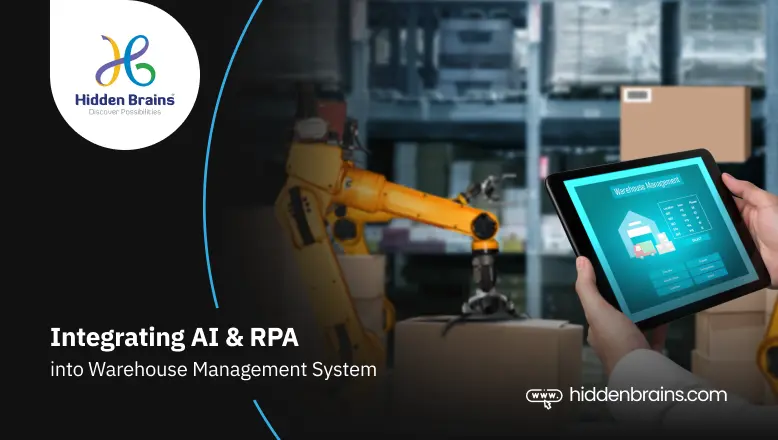
Warehouse management challenges can significantly impact operational efficiency, costs, and customer satisfaction if left unaddressed. From inventory inaccuracies to inefficient workflows and workforce issues, these problems demand strategic solutions. Implementing warehouse automation and robust management systems enables real-time visibility, optimized processes, and improved accuracy. Businesses that proactively address these challenges through technology and process optimization can enhance productivity, reduce errors, and build a more resilient and scalable supply chain capable of meeting growing market demands.